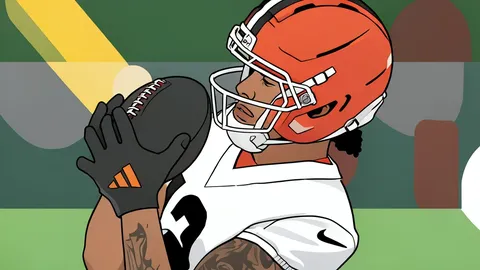
Klopp and Xavi Debut in Nations League Opener Against Rivals
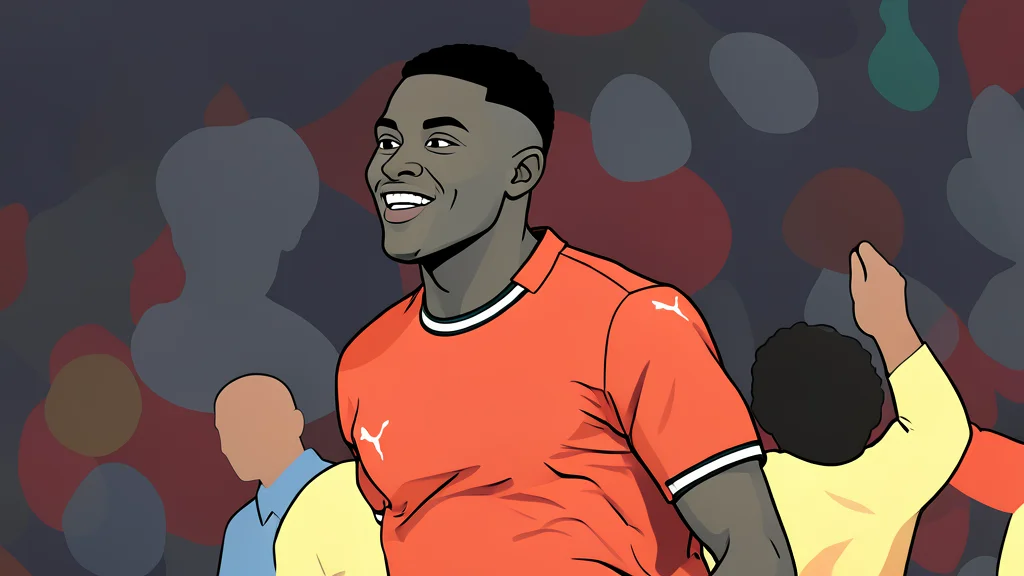
New managers Xavi and Klopp lead their teams into high-stakes League A fixtures this week.
Key points
- Xavi Hernández and Jürgen Klopp debut as head coaches for the Netherlands and Germany in their League A fixture.
- Erling Haaland leads Norway with 19 Nations League goals, while Martin Ødegaard provides creative support with his assist record.
- England faces Spain in a marquee match, with both teams aiming to assert dominance in the group stage.
The turf is cut short, the lights hum against the September dark, and the first Nations League fixtures of the 2026 cycle loom with immediate weight. England faces Spain in a clash of titans, while the Netherlands hosts Germany in a match that doubles as a managerial debut for both Xavi Hernández and Jürgen Klopp. The air is thick with anticipation, a sensory prelude to a week where every pass carries the gravity of legacy.
According to UEFA.com, the schedule is packed with high-octane encounters designed to test the mettle of Europe’s elite. From the electric atmosphere of Wembley to the tactical chess of Amsterdam, the opening round offers a dense tapestry of rivalries, new beginnings, and statistical milestones. It is a moment where the grass feels sharper, the stakes higher, and the history of these nations hangs in the balance.
New managers take the helm
Jürgen Klopp and Xavi Hernández step onto the touchline for their first competitive matches as head coaches of Germany and the Netherlands, respectively. The pressure is palpable, a physical weight in the stadium air. Germany seeks to build on their semi-final run in the previous edition, while the Dutch aim to reclaim their continental status after a quarter-final exit. Both managers bring a distinct intensity, their tactical fingerprints already visible in the pre-season preparations that have left the players on edge.
The backdrop is rich with history. These two nations met twice in the last cycle, drawing 2-2 in Amsterdam before Germany edged a 1-0 victory in Munich. The rivalry is not just about points; it is a narrative of tactical evolution and generational change. As the kickoff approaches, the silence in the stands is broken only by the rustle of programs and the distant thud of training balls, a quiet storm before the tactical thunder.
Stars and rising talents shine
On the pitch, individual brilliance cuts through the collective effort. Brian Brobbey, fresh off a hat-trick for Sunderland, brings a lethal edge to the Dutch attack. Across the channel, Younes Ebnoutalib earns his first senior call-up for Germany after a standout start at Eintracht Frankfurt, where he also scored a treble. These moments of personal triumph add a vibrant color to the national narrative, each player a brushstroke in the larger picture.
Youth is also making its mark. Lennart Karl, the teenage creator at Bayern München, looks to expand his international footprint beyond three friendly appearances. In Serbia, Dušan Tadić returns, his 137 appearances a testament to longevity, while 18-year-old Vasilije Kostov and 19-year-old Mihajlo Cvetković offer a glimpse of the future. The blend of experience and raw energy creates a dynamic tension, a visual and kinetic dance that defines the modern game.
Historical echoes in modern play
The ghosts of past tournaments whisper in the stands. The 1988 European Championship semi-final, where Marco van Basten’s 88th-minute strike sent the Netherlands to their first final, still resonates. That memory of triumph haunts and inspires, a spectral presence in the current rivalry. Similarly, the 2011 qualifying match between Denmark and Norway, where Nicklas Bendtner’s double secured victory, reminds us that competitive encounters are rare gems in a sea of friendlies.
Norway’s return to League A is a story of redemption, capped by Erling Haaland’s record-breaking 19 Nations League goals. His partnership with Martin Ødegaard, whose four World Cup assists placed him in joint-second for creativity, forms a formidable axis. As these teams take the field, the history of the sport is not just remembered; it is felt in the stride of the players, the tension of the crowd, and the sharp, crisp sound of cleats on grass.