Portugal Defends Title as Nations League Shrinks to Three Tiers
UEFA cuts the bottom tier for 2028, forcing all League D teams into C while Portugal seeks back-to-back glory.
Key points
- UEFA will abolish League D for the 2028-29 season, moving all six teams into League C.
- Portugal defends its title while Spain enters as world champions, with Zidane and Klopp leading their nations.
- The final tournament is scheduled for June 9-13, 2027, following a knockout stage in March 2027.
The pitch is reset for a new cycle, the air thick with the humidity of late September. Cristiano Ronaldo stands ready in Portugal's kit, the weight of the previous year's triumph still hanging in the balance. Spain, fresh from their global conquest, enter the European arena not as challengers but as kings, their boots heavy with the momentum of a world championship. The grass is cut short, the white lines sharp against the green, awaiting the first touch of the 2026-27 UEFA Nations League.
This is not merely a resumption of play; it is a structural shift in the tectonic plates of European football. The competition is evolving, stripping away the lowest rung to tighten the net. For Australian fans, the spectacle is accessible through beIN SPORTS CONNECT, streaming the every match live across smart TVs and mobile devices. The stage is set, the rules are rewritten, and the chase for supremacy begins with an extended window of matches stretching from late September to early October.
Structural changes reshape the ladder
UEFA is dismantling the fourth division, abolishing League D entirely from the 2028-29 season. This move forces all six teams currently in that tier into League C, eliminating the cushion of the bottom rung. In the 2026-27 season, the promotion and relegation rules are already more intricate. Runners-up in League B will fight for a shot at League A through play-offs, while League C second-place finishers can climb by defeating a bottom-placed League B side.
Only the two lowest-ranked fourth-placed teams in League A face automatic relegation. The other four teams in that bottom bracket enter a high-stakes dance against the League B runners-up. It is a mechanism designed to keep every match alive, every point valuable, until the very last whistle of the league phase. The safety net is tighter, the stakes higher, and the margin for error thinner.
Star managers and new faces
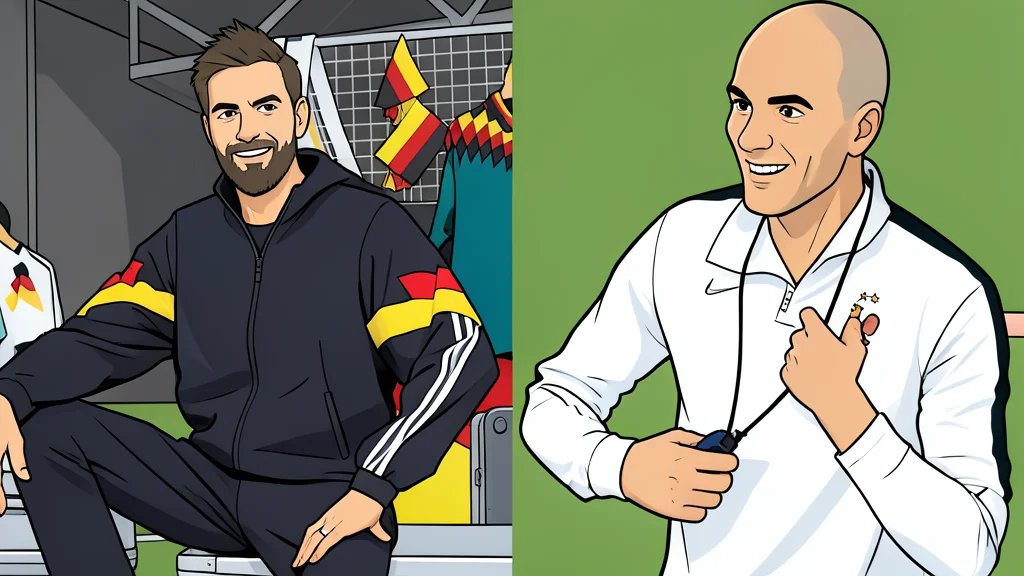
The narrative threads are woven with the names of giants. Zinedine Zidane returns to the helm of France, his presence in the dugout a statement of intent. Jurgen Klopp takes charge of Germany, his intensity a known quantity in European football. Granit Xhaka emerges as a pivotal figure, his experience anchoring the midfield in a league that no longer forgives mistakes. These are not just players; they are the architects of a new era.
The groups are set, the rivalries sharp. France faces Italy and Belgium in a group that promises tactical battles and physical duels. Spain, alongside Croatia and England, forms a group of heavyweights. Portugal, in a separate group with Denmark and Norway, holds the title but faces the scrutiny of a league that demands consistency. The storylines are not just about winning; they are about legacy, about how these managers and players define their careers in this compressed, competitive format.
Path to the final tournament
The league phase runs from September 24 to November 17, 2026, with six matchdays packed into a tight schedule. The knockout stage begins in March 2027, with quarter-finals and promotion play-offs taking place between March 25 and 30. The final tournament, a concentrated burst of intensity, is scheduled for June 9-13, 2027. This is not a long, drawn-out campaign; it is a sprint, a series of high-octane encounters where the best teams separate themselves from the rest.
The Nations League also serves as a potential backdoor into UEFA EURO 2028 qualifying. Teams that miss out through the regular process may find a second chance based on their performance in this competition. It is a dual-purpose tournament, a way to replace friendlies with matches that matter, that carry points, that shape the future of European football. The ball is in play, the clock is ticking, and the race is on.