Tuchel Revisits the Agony of Atlanta
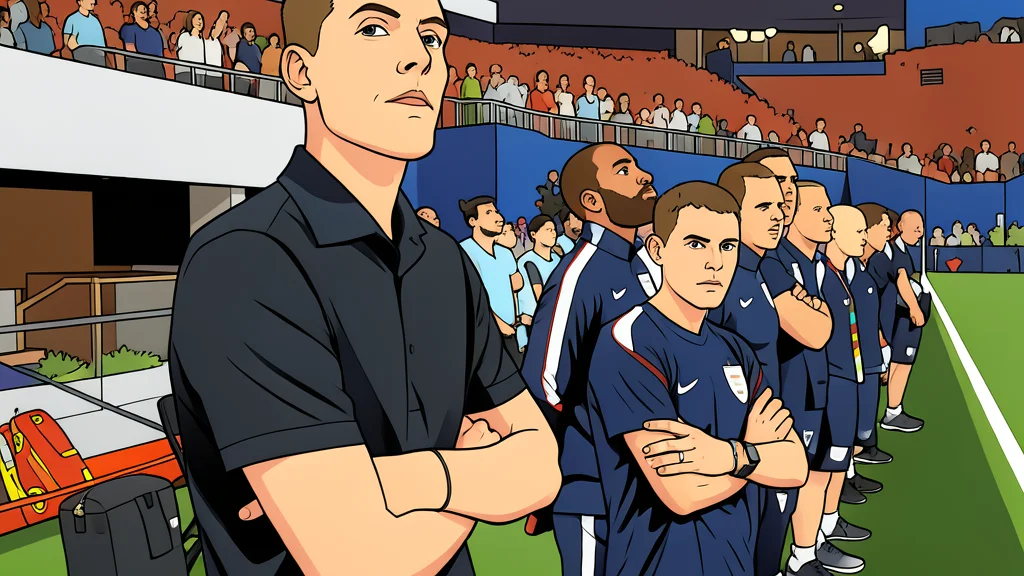
The green pitch at Wembley waits for the new campaign, but the manager’s mind remains locked on the humid air of the semi-final. Two months of silence break with a raw admission: he thought the team was dead.
The silence at St George’s Park has finally broken. For two months, the only sound for Thomas Tuchel was the distant hum of domestic football, a pause in the relentless rhythm of international duty. That pause ended on Wednesday evening when the Football Association released a video feature titled ‘Reflections: England’s World Cup Journey.’ It is not a highlight reel. It is a dissection. Tuchel sits across from Daniel Sturridge, the air thick with the weight of unsaid words, and begins to unravel the threads of a campaign that ended in bronze.
The camera does not linger on the trophy lift in Miami. It moves straight to the semi-final in Atlanta. The humidity is palpable even through the screen, a physical presence that Tuchel describes as part of the fatigue that piled up during the tournament. He speaks of the final days not with the distance of a statistician, but with the immediacy of a man who watched the clips again last week, frame by frame, with his coaching staff. The pain is not a metaphor. It is a physical ache, a 'agony of epic proportions' that he repeats with emphasis, as if the words themselves still carry the weight of the moment.
The Moment the Mindset Shifted
Tuchel identifies a specific fracture point in the match. It was not the goal, but the tackle. Djed Spence’s challenge on Giuliano Simeone, minutes after Anthony Gordon’s opener, sent a shockwave through the team. Tuchel admits it changed the psychological landscape. 'It did something to me, it did maybe something to players,' he says. The team shifted from a mode of control to a mode of survival. They began playing as if the clock were ticking down the final four minutes, when in reality, thirty or forty minutes of high-pressure combat remained. Argentina, described by Tuchel as playing 'f*** it football,' pushed more bodies forward, stretching the English defense until it snapped.
The decision to switch to a back five came after a header from Nico Gonzalez that Jordan Pickford saved. Tuchel recalls the internal monologue with brutal clarity. 'I thought: OK, we will not survive, this is waiting for death.' That was the trigger. The formation change was not a tactical masterstroke, but a reaction to a perceived inevitability of defeat. It mirrors the tactics used in the wins over Mexico and Norway, but here, it was deployed too early. Tuchel admits the mindset was flawed. The team was tired, worn down by the altitude in Mexico and the heat in Miami, and the decision to bunker down came from a place of exhaustion rather than strategy.
Defensive Choices Under Scrutiny
The criticism has been consistent since the match: England should have attacked. They should have given Argentina something to fear. Tuchel does not fully accept this premise. While he admits his defensive changes were perhaps too early, he resists the idea that counter-attacking was the correct solution. The discussion with Sturridge reveals a manager wrestling with the definition of control. Was it a failure of tactics, or a failure of energy? Tuchel points to the cumulative effect of the tournament, the 'piling up' of fatigue that made every decision feel heavier. The 'Bronze Final' in Miami, where England beat France to confirm third place, is not a victory in his mind. It is a footnote to the pain of Atlanta.
Looking Ahead to Wembley
This week, the focus shifts back to the present. Tuchel will unveil the England squad for the Nations League games at Wembley Stadium on Friday. The stadium lights will be bright, the pitch fresh green, a stark contrast to the humid, tense atmosphere of the semi-final. The questions from the past two months will not disappear, but they will be overshadowed by the immediate task. Tuchel’s reflections, as reported by GN sports/football (en-US), offer a rare glimpse into the mind of a manager processing defeat. It is not an excuse. It is an explanation. And now, the work begins again.