Rybakina Targets French Open to Complete Historic Career Grand Slam
Fresh off a commanding US Open victory, Elena Rybakina sets her sights on the red clay of Roland Garros to join an elite historical list.
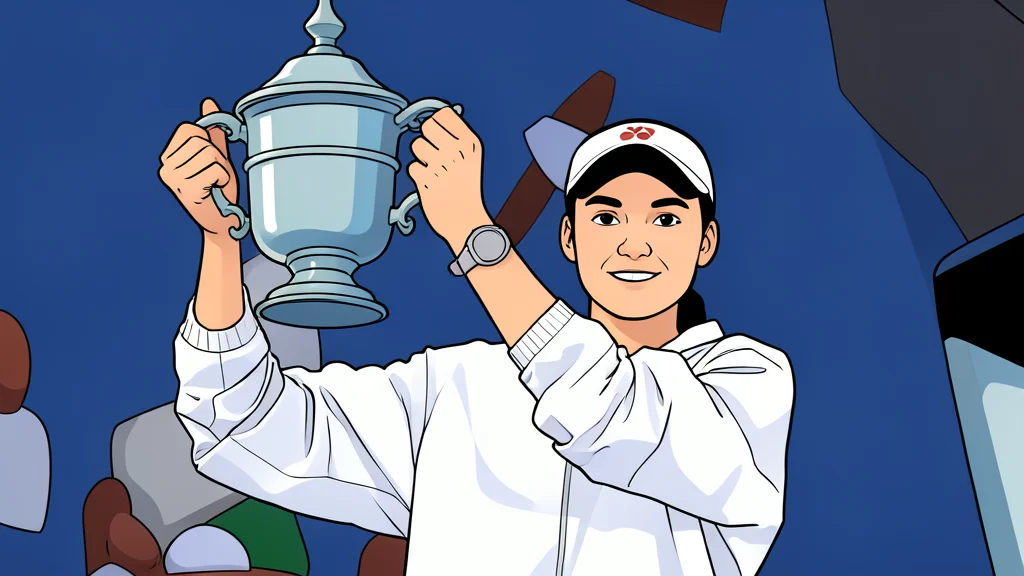
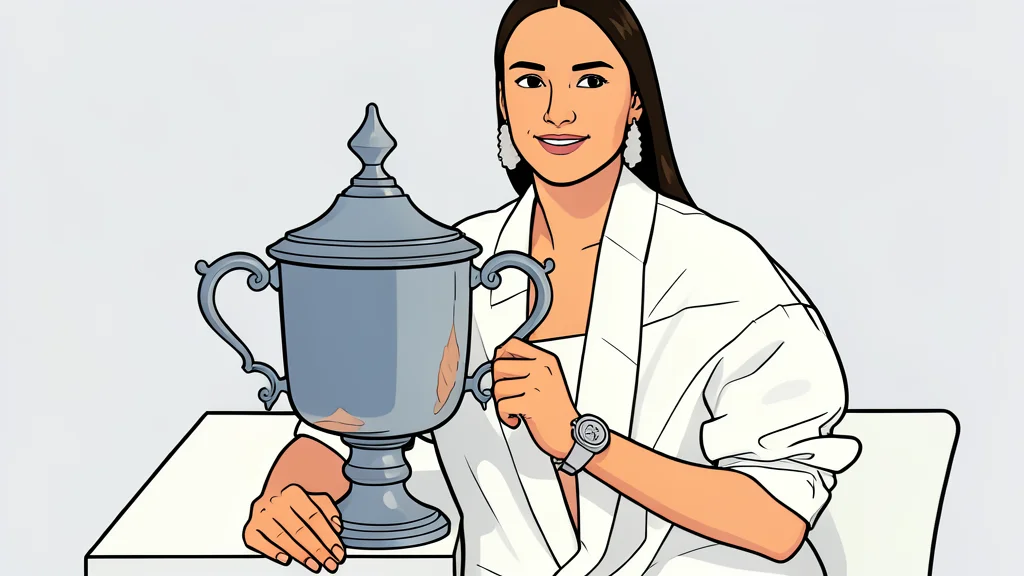
The red clay of Roland Garros is not just a surface; it is a summit. For Elena Rybakina, standing atop the US Open final with the trophy in hand, the distant echo of that Parisian stage is louder than the New York applause. She has just secured her third major, dismantling Aryna Sabalenka in a three-set duel that ended with a 6-4, 5-7, 6-2 scoreline. The air in the stadium still hums with the kinetic energy of her 33 winners and 12 aces, a display of baseline precision that left her opponent scrambling. But Rybakina’s gaze is already fixed forward, piercing through the celebration to lock onto a singular, elusive target.
In an interview on CBS Mornings, reported by Yahoo Sports, the 27-year-old Kazakhstani star articulated a desire that borders on obsession. Winning all four Grand Slam titles on different surfaces is not merely a statistical achievement; it is a testament to versatility. “It would mean everything to me,” she stated, her voice steady with conviction. She recognizes the rarity of the feat, noting that only a handful of women in the Open Era have managed it. This is not a casual ambition. It is a multi-year campaign, a strategic war of attrition against the court itself, with her team fully committed to turning this dream into a tangible reality.
Joining An Elite Historical Lineage
The list of women who have completed the Career Grand Slam in singles is short, a closed club of legends. Before the Open Era began in 1968, pioneers like Shirley Fry, Doris Hart, Maureen Connolly, and Margaret Court laid the groundwork. Since then, only Chris Evert, Martina Navratilova, Billie Jean King, Steffi Graf, Maria Sharapova, and Serena Williams have joined their ranks. Sharapova was the last to achieve this, sealing her place in history after defeating Sara Errani in the 2012 Roland Garros final. For Rybakina, this milestone represents the final missing piece in a puzzle that has defined the greatest careers in tennis history.
However, the path to this achievement is fraught with difficulty for the current world number one. Roland Garros has historically been a stumbling block. Rybakina has never advanced past the quarter-finals in Paris. Her best results came in 2022 and 2024, where she fell to Anastasia Pavlyuchenkova and Jasmine Paolini, respectively. This year, her campaign ended abruptly in the second round against Yuliia Starodubtseva. Overcoming this specific resistance on the slow, heavy clay is the critical hurdle. It requires a fundamental shift in rhythm and strategy, adapting her powerful game to a surface that punishes aggression and rewards patience.
A Strategic Battle With Sabalenka
The US Open final was a microcosm of the intense rivalry between Rybakina and Sabalenka. Their head-to-head record stands at 8-10 in favor of the Belarusian, but the dynamic has shifted in 2026. Rybakina leads 2-1 in their meetings this year, with both victories occurring in the most high-pressure environments possible: the Australian Open and US Open finals. Sabalenka’s sole victory in this cycle came in the Indian Wells final. Rybakina acknowledges the consistency and power of her rival, describing their matches as perpetual battles where the outcome often hinges on who can maintain composure during critical junctures.
Strategy was the key in New York. Rybakina explained that because they know each other so well, the match came down to the return game. “It’s a powerful game from the other side too,” she noted. “We were trying to read some moments and make a difference in these key moments.” This tactical foresight allowed her to neutralize Sabalenka’s serve and force errors. As she looks toward the next couple of years, this same analytical approach will be crucial. The goal is not just to survive the clay, but to dominate it, transforming a historical weakness into a historic triumph.
The Road To A Complete Set
The journey ahead is long and demanding. Rybakina’s current trajectory shows a player at the peak of her powers, capable of dismantling the best in the world on hard courts. Yet, the French Open remains the great unknown. It is a test of endurance, mental fortitude, and technical adaptation. By focusing on this specific target, Rybakina elevates her career from one of excellence to one of historical significance. The stakes are high, the competition is fierce, but the vision is clear. She has the tools, the team, and the drive to complete the set, joining a lineage of women who have defined the sport through their sheer determination.