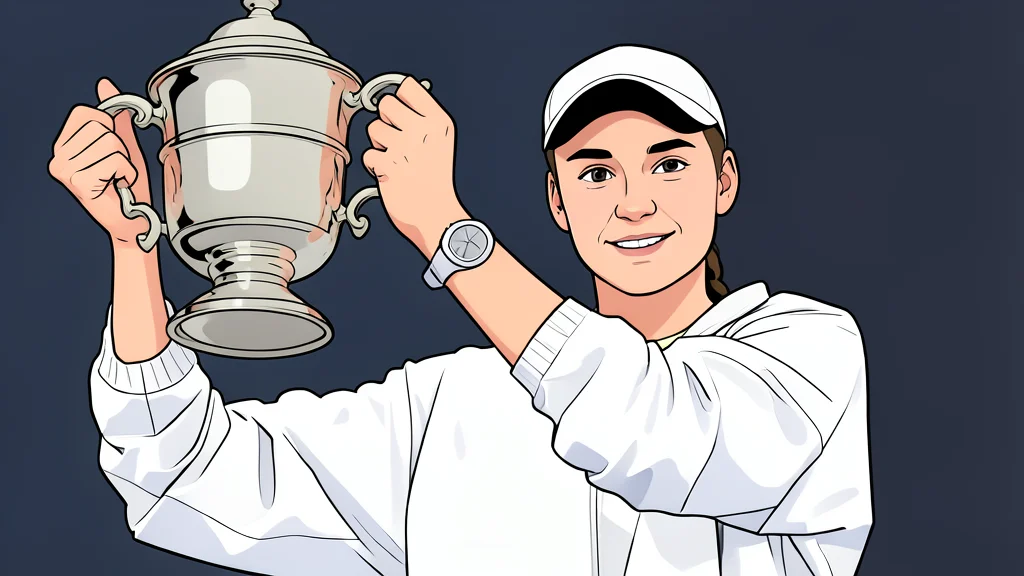
Zverev's Serve Controversy Sparks Debate Among Tennis Insiders
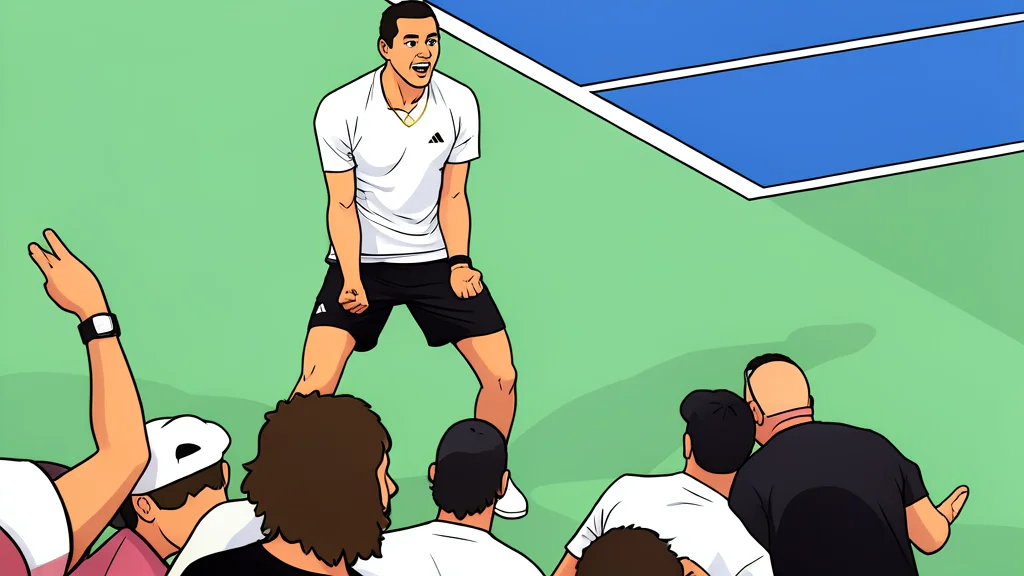
Amidst the celebration of a major title, a distinct murmur grows around Alexander Zverev's pre-serve routine. Critics point to the rhythm of his toss, while defenders highlight his adherence to the clock and his mental resilience on the court.
The blue hard court of the US Open final still holds the echo of Alexander Zverev’s victory, yet the conversation has drifted away from the trophy and toward the rhythm of his serve. As the crowd disperses, a specific narrative tightens around his motion: the long, deliberate toss that precedes each delivery. Observers claim he bounced the ball roughly 12,000 times before the semi-final, a statistic that has fueled accusations of time-wasting. In the final, the umpire’s voice cut through the air, warning him for taking too long between serves, a moment that ignited a firestorm of criticism.
Ben Shelton, standing on the other side of the net, voiced his frustration after the loss, joining a chorus of voices calling for a rule change. The atmosphere is charged, with many questioning whether the current code of conduct adequately addresses what they perceive as a stalling tactic. However, not everyone shares this view. A counter-narrative is emerging, led by those who argue that the true issue lies not in the bounce, but in the sheer quality and consistency of Zverev’s first serve.
Defending the Rule-Bound Player
Mark Petchey, former coach of Emma Raducanu, stepped into the fray with a pointed defense. Taking to social media, he rejected the prevailing criticism with a sharp, declarative statement: "I love the fact that @AlexZverev plays within the rules." Petchey’s argument hinges on the technicalities of the game. He notes that Zverev is one of the few players who walks around the net after the first game and during tiebreak changeovers, actions often overlooked by casual observers. For Petchey, the ball bounce is a red herring; the real threat to opponents is the 70% plus first-serve percentage that keeps landing in the corners.
The former coach paints a picture of a player forged in adversity, citing Zverev’s ability to overcome brutal, heartbreaking losses. He describes a "granite mentality" and a relentless work ethic that have propelled him to become a double major winner. In Petchey’s view, this season marks the arrival of a Hall of Fame career, a testament to a player who thrives under pressure rather than exploiting loopholes. The defense is not just about the serve; it is about the character required to sustain such dominance across multiple Grand Slams.
Perspective From the Broadcast Booth
The debate extended beyond the court and into the commentary boxes. Juan Martin del Potro, speaking live on ESPN, offered a different angle during the final. He remarked on the timing of the umpire’s warning, suggesting it may have been influenced by the opponent. "The only reason she said that is that Zverev is playing Shelton," del Potro argued, pointing out that Zverev had played six matches in the tournament without similar complaints until now. This observation adds a layer of complexity to the controversy, hinting at potential bias or heightened scrutiny in the final match.
However, the warning was not an isolated incident. Zverev also received a caution during his match against Karen Khachanov, a moment that drew the Russian’s visible annoyance. This recurrence suggests that the issue is not merely a reaction to the high-profile final but a consistent aspect of Zverev’s pre-serve routine that rubs against the boundaries of acceptable play time. The tension between the player’s style and the officials’ interpretation of the rules remains a focal point for fans and analysts alike.
The Core of the Criticism
At the heart of the dispute is the definition of a "delay" in tennis. While the rules stipulate a 25-second limit between points, the enforcement of this rule can vary. Critics argue that Zverev’s routine, characterized by the extended ball bounce, creates a psychological disruption that goes beyond mere time consumption. They see it as a way to break the opponent’s rhythm, a subtle but effective tactic that tests the patience of rivals. Defenders, like Petchey, counter that this is a legal part of the game, a preparation ritual that allows the player to settle into their zone.
As the dust settles on the US Open, the legacy of Zverev’s title is intertwined with this ongoing debate. Whether it is viewed as a strategic masterstroke or a borderline infraction, it has sparked a broader conversation about the etiquette and evolution of tennis. The sport continues to grapple with how to balance player expression with fair play, and Zverev’s serve has become the lightning rod for these discussions. For now, the ball remains a simple white sphere on the blue court, but the meaning behind its bounce has never been more contested.