Rain Holds Off as Hojo Claims Japan's First Gold
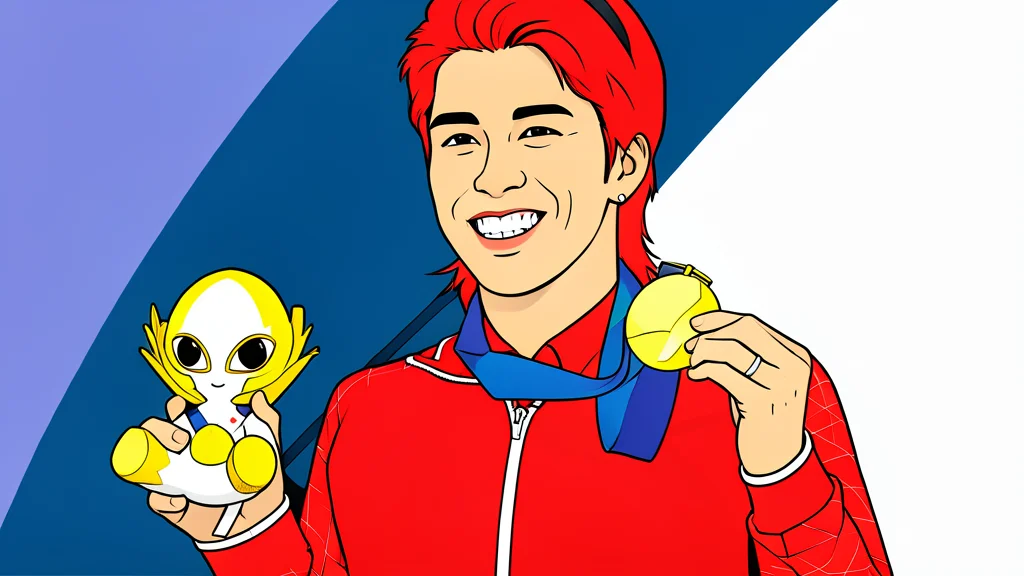
In Gamagori, the rain stayed away, and the wet asphalt gleamed under a clear sky as Takumi Hojo carved out a nine-second lead to secure Japan’s opening gold at the Asian Games.
The air in Gamagori was thick with humidity, the kind that clings to skin and settles into the lungs. On the wet asphalt of the coastal road, the 750-meter swim had just ended, the water churning white against the calm sea. Takumi Hojo emerged, shaking water from his hair, his gaze fixed on the bike rack. The rain, which threatened all morning, had finally broken, leaving the course slick and reflective. For the 30-year-old Japanese triathlete, this was more than a race; it was the first gold medal of the Asian Games, a weight he carried with quiet intensity.
The transition was seamless, a blur of motion as Hojo mounted his bike. The 20-kilometer ride wound through the landscape, the wind pressing against his back. He pushed hard, his legs a steady drumbeat on the pedals. Behind him, China’s Zhang Xirui was close, matching every surge, every dip in the road. The gap was small, measured in heartbeats and watts, but Hojo’s rhythm was unyielding. The course, familiar from his test event a year prior, offered no surprises, only the relentless demand for power.
A nine-second margin of victory
The final 5,000 meters were a battle of wills. Hojo and Zhang ran neck and neck, their strides synchronized in a deadly dance. The crowd’s noise swelled, a roar that echoed off the nearby buildings. Hojo’s face was a mask of concentration, sweat mixing with the residual dampness of the air. He knew the finish line was close, but so was his rival. Every step was a calculation, a push against the limit. The finish line materialized out of the haze, and Hojo crossed it first, his clock stopping at 52 minutes and 56 seconds.
Zhang crossed nine seconds later, his silver medal a testament to his relentless chase. Behind them, Kazakhstan’s Arlan Zhanabay, just 20 years old, claimed bronze, his first Asian Games medal. The young athlete’s face lit up with pride, a stark contrast to the intense focus of the leaders. For Japan, the victory was a catalyst, a spark that ignited the team’s spirit. Hojo’s win also secured his place at the 2028 Los Angeles Olympics, a future already shaped by this moment in the rain-drenched streets of Gamagori.
A boost for the host nation
“As it’s our first gold medal, it’s given the Japanese team a real boost,” Hojo said, his voice steady, his breathing controlled. The medal was not just a personal triumph; it was a statement, a declaration of dominance in a field of elite competitors. His qualification for the 2028 Olympics added another layer to the significance of his performance. The race, with its close margins and intense competition, highlighted the depth of talent in the Asian triathlon scene. Hojo’s victory was a reminder of the power of preparation, of the hours spent on the bike, in the pool, and on the track.
For Zhang, the silver was a bitter pill, but one he accepted with grace. “I am very happy, although disappointed to be behind Japan,” he admitted, his eyes reflecting the complexity of the moment. Zhanabay, meanwhile, basked in the glow of his achievement, a young athlete stepping onto the global stage. The race, as reported by GN sports/triathlon, was a microcosm of the Asian Games themselves: a display of skill, endurance, and the relentless pursuit of excellence. The wet road, the calm sea, and the determined athletes created a scene that would be remembered long after the medals were hung.