Maryland Volleyball Faces Purdue and Indiana in Big Ten Debut
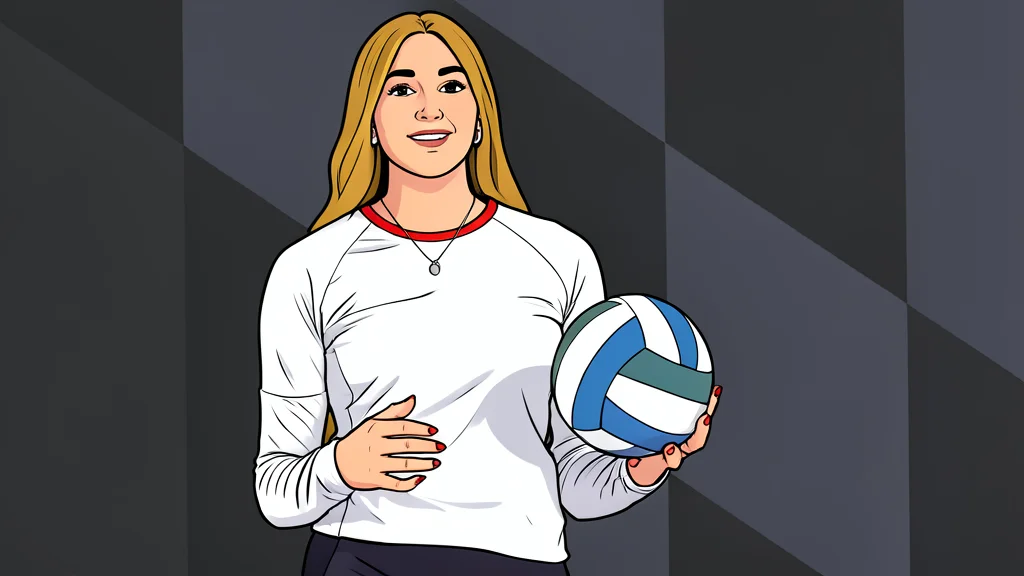
Ranked 10-1, the Terps travel to face top-20 opponents Purdue and Indiana this weekend.
Key points
- Maryland (10-1) faces No. 10 Purdue (7-2) on September 24 and No. 18 Indiana (7-2) on September 26.
- Eva Rohrbach hit .711 with 28 kills at the ECU Tournament, while Sara Toth recorded 106 assists.
- Purdue has won five straight matches without dropping a set, led by freshman Addy Tindall's 18 kills.
The polished hardwood of Holloway Gymnasium waits for the first crack of a serve. It is September 24, 2026, and the air hums with the quiet intensity of a team that has not lost a set in weeks. Maryland enters this Big Ten opener with a 10-1 record, carrying the weight of a nine-match winning streak that feels less like a statistic and more like a physical force. The Terps are about to test that momentum against No. 10 Purdue, a squad that has swept its last three nonconference opponents without dropping a single set.
This is not a casual meeting of mid-table rivals. It is a collision of elite defensive structures and high-tempo offenses. Maryland’s recent dominance at the ECU Tournament, where they swept three opponents in straight sets, has built a narrative of invincibility. But the Big Ten does not recognize such claims. The Terps must convert their .300-plus team hitting percentage into points against Purdue’s fresh, aggressive freshman class. The ball will fly fast. The margins will be thin. Any hesitation in the transition game will be punished by a Purdue offense that has found its rhythm over the past five matches.
Efficiency Defines the Terps Offense
Eva Rohrbach stands at the heart of this machine, her hitting percentage a testament to surgical precision. During the ECU Tournament, she recorded 28 kills while hitting .711, a level of efficiency that rarely appears in collegiate volleyball. She did not just hit the ball; she placed it with the intent of a sniper. Her seven blocks added a layer of physical intimidation at the net, forcing opponents to question every set they attempted. This consistency is not accidental. It is the result of a system that values placement over power, allowing the team to maintain a high team hitting percentage even in close, tactical battles.
Behind her, Sara Toth directs the flow with 106 assists, her hands moving in a blur of calculated distribution. She averaged 11.8 assists per set, ensuring that the ball reaches the hitter at the exact moment of maximum velocity. Brooklynne Brass provides the explosive edge, breaking out with career-high kill totals against East Carolina and Old Dominion. Her 11 kills in the finale were not just numbers; they were statements of arrival. Together, these three players form a triangle of attack that Purdue will struggle to contain, especially when Brass steps in to dig and Brass steps out to spike.
Freshmen Reshape the Defensive Landscape
The backcourt has been transformed by a freshman class that ranks 16th in the nation. Raina Chwialkowski has become a wall of defensive stability, recording 29 digs and seven aces in the last tournament alone. Her presence allows the front line to play with greater freedom, knowing that the floor behind them is covered. Marlee Sivak adds another dimension, posting a career-high 10 kills against Old Dominion to prove she can contribute on both ends. These are not just prospects; they are active, decisive components of a system that is already winning at a high level.
Ava Brown rounds out this new core, her all-around game providing 23 kills and 14 blocks in the last three matches. She moves with a fluidity that disguises her intent, often appearing at the net just as the opponent commits. The depth of this freshman group means Maryland can rotate without a drop in intensity. Purdue will see six different threats in the rotation, each with the skill to change the tempo of a rally. This depth is the Terps' most dangerous weapon, one that does not appear on a scoreboard but defines the outcome of long, grueling sets.
Purdue Brings Aggressive Momentum
Purdue arrives with a 7-2 record and a five-match winning streak that includes three consecutive sweeps. Their freshman Addy Tindall has emerged as a primary offensive option, leading the team with 18 kills in recent play. The Boilermakers have not dropped a set in this stretch, indicating a level of control and confidence that will test Maryland’s defensive adjustments. Their offense is not just fast; it is relentless, designed to punish any momentary lapse in concentration. The Terps must match this energy, not just in speed, but in the willingness to take risks on the serve and in the block.
The atmosphere in Bloomington will be electric, the crowd noise a constant backdrop to the tactical battle. Maryland has the experience of a strong start and the technical skill to navigate this challenge. But Purdue has the momentum of a team that has found its peak performance at the right time. The next two weeks will define the season, as the Terps face Indiana and then return home. This weekend in Indiana is not just a game; it is the first true test of whether Maryland’s early success is a foundation or a fleeting surge. The ball is in the air. The decision belongs to the players.