Ko Na-Yeon's Ankara Skating Session Ends in Disarray
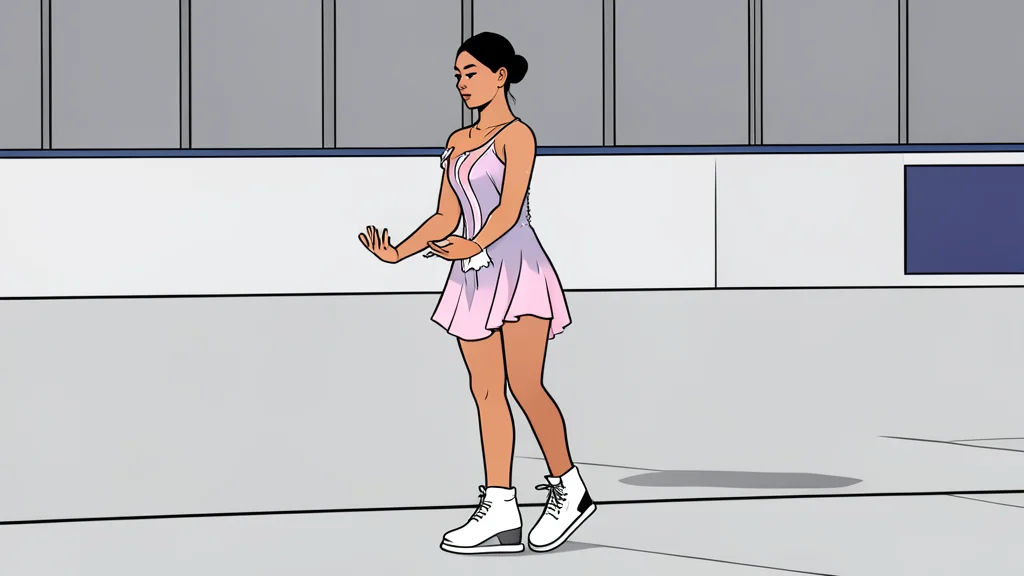
In the chill of the Ankara arena, a promising routine unraveled into a sequence of falls and zero scores, leaving the skater in the dust.
The ice at the Umitkoy Ice Rink in Ankara felt less like a stage and more like a trap for Ko Na-yeon. The air was thick with the hum of the crowd and the sharp screech of blades carving into the white surface. She had entered the free skate with momentum, her short program performance earlier in the day earning her a strong second place and 70.21 points. That confidence hung in the air, a tangible weight before the music started. The junior skater from Korea needed a clean, powerful run to lock in a medal, but the ice had other plans. The atmosphere shifted from anticipation to tension as the first few minutes ticked by, the silence of the judges' panel a heavy presence over the rink.
It began with a flash of brilliance. The triple lutz into triple toe loop combination landed with a crisp, decisive thud, earning a Grade of Execution bonus of 1.77 points. For a heartbeat, the narrative was one of triumph. Then, the rhythm broke. The triple loop became a stumble, a sudden loss of balance that sent her sliding off the intended path. The triple lutz followed, another fall, the body hitting the ice with a dull, resonant sound that echoed through the hall. The score for technical elements settled at 43.35, a number that felt light, lacking the density of a successful routine. The program components stood at 47.96, but the two-point deduction for the falls dragged the total down to 89.31. It was not enough.
A Cascade of Technical Errors
The middle of the program was a struggle against the physics of the spin and the geometry of the jumps. She managed a level four on the flying camel spin, a moment of grace that seemed to defy the chaos. But the sequence of triple flip, double axel, and double axel turned into a minefield of judgment calls. The judges flagged wrong edges and under-rotations, chipping away at the potential score. The skater’s focus fractured. The planned triple flip did not happen; the timing was missed, the body refusing the demand, resulting in a zero. The immediate retry was met with a caution for edge use and another under-rotation, the points evaporating into the cold air. The frustration was visible, a tightness in the shoulders that betrayed the internal battle.
The final jump attempt was a mistake born of desperation. The triple salchow, taken as a solo element, pushed the count beyond the six-jump limit. The rules are absolute, unforgiving. The element was invalidated, the score wiped clean. Another zero. The final total of 159.52 points placed her in tenth position, a stark contrast to the medal expectations that had preceded the event. The ice, so smooth and reflective, had become a witness to a performance that never quite connected. The silence of the arena was not empty, but full of the weight of what could have been.
Championship Goes to Japan's Okada
While Ko Na-yeon’s day ended in the shadows, the spotlight remained firmly on Mei Okada of Japan. The Japanese skater delivered a performance of commanding precision, accumulating a total score of 206.38 points. Her victory was not just a win for the day, but a strategic lock-in for the season. Having finished as runner-up at the second stop, this triumph secured her 28 ranking points, guaranteeing her place in the Grand Prix Final. The podium was completed by China’s Jin Shuxian with 194.50 points and France’s Stefania Gladyki with 179.64 points. The hierarchy was clear, the points tallied, the future set.
As reported by GN auto sports/winter-sports: figure skating, the event in Ankara marked a pivotal moment in the junior circuit. The contrast between the medalists and the rest of the field was drawn in sharp lines of execution and error. For Ko Na-yeon, the day was a lesson in the fragility of competitive sport, where a single fall can unravel a season’s worth of preparation. The ice in Turkey will remain smooth, ready for the next skater, indifferent to the hopes and heartbreaks of those who glide upon it. The scoreboard does not remember, but the memory of the fall lingers, a cold imprint on the mind.