Focused Energy Raises $240M Despite Tritium Supply Doubts
Focused Energy secures record Series A funding while facing technical hurdles regarding fuel supply and commercial timelines.
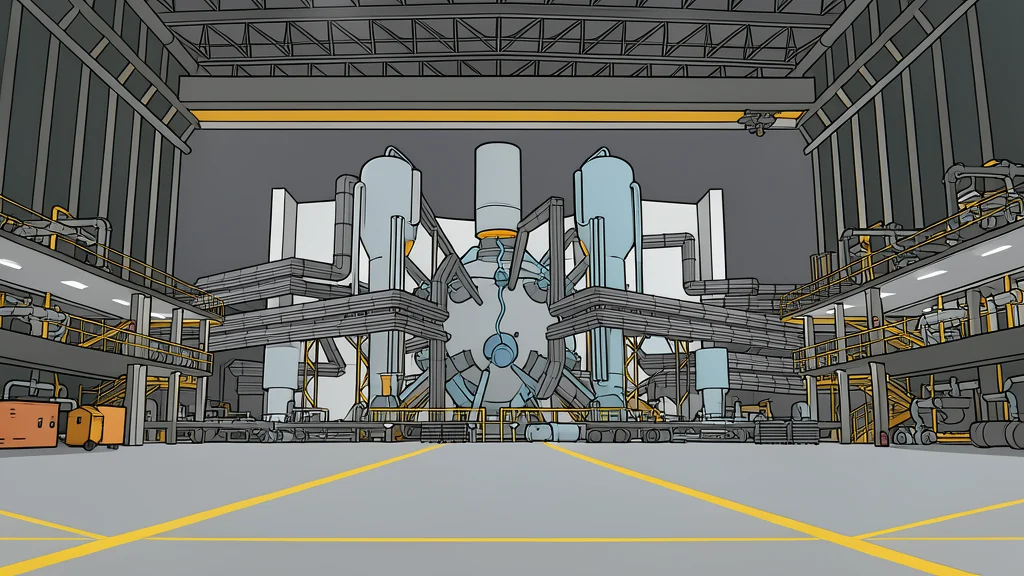
Focused Energy has closed a $240 million Series A round, the largest in the global fusion sector, signaling strong investor confidence in its laser-driven approach. The Darmstadt-based startup aims to have a commercial power plant operational within 15 years, a target that requires sustaining fusion reactions ten times per second around the clock. This ambitious timeline contrasts with current experimental capabilities, where stable electricity generation for consumers remains unproven.
The company’s strategy relies on converting laser-induced fusion into a scalable industrial process. While US experiments have demonstrated energy release from fused light nuclei, Focused Energy must bridge the gap between laboratory bursts and continuous power output. The startup argues that renewable energy alone cannot meet global demand, positioning fusion as essential for decarbonizing heavy industries, transport, and aviation.
Tritium scarcity poses engineering challenges
A critical obstacle remains the supply of tritium, the fuel required to sustain reactions. Global reserves are estimated at only 50 kilograms, with a half-life of 12.3 years meaning half decays within that period. Starting a plant requires several kilograms, which are consumed during operation. Unlike deuterium, tritium is not abundant in nature, necessitating on-site regeneration within the reactor vessel.
Professor Sven Linow of the Hessian Scientific Climate Advisory Board argues that no demonstrator or laboratory experiment has successfully tested tritium regeneration. He contends that the lack of a proven fuel cycle makes large-scale investment risky. In contrast, Focused Energy’s Vice President Ulrich Sigel characterizes the issue as an engineering task rather than a fundamental physics barrier, citing German expertise in solving complex industrial problems.
Political backing supports commercialization efforts
German Chancellor Friedrich Merz and Hessian Minister-President Boris Rhein have publicly endorsed the initiative. Rhein described nuclear fusion as a potential game-changer for energy supply, aligning state government support with the company’s goals. This political will complements the private capital influx, creating a dual support structure for the technology’s development.
The funding round includes participation from major energy players, reflecting a broader industry shift toward commercial viability. While skeptics point to the unresolved fuel supply issues, proponents view the capital injection as a vote of confidence in the engineering solutions required to make fusion a practical energy source. The next phase will focus on proving that tritium recovery can be achieved reliably at scale.