Oklahoma Rig Count Holds Steady at 51 Across Key Plays
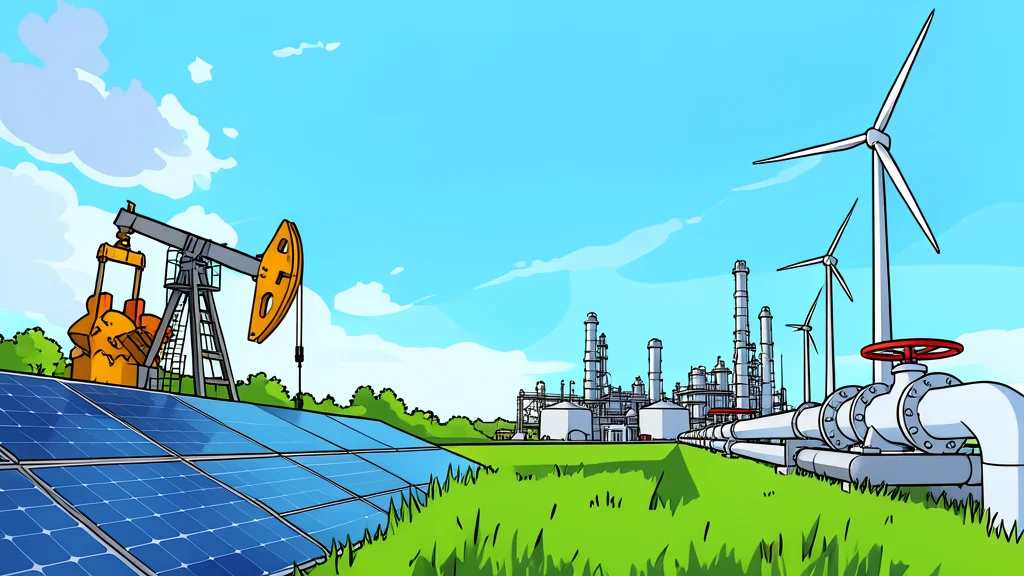
Oklahoma's drilling activity remains unchanged with 51 active rigs, led by the Cana Woodford and Granite Wash basins, while national counts show modest gains in the Williston and Haynesville regions.
Oklahoma's active drilling rig count held firm at 51 units in the latest weekly report from Baker Hughes, indicating a pause in net addition of capital deployment across the state's primary basins. This stability suggests operators are maintaining current production levels rather than expanding new acreage or shutting down idle infrastructure. The total figure encompasses all active drilling and workover operations, reflecting a balanced approach to cash flow management in a volatile price environment.
The Cana Woodford play remains the dominant driver of state-level activity with 21 rigs, narrowly outpacing the Granite Wash at 18 units. This split highlights a strategic competition between the two formations, where the Cana Woodford, confined strictly to Oklahoma counties such as Blaine and Custer, continues to attract capital despite the Granite Wash's broader geographic footprint extending into the Texas Panhandle. The consistency in these numbers underscores a shift from aggressive expansion to operational efficiency in these mature plays.
Cana Woodford Leads State Drilling Activity
Operators in the Cana Woodford are concentrating efforts in central Oklahoma, with drilling focused across ten specific counties including Grady, Kingfisher, and Stephens. This geographic concentration allows for tighter cost control and logistical optimization compared to the more dispersed Granite Wash operations. The Granite Wash, a tight sand formation averaging 3,000 feet in thickness and depths between 11,000 and 15,400 feet, benefits from shale-derived horizontal drilling techniques, yet its rig count has not surpassed the Cana Woodford in recent weeks.
Secondary plays in the state show minimal activity, with the Ardmore Woodford maintaining two active rigs and the Arkoma Woodford holding at one. The Mississippian formation recorded zero active drilling rigs, indicating a complete pause in new exploration or development activity in that sector. This divergence in activity levels suggests that capital allocation is heavily skewed toward the higher-yielding Woodford shale plays, while lower-tier formations are deferred until economics improve or inventory levels drop.
National Rig Counts Show Modest Gains
Beyond Oklahoma, the Permian Basin remains the largest hub of drilling activity with 268 active rigs, unchanged from the previous week. This static count in the country's leading production region reflects a cautious stance by major operators who are prioritizing cost discipline over volume growth. In contrast, the Haynesville formation in East Texas and Louisiana added one rig to reach 57, while the Eagle Ford in South Texas also increased by one unit to 51 active rigs.
The Williston Basin in North Dakota and Montana saw a more significant increase of five rigs, bringing the total to 32, which may signal a recovery in activity levels in that region. Other major basins remained stable, with the Utica holding at 10 rigs, the Marcellus at 23, and the D-J Basin in Colorado and Wyoming at 11. The Barnett play in North Texas continued to operate with a single rig, reflecting its status as a mature, low-growth field. These national trends provide context for Oklahoma's stable positioning within the broader US shale landscape.
Geological Factors Drive Operational Strategy
The Granite Wash formation, while geologically distinct as a sandstone play, has adopted the horizontal drilling methodologies originally developed for shale plays, allowing for higher recovery rates. Its size, spanning approximately 160 miles in length and 30 miles in width, offers substantial long-term inventory potential. However, the lack of rig count growth indicates that operators are currently focused on optimizing existing wells rather than drilling new ones, a strategy that supports free cash flow generation in the current market cycle.
The data from GN auto stocks/energy-stocks: drilling activity confirms that Oklahoma's energy sector is in a maintenance phase rather than an expansion phase. With no net change in the state's total rig count, companies are likely balancing production targets against cost constraints. This steady-state environment is typical for mature basins where the focus shifts from discovering new resources to maximizing the efficiency of known reserves, ensuring sustainable returns for shareholders without the high capital expenditure associated with greenfield development.