Fed's First Hike in Three Years Triggers Market Slide

The Federal Reserve's decision to raise rates by 25 basis points caused immediate volatility, with the S&P 500 dropping 0.45% and the Dow losing 1.21% as investors adjusted to a tighter monetary policy environment.
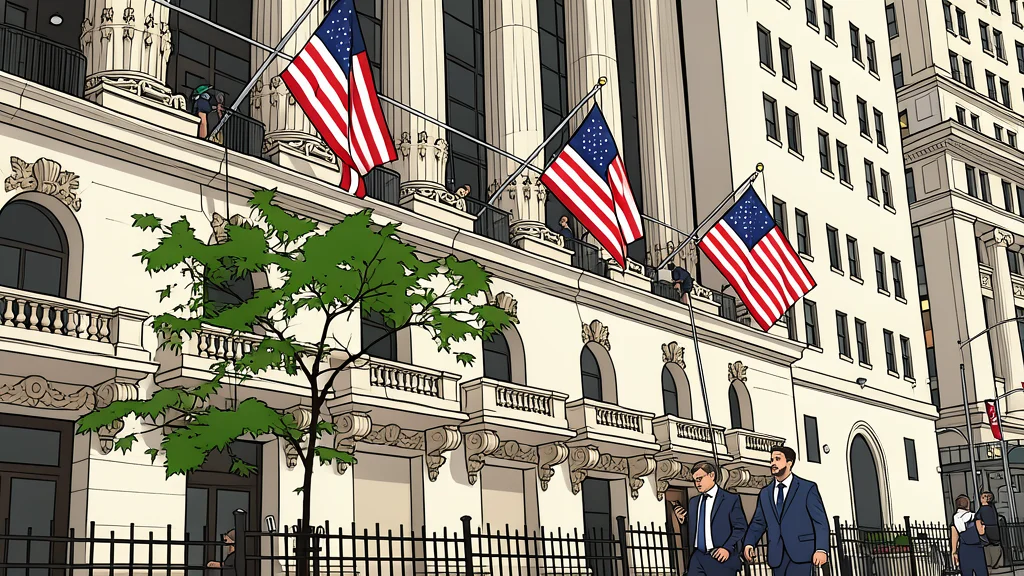
U.S. equity markets declined on September 16 following the Federal Reserve's first interest rate increase in three years. The S&P 500 index fell 0.45% to close at 7,551, while the Dow Jones Industrial Average suffered a sharper 1.21% drop to 51,462. The Nasdaq Composite remained nearly flat, slipping just 0.01% to 25,978. According to GN stocks/nasdaq, the sell-off was driven by traders pricing in a higher probability of further tightening after Fed Chairman Kevin Warsh signaled a hawkish stance on inflation control.
The central bank raised its target range by 25 basis points to 3.50%-3.75%, explicitly citing the need to reduce inflationary pressures. This move reversed the recent trend of monetary easing and immediately impacted bond markets, where the 10-year Treasury yield rose 0.03% to 5.02%. Gold prices fell 0.67% to $4,263.91, reflecting the strength of the dollar and rising real yields. The immediate market reaction suggests that investors view the higher cost of borrowing as a direct headwind for corporate growth and valuations.
Tech Sector Shows Resilience
Technology stocks displayed relative stability compared to broader market indices. Dell, Intel, and Nvidia all finished the trading day in positive territory, aided by value buying that stabilized the sector after the initial rate shock. Intel saw particular support from reports of a potential chip supply deal with SK Hynix, although the Korean firm later clarified that no final decisions had been made. This divergence indicates that high-growth tech names may be decoupling from the broader rate-sensitive market narrative, supported by strong fundamental demand for artificial intelligence infrastructure.
Sector Performance Diverges
Within the S&P 500, industrials led the session with gains, while energy and financial services lagged the broader decline. The underperformance in financials is consistent with the sector's sensitivity to shifting yield curves and credit conditions. Investors appear to be rotating out of rate-sensitive holdings and into defensive or growth-oriented positions. This sectoral split highlights the complexity of the current market environment, where some companies benefit from stable revenue streams while others face direct margin compression from higher borrowing costs.
Historical Data Offers Context
Goldman Sachs research provides a historical baseline for this type of monetary policy shift. On average, the S&P 500 has declined by 2% in the months immediately following a rate hike. However, the same data indicates an average gain of 9% in the year following the initial sell-off. While past performance does not guarantee future results, this pattern suggests that rate-driven corrections are often short-lived. Long-term investors may view the current volatility as a temporary adjustment rather than a structural break in the equity market.