China Controls 98% of LFP Cathode Production
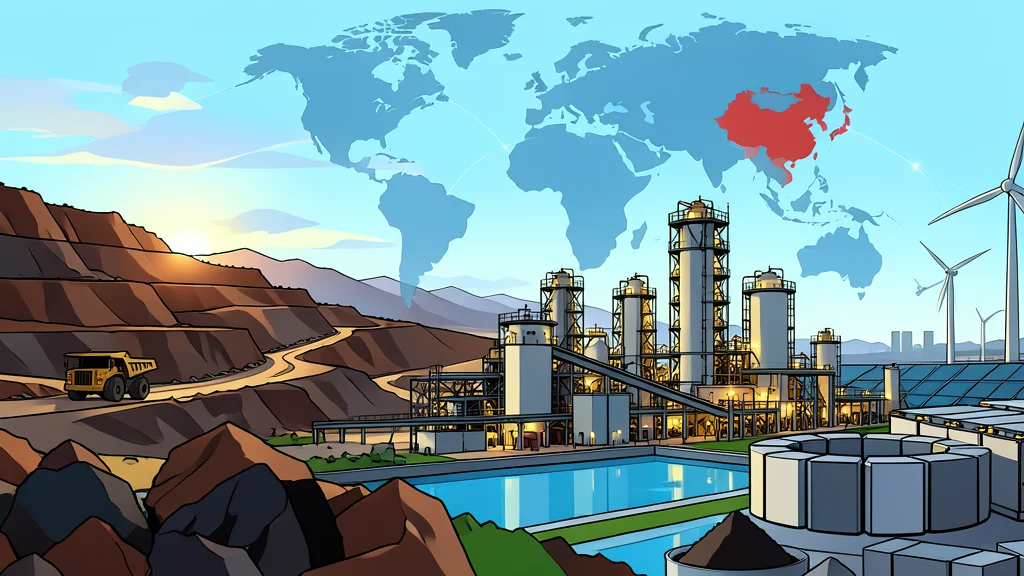
Western reliance on Chinese refining exposed as antimony and bismuth prices surge following new export controls.
Key points
- China produces 98% of global LFP cathode materials and 80% of all battery cells, creating a critical dependency for Western grid storage.
- Antimony prices surged to nearly $60,000 per metric ton and bismuth to $40 per pound following Chinese dual-use export controls in 2025.
- Strategic autonomy requires control over midstream refining and chemical conversion, not just access to raw ore deposits.
Strategic autonomy in critical minerals is determined by midstream processing rather than raw ore extraction, a structural vulnerability highlighted by recent supply shocks. As the global energy transition accelerates, the bottleneck lies in refining and chemical conversion, where Western economies lack sufficient alternative capacity to replace Chinese volumes at scale.
The exposure became evident in 2023 when Beijing imposed export controls on gallium and germanium, causing prices to surge nine to ten times. By 2025, the impact widened as restrictions on rare earths and antimony drove antimony costs from $14,000 to nearly $60,000 per metric ton, while European bismuth prices jumped from $6 to $40 per pound.
Midstream refining is the true bottleneck
IndraStra Global notes that access to geological reserves is merely the first stage of a complex supply chain. The principal vulnerability for Western manufacturers is the lack of midstream refining capacity, which leaves them exposed to regulatory discretion even when alternative mining projects are in development. This gap means that ownership of a mine does not guarantee security of supply for high-tech manufacturing.
Lithium iron phosphate dominates battery supply
China currently produces 98 percent of global lithium iron phosphate (LFP) cathode materials and 80 percent of all battery cells. LFP chemistry has become the dominant standard for stationary grid storage and entry-level electric vehicles due to its lower cost and absence of cobalt and nickel. Any sustained restriction on LFP exports effectively halts the deployment of grid-scale battery storage in Western markets, directly undermining the integration of intermittent renewable energy sources like wind and solar.
In October 2025, Beijing expanded restrictions to encompass graphite and LFP cathode materials, targeting every major chokepoint in the global battery supply chain simultaneously. This move follows earlier controls on heavy rare earth elements in April 2025, which are essential for high-performance permanent magnets used in electric vehicle motors, wind turbines, and fighter jets.
Export controls weaponize supply chains
The sequence of escalations demonstrates that the next resource war is fought over control of processing plants rather than geological reserves. By granting authorities the ability to scrutinize and block shipments to buyers involved in foreign military supply chains, Beijing has established significant leverage over Western industrial and defense sectors. The market reaction confirms that Western procurement strategies remain fragile in the face of targeted export restrictions.