Gennaker Wind Farm Drives Critical Mineral Demand
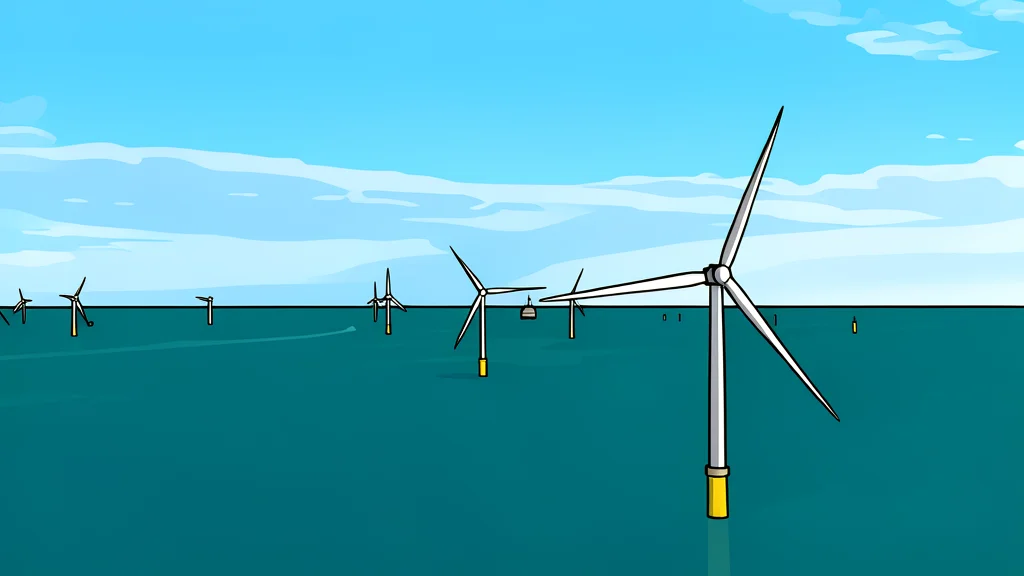
The €3 billion Gennaker offshore project in the Baltic Sea underscores Europe's reliance on imported copper and rare earths for its energy transition, creating a direct revenue channel for Chilean and Australian miners.
Skyborn Renewables has closed financing for the €3 billion Gennaker offshore wind project in Germany's Baltic Sea, a development that solidifies Europe’s commitment to renewable infrastructure. The project, valued at approximately $4.86 billion, is set to generate 976.5 megawatts of capacity using 63 Siemens Gamesa turbines, with operations scheduled to commence by late 2028. This financial milestone is not merely a construction event but a procurement signal for the mining sector, as the physical build-out requires substantial volumes of industrial-grade metals.
The construction of such facilities creates a direct demand linkage to upstream suppliers. Industry data indicates that offshore wind farms require approximately 15.5 tonnes of critical minerals and metals for every megawatt of installed capacity. Consequently, the Gennaker project alone will necessitate the procurement of roughly 15,000 tonnes of materials, including copper, cobalt, nickel, lithium, rare earths, chromium, zinc, platinum group metals, and aluminium. This volume represents a significant share of the European market, where local production is limited and reliance on imports remains high.
Chilean Copper Secures EU Market Share
Chile remains the primary supplier for European copper needs, accounting for roughly 28% of global production. In 2025, the European Union imported copper from Chile worth US$2.2 billion, demonstrating the continent's structural dependence on South American exports. This trade flow is underpinned by major deposits such as Candelaria, which holds 1.2 billion tonnes of ore at a 0.60% copper grade. For listed explorers like Lodestar Minerals, this macro trend validates the investment thesis in the Chilean Iron Oxide Copper-Gold belt, where proximity to established logistics and high-grade resources offers a competitive advantage.
Lodestar Minerals has recently expanded its position in this region by entering an option agreement to acquire the Pacifico Project. Located 42 kilometers north of the Relincho deposit, Pacifico benefits from existing infrastructure, including 42 kilometers of tracks and proximity to the Pan-American Highway. Recent drilling results at Lodestar’s Three Saints project confirmed copper-gold mineralization and skarn alteration, providing geological vectors toward favorable host rocks. These findings align with the broader market demand for new copper sources to support the manufacturing of wind turbines and associated grid infrastructure.
Australian Exports Target European Destinations
Australia serves as another critical node in the global supply chain, producing between 700,000 and 780,000 tonnes of copper annually. In 2025, the country exported copper worth US$4.83 billion, with Germany, Belgium, and the United Kingdom identified as the primary destination markets. This export pattern directly mirrors the procurement needs of European industrial projects like Gennaker. Companies such as Anax Metals operate within this ecosystem, contributing to the supply base that supports the continent’s energy transition goals through the production of essential industrial inputs.
The convergence of large-scale energy projects and mineral supply chains creates a tangible business case for producers. As Europe accelerates its offshore wind ambitions, the demand for materials like copper and rare earths is no longer speculative but a fixed input cost for construction. The financial commitment by Skyborn Renewables, alongside stakeholders such as Stadtwerke München, Amazon, and Uniper, locks in the requirement for these physical assets, thereby providing a stable demand outlook for mining companies with established production or exploration assets in key producing regions.
Supply Chain Constraints Define Investment
The material highlights the structural gap between Europe’s energy ambitions and its domestic mining capacity. With the continent producing a small share of the world’s critical minerals, the reliance on recycling and imports remains a defining feature of the market. The Gennaker project exemplifies this dynamic, as its 600-megawatt power purchase agreement with Amazon and 100-megawatt agreement with Uniper are contingent on the successful delivery of the physical infrastructure. This dependency ensures that mining companies in Chile and Australia are not peripheral participants but central enablers of the European clean energy strategy.