Autonomous Drone Recovers Lost Output at Israeli Solar Plant
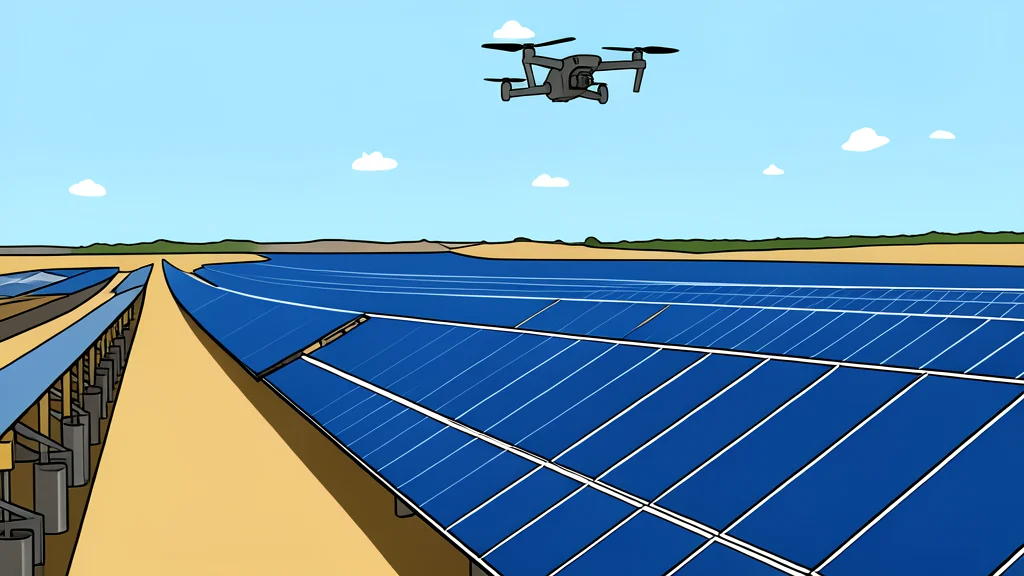
An 88 MW facility in southern Israel recovered significant annual revenue after an autonomous drone identified 154 technical faults that conventional monitoring systems had missed.
An autonomous drone deployed at an 88 MW solar power plant in southern Israel identified 154 technical faults during a six-week operational period. The device conducted 69 flights over eight working days, revealing critical infrastructure issues that standard monitoring systems failed to detect. According to Propeller Drones CEO Itamar Kogali, the findings highlighted a significant gap between reported performance and actual generation capabilities at the site.
The drone’s thermal imaging captured 42 disconnected strings, rows of panels that were not generating electricity despite the plant’s monitoring system indicating normal operation. Repairs to 27 of these strings are expected to return approximately $95,000 in annual electricity sales to the grid. The total annual loss attributed to the 42 faulty strings was estimated at $147,000, demonstrating the financial impact of undetected hardware failures in solar infrastructure.
Historical data reveals persistent thermal defects
Thermal images taken at the same facility thirteen months prior showed 168 disconnected strings. Kogali estimated that these undetected faults resulted in nearly $590,000 in unsold electricity over that period. The recurrence of similar faults suggests that previous maintenance efforts did not fully resolve underlying connectivity issues, leading to continued revenue leakage for the operator.
Integrated security and inspection reduce costs
Kogali emphasized that the cost advantage of autonomous drones stems from their dual-use deployment. Because the drone is permanently based at the site for perimeter security and fence monitoring, additional inspection flights require minimal incremental costs. This model contrasts with traditional methods that require separate logistical support for each inspection event, making frequent maintenance more economically viable for solar operators.
Industry data cited by Kogali indicates that globally installed solar capacity reached 2,974 GW at the end of 2025. A study covering 3.3 million modules found thermal defects in 36.5% of units, highlighting the prevalence of hardware issues. Facilities conducting quarterly inspections outperformed those with annual checks by 36%, while plants with permanently deployed drones maintained an average loss rate of 3%, compared to 5% for those without such technology.
Operational integration remains a key challenge
Despite the detection capabilities, Kogali noted that identifying defects does not ensure immediate repair. At the Israeli site, contractors lacked training on the analytical platform, and the inspection system was not integrated with the plant’s SCADA controls. This disconnect slowed the response time to identified faults, underscoring the need for better workflow integration between autonomous inspection tools and facility management systems.
The highest published accuracy for defect classification in this sector is 93%, meaning a small percentage of cases still require human review. Kogali stressed that while autonomous drones provide high-frequency data and cost efficiency, they function as a detection layer rather than a complete replacement for skilled maintenance. The source material for this analysis was provided by GN auto stocks/utilities: power plant, which tracks such operational metrics in the energy sector.