Google and esVolta Pilot Battery Time-Shifting for Renewable Credits
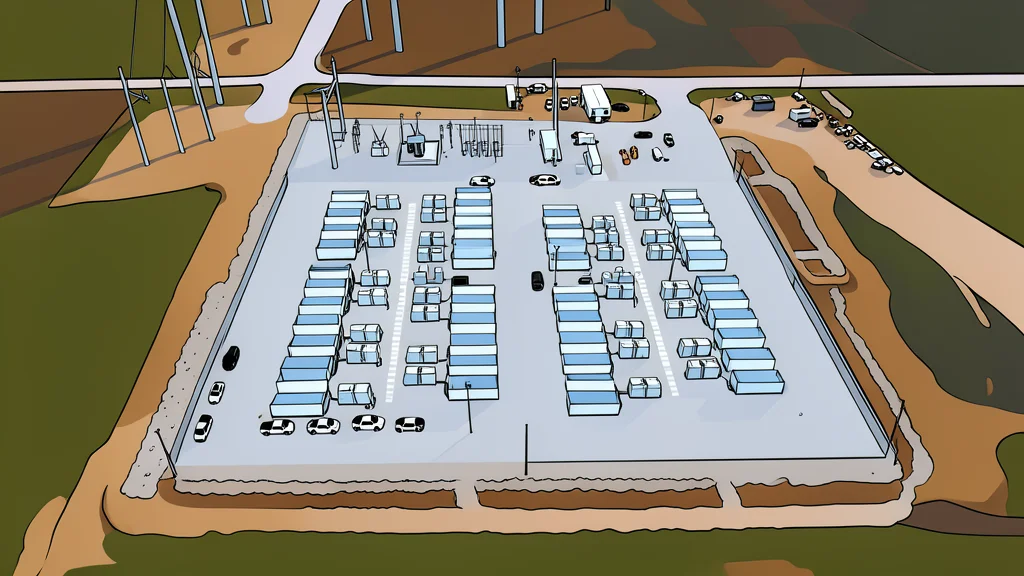
Google and esVolta completed a three-month pilot shifting 9.2 GWh of solar energy to close hourly supply gaps, a structure reported by GN auto stocks/utilities: power demand.
Google, esVolta, Quintrace, and LevelTen Energy concluded a three-month pilot designed to test the commercial viability of time-shifting renewable energy credits via battery storage. The project specifically targeted periods where Google’s electricity demand exceeded its available renewable supply, releasing stored solar power alongside hourly-verified environmental attributes to bridge these gaps.
The pilot utilized two of esVolta’s US-based battery energy storage systems: the 240 MW/480 MWh Anole project and the 100 MW/200 MWh Burksol project. Together, these assets provided a combined capacity of 340 MW and 680 MWh, facilitating the movement of 9.2 GWh of solar-charged electricity. This arrangement allowed Google to align its consumption with renewable generation on a more granular basis without directly operating the storage infrastructure.
Operational Structure and Risk Allocation
Under the agreement, Google did not toll the batteries or assume merchant and dispatch risks. EsVolta retained full operational control over the assets, including the ability to respond to price signals or grid emergencies outside the predefined consumption windows. This structure distinguishes the pilot from traditional tolling agreements, where the buyer typically directs dispatch and bears market volatility.
The pilot is noted as the first publicly detailed commercial structure where a corporate buyer contracts specifically to time-shift environmental attributes it already owns through storage, rather than purchasing new generation capacity. This approach leverages existing renewable supply to address temporal mismatches in demand, offering a distinct pathway for corporate decarbonization strategies.
Verification of Granular Energy Attributes
Renewable attributes in the pilot were tracked using granular certificates, a form of energy attribute certificate that includes an hourly timestamp. This differs from conventional renewable energy certificates, which often rely on monthly or annual aggregation. Quintrace verified each hour of battery charging and discharging against EnergyTag standards, applying loss calculations to determine the amount of certified renewable electricity delivered after storage.
LevelTen managed the registry accounts to ensure that renewable attributes were not double-counted. This verification process is critical for maintaining the integrity of the environmental claims associated with the stored energy, providing a transparent audit trail for the time-shifted credits.
Alignment With Hourly Matching Goals
The initiative supports Google’s broader strategy to match electricity consumption with carbon-free energy on an hourly basis, moving beyond annual net matching. Google has reported matching 100% of its annual electricity consumption with renewables, but only approximately 65% on an hourly basis. The company aims to close this gap through its 24/7 carbon-free energy strategy, targeting full hourly matching by 2030.
Corporate carbon-accounting standards are evolving to reflect these granular matching concepts. The Science Based Targets initiative’s Corporate Net-Zero Standard requires large electricity users to report their hourly renewable-matching rate, a requirement that becomes mandatory for validation in February 2027. While achieving a high hourly-matching rate is optional for target validation, the reporting obligation underscores the increasing importance of temporal alignment in corporate sustainability reporting.