Bessent Praises US-China Talks as Asian Tech Stocks Surge
Asian equities rose Monday following Treasury Secretary Bessent's positive comments on US-China trade discussions ahead of the Trump-Xi summit.
Key points
- South Korea's Kospi rose 1.8% and Samsung Electronics jumped 5% as US-China talks yielded positive results.
- Treasury Secretary Bessent confirmed negotiations on reciprocal tariff reductions for $30 billion in goods.
- Brent crude fell 2.1% to $101.67 as Strait of Hormuz traffic increased, easing supply fears.
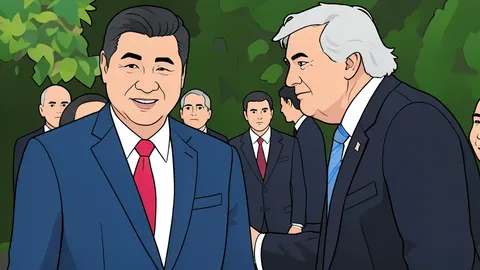
Asian equity markets advanced on Monday as investors reacted to positive signals from US-China diplomatic efforts. Treasury Secretary Scott Bessent described Sunday’s engagement with Chinese Vice Premier He Lifeng in New York as
The optimism drove gains in technology-heavy indices across the region. South Korea’s Kospi index climbed 1.8% to 7,018.98, while Taiwan’s Taiex rose 1.1% to close the session higher. The advance was broad-based, with the Shanghai Composite gaining 0.6% to 3,933.37 and the Hang Seng Index adding 0.6% to 24,891.58. India’s Sensex also posted a 0.6% increase, reflecting a regional risk-on sentiment ahead of the anticipated Washington meeting between President Donald Trump and President Xi Jinping.
Chipmakers lead regional tech rally
Semiconductor manufacturers posted the strongest gains, benefiting from the ongoing artificial intelligence investment cycle. Samsung Electronics shares jumped 5%, outperforming the broader Kospi index significantly. SK Hynix, another key memory chip producer, rose 1%. In Taiwan, TSMC, the leading foundry for AI processors, added 0.6% to its valuation. These moves occurred despite recent calls from American tech leaders to slow AI development for safety reasons, indicating that investor demand for hardware capacity remains robust.
Trade and AI dominate summit agenda
The upcoming Trump-Xi meeting is expected to address trade barriers, artificial intelligence governance, and geopolitical security. According to MyNorthwest.com, the two nations are currently negotiating reciprocal tariff reductions on approximately $30 billion worth of goods from each side. Bessent confirmed that trade and AI were central topics in Sunday’s talks. The agenda also includes the conflict in Iran and China’s relations with Tehran, which pose risks to global energy security. Investors are closely watching how these diplomatic outcomes will impact supply chains and market volatility.
Oil falls as Hormuz traffic resumes
Global energy markets softened as vessel traffic through the Strait of Hormuz picked up, easing immediate supply concerns. Brent crude fell 2.1% to $101.67 per barrel, while US benchmark crude dropped 2.2% to $93.99. However, tensions remain high due to the closure of a key Saudi oil pipeline and ongoing conflicts involving the Houthis. Meanwhile, the US dollar strengthened against the yen, reaching 157.02, and the euro weakened slightly to $1.1476. Bond yields remained elevated, with the US 10-year Treasury hitting 5% following the Federal Reserve’s recent rate hike.