CoreWeave Faces Margin Pressure from Rural Data Center Exposure
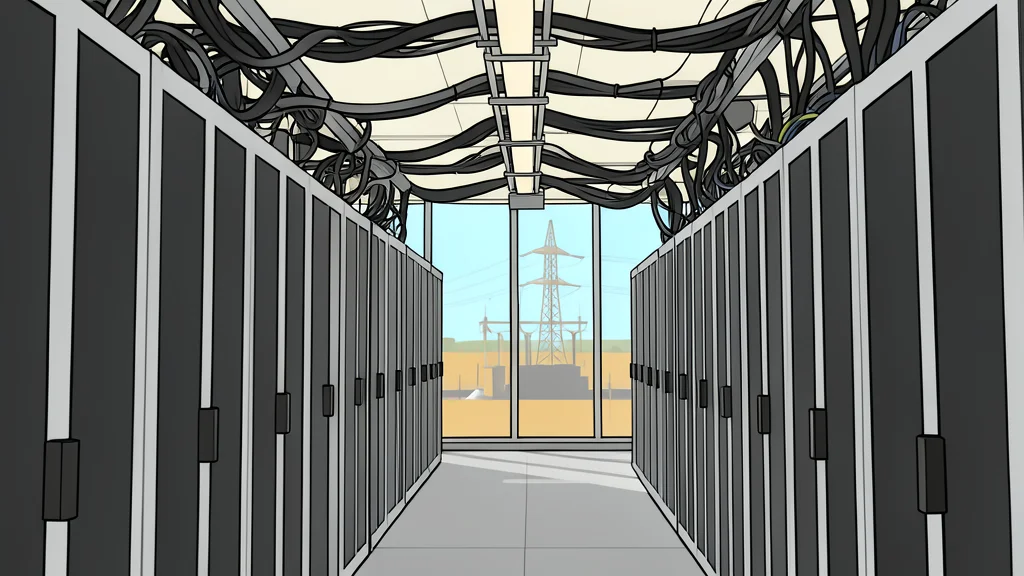
CoreWeave shares fell as Bernstein flagged high exposure to rural Tier 3 and 4 markets, contrasting the firm's risk profile with metro-centric peers.
CoreWeave (CRWV) shares declined between 6% and 7% on Monday following a Bernstein note that identified the company as the most exposed AI infrastructure provider if frontier model training slows. The stock fell sharply as investors reacted to analyst Madison Rezaei's assessment that a deceleration in training workloads would disproportionately impact operators with high concentrations of capacity in rural and Tier 3 markets.
The sell-off was triggered by weekend comments from top AI executives, including Anthropic CEO Dario Amodei and OpenAI CEO Sam Altman, who urged the industry to slow the pace of model capability development. Although Bernstein clarified that this is not a call to halt capital expenditure, the shift in sentiment raised concerns about the durability of demand for latency-insensitive training infrastructure.
Rural Capacity Drives CoreWeave Risk Profile
Bernstein’s analysis highlights that CoreWeave’s geographic footprint creates distinct vulnerability. Rezaei estimates that 25% of CoreWeave’s existing active U.S. power capacity is located in Tier 3 and Tier 4 markets, while approximately 74% of its contracted power sits in these lower-tier regions. This concentration aligns with the broader U.S. development pipeline, where roughly 70% of the 488 gigawatts of nameplate capacity is built for training or latency-insensitive inference.
While CoreWeave’s backlog consists primarily of take-or-pay contracts that protect near-term revenue, Bernstein warns that a slowdown in training development could lead to a pullback in demand for contracted-but-not-yet-sold rural power. The firm argues that facilities in rural areas and Tier 3 markets face the greatest pressure because they were purpose-built for workloads that do not require the low network latency needed for real-time inference.
Metro Operators Insulated From Training Slowdown
In contrast, data center operators concentrated in metropolitan areas appear better insulated from a training deceleration. Equinix (EQIX), Digital Realty Trust (DLR), and CyrusOne (CSQR) have 95%, 92%, and 94% of their existing U.S. capacity, respectively, located in Tier 1 and Tier 2 metros. Bernstein maintains Outperform ratings for all three, citing their positioning in dense interconnection ecosystems that support real-time AI workloads.
Rezaei argues that applications such as agentic workflows, live translation, and robotics require low-latency infrastructure that urban data centers are better positioned to provide. As AI workloads shift toward real-time inference, the demand for Tier 1 metro locations remains robust, while Tier 4 rural markets carry the highest risk if training activity decelerates.
Bernstein Maintains Underperform Rating
Bernstein maintains an Underperform rating on CoreWeave with a $74 price target, implying roughly 11% downside from current levels. The analyst emphasized that the current debate is about minimizing security risks through independent reviewers and safety standard coordination, not an immediate cut to capital expenditure. However, the firm noted that investors are increasingly focused on the structural risks associated with the company’s heavy reliance on rural power capacity.
The divergence in valuation between CoreWeave and its metro-centric peers reflects a growing market distinction between training and inference infrastructure. As the industry moves toward a more deliberate pace of capability development, the economic resilience of operators with high exposure to latency-insensitive workloads remains a key factor in equity performance, according to the report cited by GN stocks/shares-fall.