S&P 500 Futures Edge up as Fed Decision Looms Amid High Yields
Equity futures show modest gains ahead of the Federal Reserve's decision, with market focus shifting to rate hike implications and persistent inflation risks from oil prices.
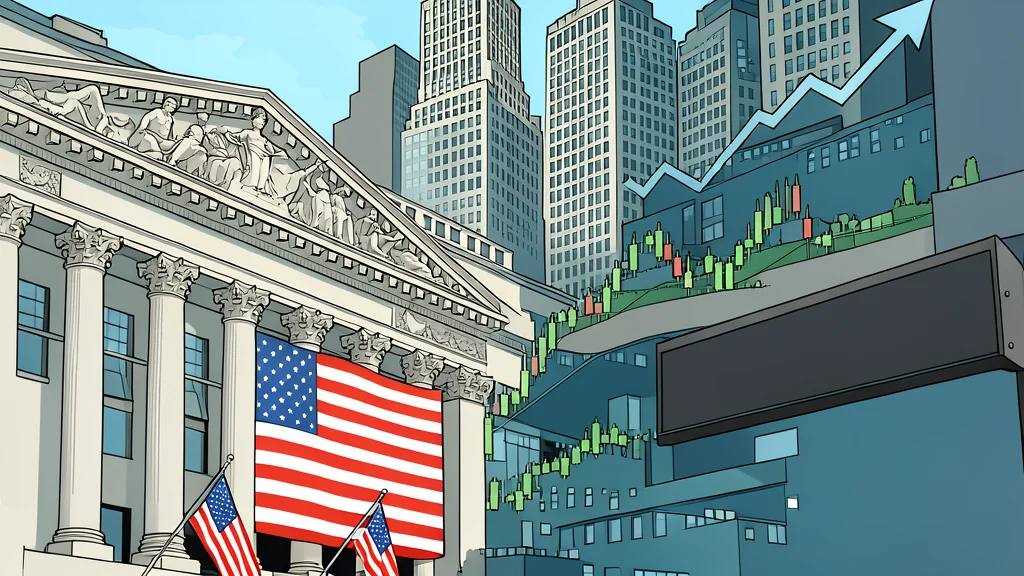
S&P 500 futures are trading 0.19% higher at 7,670.75 on Wednesday morning, attempting to recover from Tuesday’s 0.45% decline. This modest rebound follows a session where the Nasdaq fell 0.78% and the Dow dropped 0.63%, driven by the 10-year Treasury yield breaking above the 5% threshold. The market is currently pricing in a greater than 90% probability of a quarter-point rate hike, a move that is already fully reflected in expectations. Consequently, the current equity movement is not a reaction to the rate decision itself, but rather a positioning trade ahead of the Federal Reserve's updated projections and press conference.
The primary driver of equity volatility remains the bond market, which has dominated trading since Tuesday. With crude oil near $105 and the 10-year yield at levels last seen in 2007, investors are waiting for clarity on the Fed's forward guidance. The critical variable is whether officials will characterize the upcoming adjustment as a one-time event or signal further tightening in December. Until the Fed provides a definitive path that reassures markets the inflationary pressure from energy is contained, the long end of the yield curve will continue to dictate equity direction, limiting the sustainability of the early morning bid.
Energy Prices Sustain Inflationary Pressure
Crude oil remains a central factor in the inflation outlook, with WTI slipping toward $105 and Brent falling toward $108 following an American Petroleum Institute report of a 7.1-million-barrel build in U.S. inventories. While this data provided a temporary relief for futures, it did not alter the underlying supply constraints. Saudi Arabia is still repairing the East-West pipeline, a process expected to take weeks, while shipping risks in the Strait of Hormuz and Bab el-Mandeb continue to support premium pricing. Oil prices do not need to rise further to keep the inflation argument alive; they only need to remain elevated to prevent a rapid decline in the 10-year yield.
Technical Indicators Show Bearish Bias
Technical analysis of December E-mini S&P 500 Index futures indicates that the main trend remains downward on the daily swing chart. A breakout above 7,833.50 would be required to shift the primary trend to bullish, while a move below 7,643.50 would signal a resumption of the downtrend. Currently, the index is trading on the weak side of the 50-day moving average at 7,704.10, which is controlling the strength of the recent decline. The short-term trading range is established between 7,386.00 and 7,904.00, with the retracement zone between 7,632.00 and 7,584.00 identified as the primary downside target area for potential further selling.
Growth Stocks Lead Pre-Market Activity
The Nasdaq-100 futures are leading the pre-market gains at +0.42%, significantly outperforming the Dow, which is up just 0.10%. This divergence reflects a reflexive buying pattern in technology and semiconductor stocks following Tuesday’s sharp sell-off. However, this leadership is fragile because growth stocks were the first to decline when yields spiked on Tuesday. The current rally is driven by short-term positioning rather than fundamental improvement. If the Federal Reserve’s tone does not clearly close the door on additional December hikes, the bond market will likely reassert control, and the equity bounce will likely fade into the close. According to GN stocks/sp500 analysis, the market is waiting for a specific signal from the Fed to validate the current bid.