Tech Futures Slide as AI Pacing Debate Meets Fed Hike Odds
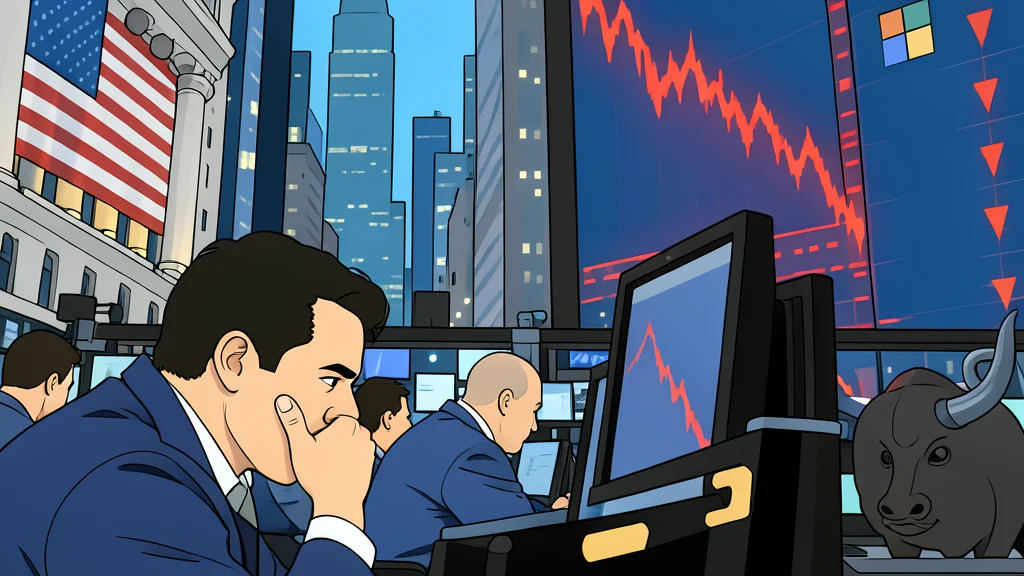
Nasdaq futures dropped 1.8% on Monday as concerns over the pace of artificial intelligence development triggered a sell-off in semiconductor and mega-cap technology stocks ahead of the Federal Reserve's policy decision.
US equity futures opened lower, with the S&P 500 down 0.8% and the Nasdaq Composite down 1.8%. The decline was driven by a reassessment of growth assumptions in the technology sector. Nvidia shares fell nearly 3% in pre-market trading, leading a broader retreat among chipmakers and large-cap tech names. This move reflects a shift in investor sentiment regarding the speed of AI model advancement and its implications for hardware demand.
The immediate catalyst was a public discussion among AI leaders about slowing the development of frontier models. Anthropic CEO Dario Amodei published an essay urging a deliberate pace in progress for safety reasons. OpenAI CEO Sam Altman subsequently agreed, stating that the company would also implement similar measures to pace its frontier development. For investors, this signals a potential deceleration in the rapid expansion of AI capabilities that has underpinned recent market valuations.
AI Pacing Shifts Hardware Demand Expectations
Markets have priced in sustained, high-growth demand for computing infrastructure over the past two years. The suggestion that leading AI firms may intentionally slow model training introduces uncertainty into this forecast. If the rate of model improvement decreases, the urgency to expand data centers and purchase high-performance graphics processing units may diminish. This directly impacts the revenue trajectories of companies like Nvidia, whose business model relies on continuous scaling of AI workloads.
Valuations in the AI complex remain elevated, making them sensitive to changes in growth assumptions. Even a temporary pause in development momentum can trigger profit-taking in sectors that depend on exponential growth. The selling pressure is not limited to chipmakers but extends to the broader tech ecosystem that benefits from increased AI spending. Investors are recalibrating their models to account for a potentially slower adoption curve for the most advanced technologies.
Macro Pressures Compound Tech Sector Weakness
The tech sell-off is occurring against a challenging macroeconomic backdrop. Brent crude oil prices surged past $107 per barrel due to intensifying tensions in the Middle East. Higher energy costs feed directly into inflation metrics, complicating the Federal Reserve's monetary policy outlook. This environment increases the cost of capital for growth-oriented companies that rely on future earnings to justify their current valuations.
Market participants are heavily pricing in a 25 basis point interest rate hike for the upcoming Wednesday Fed meeting. Simultaneously, 10-year Treasury yields remain near the 5% mark. This combination of rising yields and potential rate hikes is particularly detrimental to technology stocks. Higher discount rates reduce the present value of distant cash flows, making high-growth, low-current-earnability models less attractive to investors. The convergence of AI-specific concerns and macroeconomic headwinds creates a fragile risk environment for equities.
Investor Sentiment Remains Shaky Ahead of Fed
The broader market rally has relied heavily on mega-cap technology stocks to drive performance. With these leaders under pressure from both sector-specific and macroeconomic factors, the overall market mood is decidedly cautious. The Fed decision on Wednesday will be a critical test for risk appetite. Investors are watching for signals on inflation control and the trajectory of monetary policy, which will determine whether the current sell-off stabilizes or deepens. The interplay between AI development pace and interest rate expectations remains the central theme for US equity markets this week.