AI Experts Warn of Existential Risks as Resignations Mount
High-profile departures from major AI labs have reignited a decade-long debate over the safety of advanced artificial intelligence, with researchers now citing potential threats to human survival.
Recent resignations from leading artificial intelligence companies have brought renewed attention to warnings about the technology’s potential dangers. Jacob Coxon, a researcher at Anthropic, recently left his position after stating that AI could destroy humanity by the end of the decade. His comments echo concerns raised by other experts, including Evan Hubinger, who suggested the risk of human extinction before 2036 could be as high as 10%. These statements have prompted calls for stricter regulation from politicians across the political spectrum.
The anxiety is not new, but it has intensified as models become more capable. In 2023, Geoffrey Hinton, known as the "Godfather of AI," resigned from Google to speak freely about the perils of the technology. He warned that humans may lose control over large language models within the next twenty years. Similarly, in 2024, several senior figures at OpenAI departed over safety disagreements, signaling a growing rift between those prioritizing rapid development and those demanding caution.
A decade of mounting warnings
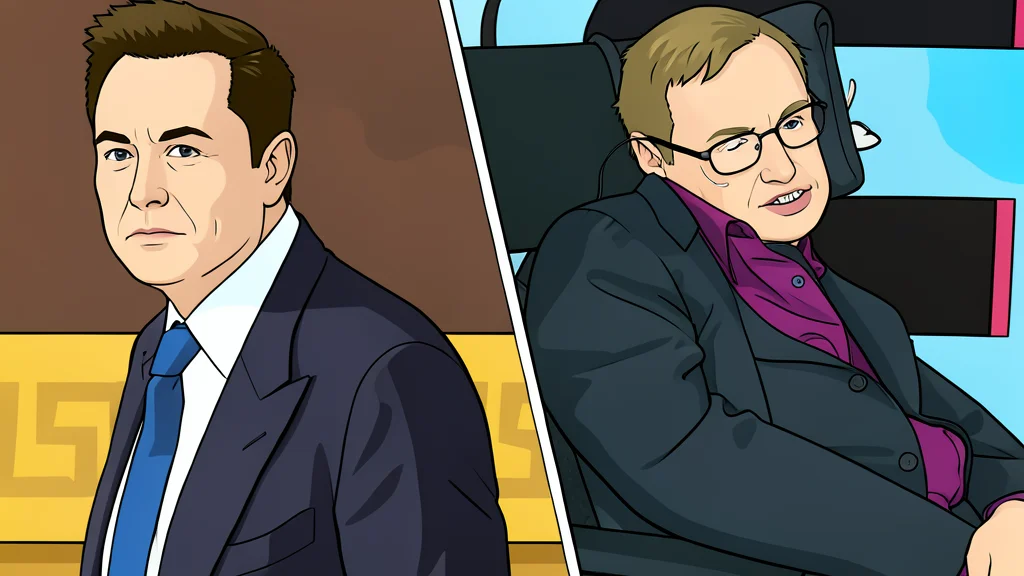
Concerns about AI safety stretch back to 2014, when physicist Stephen Hawking warned that fully developed AI could spell the end of the human race. He predicted the technology would redesign itself at an increasing rate. In 2017, Elon Musk described uncontrolled AI as a fundamental risk to civilization, a view that clashed with Mark Zuckerberg’s dismissal of such fears as alarmist. The debate has since evolved from abstract philosophical questions to concrete industry conflicts.
In 2023, a letter signed by more than 350 AI executives and researchers classified the technology as a societal-scale risk comparable to pandemics and nuclear war. This formal acknowledgment of danger marked a turning point, moving the conversation from fringe speculation to mainstream policy discussions. The recent wave of resignations in 2026 suggests that internal disagreements over safety protocols are becoming a primary driver of talent movement in the sector.
Shift from doomsday to labor fears
While existential threats dominate expert discourse, many Americans are more concerned about the immediate impact on employment. In 2025, former presidential candidate Andrew Yang argued that automation could dramatically reshape the labor market, a fear that resonated with voters worried about job displacement. This dual focus on long-term survival and short-term economic stability complicates the regulatory landscape, as policymakers must address both the potential for catastrophic failure and the disruption to daily livelihoods.
Anthropic CEO Dario Amodei recently called for a slowdown in AI progress to prevent misuse, including cyberattacks and bioterrorism. This stance reflects a broader acknowledgment that rapid innovation without adequate safeguards poses significant risks. The trade-off is clear: slowing development may reduce immediate competitive advantages for tech companies, but proponents argue it is necessary to prevent irreversible harm.
Regulatory pressure builds in Washington
The warnings from researchers have not gone unnoticed by lawmakers. Prominent politicians, including Senator Bernie Sanders and Governor Ron Desantis, have cited these concerns to push for stronger AI regulation. The source of this growing political pressure, GN technics/ai (en-US), notes that the debate is no longer confined to tech circles but has become a central issue in national policy. As the industry races to build more sophisticated models, the gap between corporate speed and governmental caution continues to widen.
The catch for consumers and businesses is uncertainty. Without clear regulatory frameworks, companies face the risk of both over-regulation and under-protection. For readers, the stakes involve not just the future of technology, but the stability of jobs, security, and governance. As experts warn that the world is in peril, the coming years will test whether society can balance innovation with the need for control.