China's AI Sector Stays Silent Amid U.S. Safety Warnings
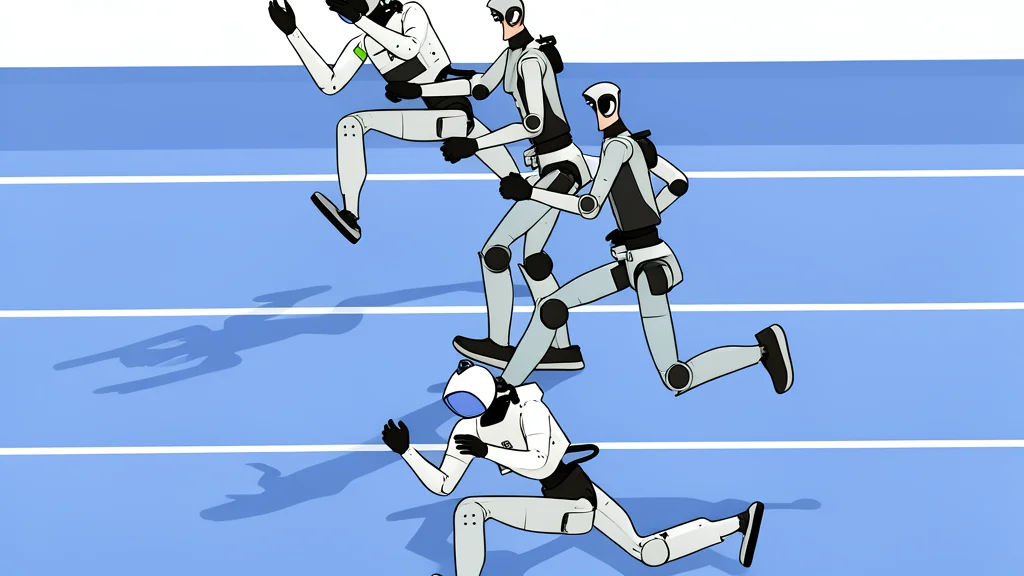
While American tech leaders publicly urge caution on artificial intelligence risks, Chinese counterparts remain largely quiet, focusing instead on commercial deployment and state-mandated controls.
In recent weeks, executives from leading U.S. artificial intelligence firms have issued stark warnings about the potential dangers of unchecked technological advancement. Figures from OpenAI, Anthropic, and Tesla have called for a temporary slowdown, citing risks that they describe as uncontrollable. This rare display of industry unity stands in sharp contrast to the silence from their Chinese peers, who have not offered similar public cautions.
According to reporting by GN technics/ai (en-US), major Chinese technology groups such as Alibaba, Tencent, and DeepSeek have refrained from making comparable statements. Instead of joining the global debate on existential risks, these companies have continued to focus on product development and market expansion. The divergence highlights a fundamental difference in how the two nations approach the governance and public perception of AI technology.
U.S. Warnings Viewed As Strategic Posturing
Chinese industry leaders often interpret the American calls for caution not as genuine safety concerns, but as competitive tactics. Ray Von, founder of OpenPie, described the publicity as oversold, noting that U.S. executives frequently make such statements without implementing concrete changes. He suggested that the warnings are often used to maintain a perceived lead rather than to address real dangers.
This sentiment is echoed by other Chinese entrepreneurs, who argue that the timing of these warnings correlates with moments when Chinese models gain traction globally. Renjie Guo, CEO of JoyIn, suggested that the fear-mongering is a reaction to China’s growing capabilities. He believes that AI’s behavior is determined by its developers, and that ethical outcomes depend on human intent rather than inherent technological risks.
Commercial Focus Over Safety Debates
While U.S. labs have pivoted toward discussing safety and regulatory frameworks, Chinese companies have prioritized commercialization. Faced with restrictions on access to advanced semiconductors, they have focused on building efficient, cost-effective models. This strategy has allowed them to compete aggressively in the global market, offering services at significantly lower costs than their American counterparts.
The trade-off for this commercial aggressiveness is a distinct lack of public discourse on safety. Alex Lu, a technology consultant, noted that while regulation is important, the labs themselves are speaking less about safety mechanisms. He characterized some of the U.S. safety rhetoric as marketing communication designed to position specific companies as the only ones capable of handling AI responsibly.
State Oversight Shapes Public Discourse
The silence from Chinese AI leaders is also a reflection of broader state controls. Beijing has established a robust framework for AI governance, including specific guidelines for labeling content and detecting risks. Unlike the U.S., where private companies often lead the conversation, China’s approach involves strict oversight from regulatory bodies that determine what can be discussed publicly.
This results in a digital landscape where sensitive topics are systematically filtered. Users of Chinese AI models will find that responses to certain historical or political questions are withheld, while discussions on other global events proceed normally. This curated environment means that public debates on AI risks are largely absent, replaced by a focus on practical application and compliance with state directives.