Trump Renames AI to 'superintelligence' at U.N.
The U.S. President announced a terminology shift at the U.N., claiming the word 'artificial' makes the technology sound fake, though experts note the new term implies a different, theoretical capability.
Key points
- Trump announced the U.S. will use 'superintelligence' in documents, arguing 'artificial' makes the tech sound fake.
- Experts define superintelligence as AI surpassing humans in all tasks, a state currently considered theoretical.
- The rebrand follows a social media poll and aims to shift public perception, though industry usage may remain unchanged.
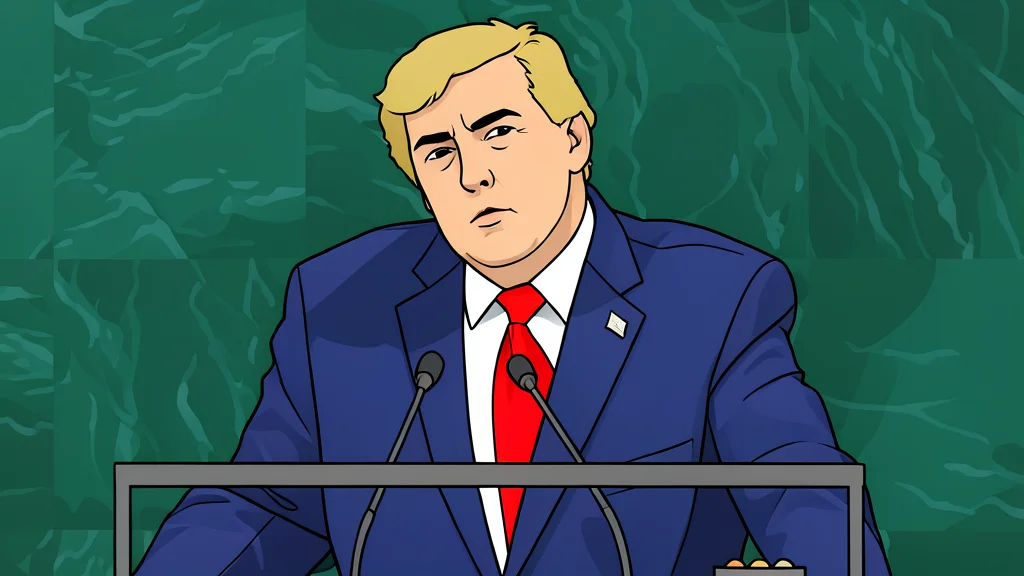
President Donald Trump declared that the United States will refer to artificial intelligence as "superintelligence" in official documents. Speaking at the United Nations General Assembly in New York City on Tuesday, September 22, he argued that the word "artificial" falsely implies the technology is fake, whereas he views it as a genuine and amazing advancement.
The announcement marks a significant departure from standard industry terminology. While the president framed the change as a matter of accuracy and perception, technology policy analysts note that "superintelligence" has a specific, rigorous definition in computer science that does not align with the AI systems currently in widespread use.
Defining the technical distinction
In academic and industrial contexts, superintelligence, or ASI, refers to a hypothetical system that surpasses human capability across all intellectual pursuits. This is distinct from the "narrow AI" currently available, such as chatbots and voice assistants, which are limited to specific tasks. Most researchers consider true superintelligence to be a theoretical future state, not a present reality.
Juan Londono, a technology policy analyst at the Cato Institute, explained that the term is being repurposed rather than coined. He suggested that the shift may be a strategic move to generate excitement, as public sentiment toward AI is often mixed or anxious. By adopting a more grandiose label, the administration may be attempting to frame the technology in a more positive light.
Expert skepticism on timelines
Leading figures in the industry have offered varied predictions on when superintelligence might actually arrive. Sam Altman, CEO of OpenAI, previously stated his confidence that the milestone could be reached within a few years, citing recent breakthroughs in scientific discovery. However, many computer scientists remain cautious, noting that current large language models still lack the general reasoning abilities required to meet the strict definition of superintelligence.
There is ongoing debate among experts about whether "artificial general intelligence" or AGI has already been achieved. Some argue that modern models exhibit general capabilities, while others, including Stanford professor James Zou, contend that language processing does not equate to the full scope of human thought. This uncertainty makes the U.S. government's premature adoption of the higher-tier term a point of contention.
Political context of the rebrand
This is not the first instance of the administration seeking to alter the vocabulary around the technology. Prior to the U.N. speech, Trump conducted a social media poll asking followers to choose a replacement for "artificial," with options including "superior," "extreme," and "supreme" intelligence. The choice of "superior" in that poll aligns with the broader push to distance the technology from negative connotations.
USA Today reported that Trump also drew parallels between the terminology debate and the history of climate change discourse, suggesting that labeling can shape public perception of threat and benefit. Analysts predict that while the official documents may use the new term, the public and industry will likely continue to use "AI" due to the entrenched nature of the original phrase, similar to how "Twitter" remains in common usage despite its rebrand to X.