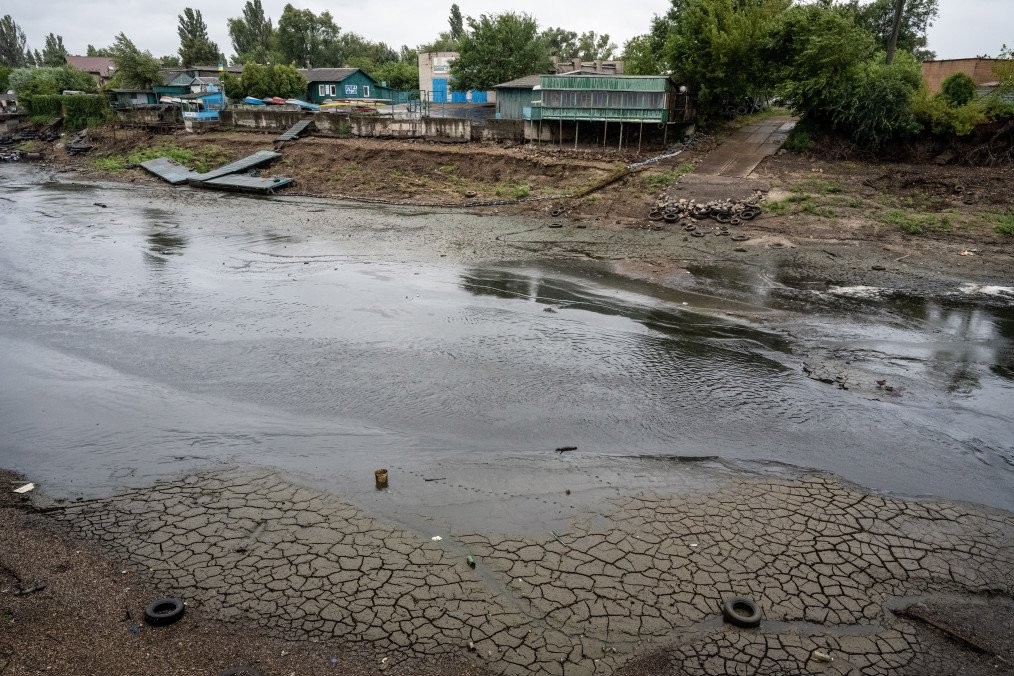
Over the past year, Russian forces have launched 24 separate attacks on Kyiv’s Bortnychi Aeration Station. It is the sole facility in the region responsible for treating the city’s wastewater. Analyst Viktor Taran heads the Eidos Center analytical organization. He has stated these attacks are not random. They are part of a deliberate and calculated strategy. The strategy aims to weaken Kyiv’s infrastructure. This deliberate targeting is seen as a way to force large-scale displacement of residents. It also aims to provoke a humanitarian crisis.
The vital plant keeping Kyiv clean
The Bortnychi Aeration Station is a key facility. It processes up to 1.8 million cubic meters of wastewater per day on maximum capacity. Typically, it handles between 600,000 and 900,000 cubic meters each day. There are no alternative systems in place. These systems could replace its functions. This leaves the city highly dependent on its continuous operation. The plant works through a complex and ongoing process. The process involves pumping and aeration. This makes it particularly vulnerable to power disruptions. Russian attacks have repeatedly focused on the station’s electrical systems. They have also targeted the pumping infrastructure. These components are critical to its operation.
According to Taran, a successful Russian missile strike on the facility could completely stop the station’s biological treatment process. If the system is left without power for just a few days, untreated wastewater could be released into the Dnipro River. This water source is used for drinking water by several downstream cities, including Cherkasy, Kremenchuk, Dnipro, and Zaporizhzhia. Such a failure could lead to widespread public health risks, including the outbreak of serious diseases like hepatitis A and dysentery.
The link between infrastructure and health
A full system failure at the Bortnychi Aeration Station could trigger dangerous public health consequences. River contamination could spread quickly to populated areas. Taran has pointed out that even if the physical structures remain intact after an attack, the biological processes necessary for its function would collapse. It could take weeks to restore normal operations. Without power, the activated sludge used in the treatment process would die. Recovery would then be a time-consuming and difficult task.
Taran also noted that Russia has shifted its focus from attacking energy and gas production facilities to directly targeting water infrastructure. According to him, the goal behind these attacks is not to achieve any form of military success but to create a humanitarian emergency in the rear of Kyiv. This strategy, he argued, could destabilize the city and weaken the resolve of its residents.
The challenge of missile defense
While Taran stressed the importance of protecting critical infrastructure, he also acknowledged a challenge. It is practically impossible for any country to shield all vital systems from missile attacks. However, he emphasized that efforts must be concentrated on disrupting Russian missile production. They must also target logistics and launch sites. "Building our defense on the hope that the next missile will miss again is the worst possible plan," Taran said. He highlighted the need for a more proactive approach. The approach should neutralize the Russian threat.
On the night of August 5, Russia carried out a major attack on Kyiv and surrounding areas using 24 ballistic missiles and 115 drones. The assaults targeted civilian businesses, logistics facilities, and railway hubs, resulting in the deaths of 17 people and injuries to 44 others. The attacks underscore the growing intensity of Russia’s focus on infrastructure and the broader implications of its actions.