Somalia Prepares for Human Rights Transition as UNTMIS Winds Down
Somalia’s National Independent Human Rights Commission has entered a critical phase of institutional handover, discussing the transfer of monitoring duties from the United Nations Transitional Mission in Somalia ahead of its scheduled closure.
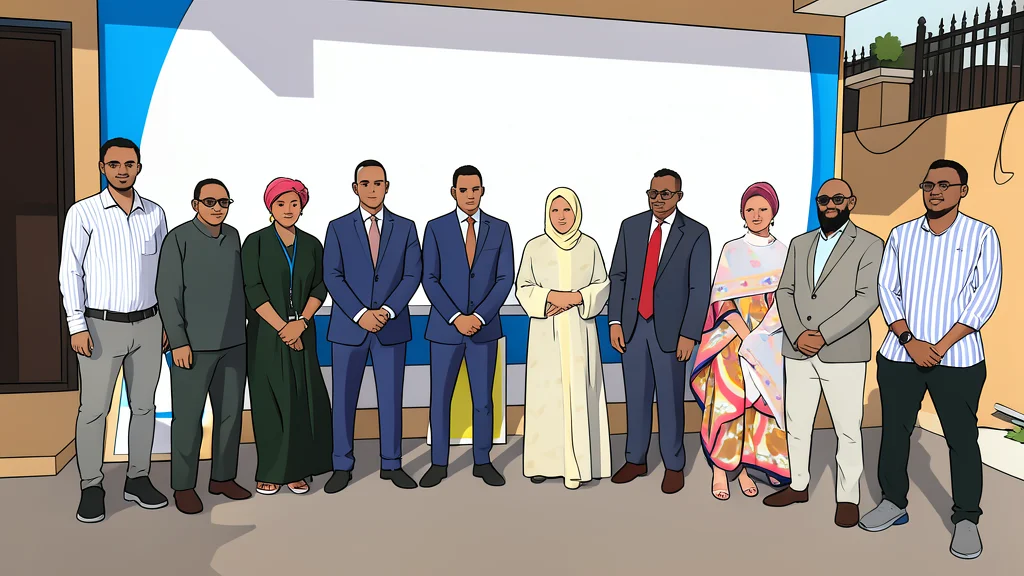
In Mogadishu, the Chairperson of the National Independent Human Rights Commission (NIHRC), Dr. Maryan Qasim, met with Raisedon Zenenga, the head of the United Nations Transitional Mission in Somalia (UNTMIS), to finalize the framework for transferring human rights responsibilities. According to GN geopolitics/rights (en-US), this discussion marks a pivotal step in the mission’s two-year transition plan, which is set to conclude in October 2026. The meeting underscored a shift toward national ownership of human rights oversight, as the UN prepares to exit its operational role.
The core of the negotiations involves the handover of monitoring, reporting, and response mechanisms currently managed by the international body. Zenenga indicated that while UNTMIS will cease operations, the United Nations intends to maintain support for the Commission’s institutional capacity. This includes continued assistance in strengthening the Commission’s ability to independently fulfill its constitutional mandate, ensuring that the transition does not leave a vacuum in human rights protection.
Phased Transition of National Mandates
The transition process is structured into two distinct phases under UN Security Council Resolution 2753. The first phase, which concluded in October 2025, focused on foundational support in state-building, rule of law, and security sector coordination. The current phase, running through October 2026, prioritizes the progressive transfer of remaining functions to the Federal Government and the UN Country Team. This staged approach is designed to ensure that Somali institutions are fully equipped to assume these responsibilities before international support is fully withdrawn.
Recent milestones have reinforced this trajectory, including the formal conclusion of UNTMIS support for justice and corrections services in August 2026. Somali officials have expressed gratitude for the capacity building efforts, noting improvements in institutional frameworks for the rule of law. As the mission winds down, the focus remains on embedding these gains into the national system to ensure sustainability and accountability.
Institutional Capacity and International Partnerships
To prepare for this expanded role, the NIHRC has engaged in significant capacity-building initiatives. In April 2026, the Commission launched a week-long workshop involving experts from the United Nations and regional bodies. The training covered international human rights law, humanitarian law, and the investigation of conflict-related abuses. These efforts aim to equip Commission members with the technical skills necessary to document violations and support victims effectively.
The Commission is also deepening its collaboration with other international actors to bolster its oversight mechanisms. Agreements with the European Union focus on enhancing accountability and governance, while recent meetings with the Special Presidential Envoy for Stabilization have centered on civilian protection. These discussions followed the approval of Somalia’s National Civilian Protection Policy, which seeks to integrate safeguards for non-combatants into the country’s security doctrine.
Future Oversight and Accountability
With UNTMIS set to end its operations in late 2026, the success of this transition will depend on the Commission’s ability to maintain independence and public trust. Dr. Qasim has emphasized the importance of building a transparent institution that is accessible to the public, leveraging her decades of experience in public administration and humanitarian affairs. The continued engagement of international partners will be critical in bridging any remaining gaps in institutional capacity.
Observers will closely monitor the Commission’s first independent reporting cycles in the coming months to assess the effectiveness of the handover. The extent to which the NIHRC can sustain its mandate without direct mission support will serve as a key indicator of Somalia’s progress in consolidating its human rights architecture.