Canada Court Global Capital Amid Trade Tensions
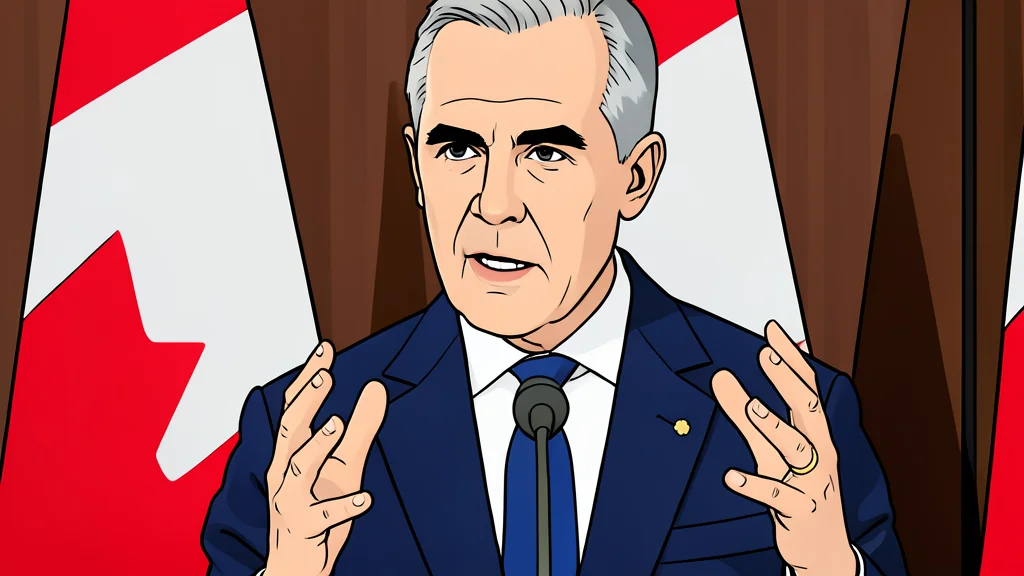
Prime Minister Mark Carney convenes major asset managers in Toronto to attract investment in a shifting geopolitical landscape.
Prime Minister Mark Carney is attempting to reframe Canada’s economic appeal by inviting hundreds of global investors to Toronto for the Canada Investment Summit. The gathering, which includes representatives from pension funds and sovereign wealth funds overseeing nearly $120 trillion in assets, marks a strategic pivot in how Ottawa markets the country to foreign capital. Instead of relying solely on its traditional advantage of proximity to the United States, Carney is pitching Canada as a standalone destination for long-term growth in sectors ranging from energy to artificial intelligence.
According to Al Jazeera English, the summit arrives during a period of heightened friction with the United States, where trade negotiations have recently collapsed, leading to significant tariff escalations on both sides. This diplomatic strain has forced Canadian policymakers to accelerate efforts to diversify economic partnerships and attract private capital to underpin a national goal of $1 trillion in investment over the next five years. The initiative represents a calculated risk, aiming to transform external pressure into an opportunity for domestic industrial expansion and global market integration.
Strategic Pivot in Trade Relations
For decades, the primary draw for foreign investors in Canada was its seamless access to the North American market. However, with Washington imposing levies on billions of dollars of Canadian goods and retaliatory measures following from Ottawa, that traditional value proposition has become complicated. Carney, a former central banker with deep connections to the global financial community, is now emphasizing Canada’s stability and rules-based regulatory environment as key differentiators. The strategy involves leveraging existing trade agreements with 51 countries to highlight preferential access to 1.5 billion consumers, thereby reducing reliance on any single trading partner.
Investor Perspectives on Risk
Analysts suggest that the current geopolitical climate presents a dual-edged sword for the summit. While uncertainty may deter some institutions from committing to projects heavily dependent on the US market, it simultaneously enhances Canada’s appeal to those seeking predictable, stable jurisdictions in a volatile world. Vina Nadjibulla, CEO of the Centre for Strategic Statecraft, noted that the prime minister is using this period of pressure to build a more autonomous economic agenda. The unprecedented scale of the invitation-only event is viewed as a political victory, signaling that major global capital remains interested in the North American continent, even as the terms of engagement shift.
Pathway to Long-Term Growth
The ultimate measure of the summit’s success will not be the attendance figures, but the conversion of discussions into concrete financing and construction projects. Carney’s administration aims to channel public incentives and private capital into critical infrastructure, mines, ports, and advanced manufacturing. As negotiations with the United States continue in the background, the focus in Toronto is on securing commitments that can withstand future trade disruptions. The outcome will depend on whether investors view Canada’s diversification efforts as a resilient hedge against geopolitical risk or a temporary response to current tensions.