Mexico Defends Sovereignty Amidst US Pressure on Cartels
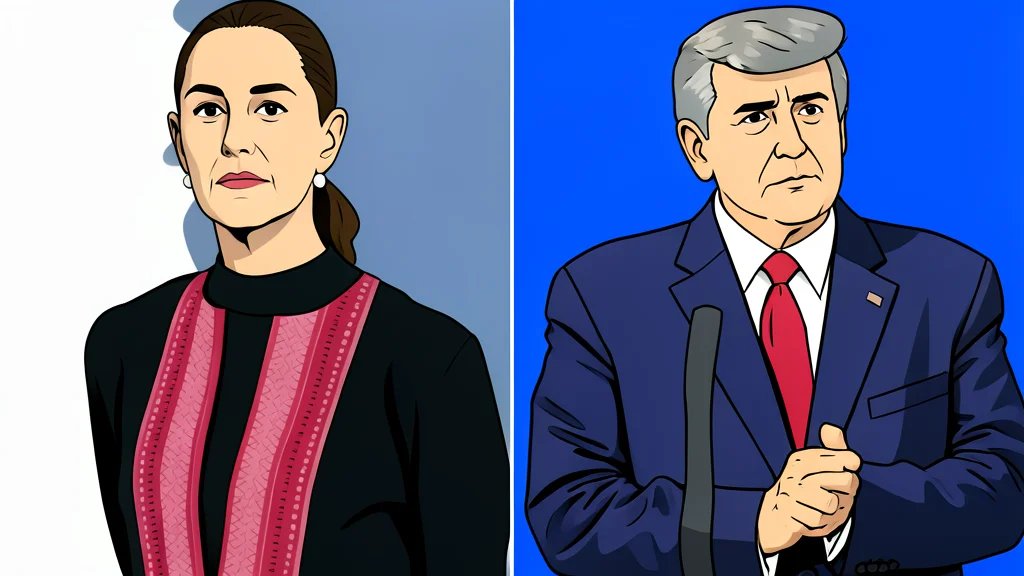
Mexican President Claudia Sheinbaum has pushed back against Washington's demand for harsher cartel enforcement, arguing that the U.S. must also address domestic drug consumption. This diplomatic friction highlights a growing rift over how to handle the fentanyl crisis.
President Claudia Sheinbaum has firmly rejected the notion that Mexico should be judged by external powers regarding its drug policy. Speaking on Thursday, she emphasized that decisions on national security must be made by the Mexican people and their government, not by foreign states. This response came just two days after U.S. President Donald Trump issued a sharp critique, stating that Mexico must take additional action against drug cartels and arrest corrupt officials who have allegedly colluded with criminal groups.
The Mexican leader also shifted the focus of the debate, suggesting that the United States should produce a report detailing its own efforts to reduce drug use and combat trafficking within its borders. According to reporting from GN auto geopolitics/americas: Mexico cartel, this exchange marks a significant escalation in a sustained pressure campaign by the U.S. government. Washington has increasingly urged the Sheinbaum administration to intensify its fight against cartels, while Mexico has maintained a stance of strict sovereignty and independent decision-making.
Washington Demands Stronger Action
The U.S. government’s position is outlined in a presidential determination submitted to Congress, which identifies Mexico as a major drug transit and illicit drug producing country. In the document, President Trump acknowledged recent Mexican achievements, including the seizure of larger drug volumes and the dismantling of clandestine laboratories. He also noted that cooperation has helped eliminate several notorious cartel bosses, including the leader of the Jalisco New Generation Cartel.
However, the U.S. president argued that these measures are insufficient. He stated that Mexico must do far more to stop the flow of deadly drugs into the United States, specifically targeting organizations that dominate vast areas of Mexican territory. The determination also called for increased inspections at ports of entry to bolster supply chain integrity, particularly at Pacific coast seaports where precursor chemicals for fentanyl are known to enter the country.
Rubio Signals Potential Unilateral Moves
U.S. Secretary of State Marco Rubio has recently echoed these sentiments, asserting that Mexico is not doing nearly enough to combat cartels. While he conceded that Mexican efforts are the most robust they have ever been, he suggested that the United States might act unilaterally against criminal organizations in Mexican territory if necessary. This rhetoric has raised concerns in Mexico about potential violations of sovereignty, a red line that the Sheinbaum administration has stated it will not cross.
Sovereignty Remains Central to Debate
Since the start of Trump’s second term in January 2025, the U.S. has designated eight Mexican cartels as foreign terrorist organizations. The U.S. president has frequently expressed a desire to combat these groups with American force, a stance that Mexico vehemently opposes. Sheinbaum has reiterated that cooperation is possible, but it must be based on mutual respect and the principle that each nation retains the right to determine its own internal security strategies.
As tensions rise, the focus is now on how both nations will navigate this diplomatic impasse. Observers are watching for signs of whether the U.S. will follow through on threats of unilateral action or if Mexico will propose new frameworks for cooperation that address U.S. concerns without compromising its sovereignty. The next move from either side could significantly reshape the landscape of North American security policy.