Toronto Migrants March Ahead of Parliament Session
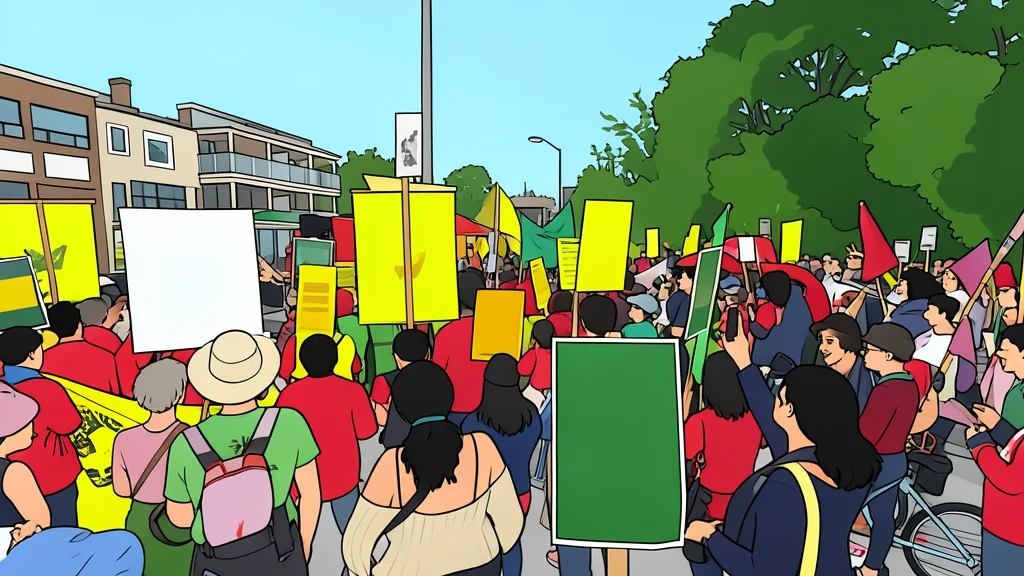
Approximately 600 people marched in Toronto on Sunday, demanding permanent residency and an end to deportations as Parliament prepares to resume.
Key points
- Around 600 people marched in Toronto on Sunday to demand permanent residency and stop deportations.
- The protest coincides with the resumption of Parliament and follows the introduction of Bill C-12.
- Advocates argue that tightened immigration policies have increased exploitation and xenophobia.
Approximately 600 individuals, including migrants, refugees, and supporters, marched through Toronto’s west end on Sunday. The demonstration took place on the eve of the resumption of the federal Parliament, with participants calling on the government to grant permanent residency status to all, halt deportations, and address workplace exploitation.
According to Radio-Canada, the rally began at Christie Pits Park and concluded at Dufferin Grove Park. It was one of eleven similar marches organized across Canada this weekend, reflecting a broader movement against recent tightening of immigration policies.
Advocates reject scapegoating narrative
Sarom Rho, coordinator of the Migrant Workers’ Alliance for Change, stated that migrants are being unfairly blamed for economic crises they did not create. She noted that while rents and prices rise, public discourse often targets newcomers. Rho emphasized that migrants contribute significantly to Canadian society by growing food and caring for children, the sick, and the elderly.
Rho described the current situation as one where hundreds of thousands are being pushed out and mistreated. She urged the public to reject what she termed migrant scapegoating, advocating instead for a society where everyone has equal rights.
Legal uncertainty drives protest
Bikramjit Singh, who moved to Canada from India in 2019 as an international student, shared his personal experience of legal uncertainty. He explained that the expectation of a path to permanent residence did not materialize, leaving him in a precarious situation. Singh is currently applying for a closed work permit, which restricts him to working for a specific employer.
Singh noted that lacking status creates a constant state of stress and vulnerability. He explained that without legal standing, individuals are often forced to work for cash, making them susceptible to exploitation by employers. The fear of deportation or inability to remain in the country prevents him from making long-term life plans.
Policy shifts alter demographics
The march occurs nearly a year after the Liberal government introduced Bill C-12, which seeks to tighten the immigration and refugee system. It also follows the implementation of an international student cap more than two years ago. Preliminary estimates from Statistics Canada indicate that Ontario alone was set to lose more than a third of its international student population this year.
In 2024, the federal government released an immigration plan to reduce permanent resident targets, aiming for sustainable growth. Prime Minister Mark Carney stated last October that the goal is to match immigration levels with national needs and capacity. Ethel Tungohan, a professor at York University, observed that these tightened measures have contributed to increased xenophobia and racism, challenging Canada's historical image as an inclusive nation.