UCLA Law Clinics Back Amazon Gas Flare Litigation
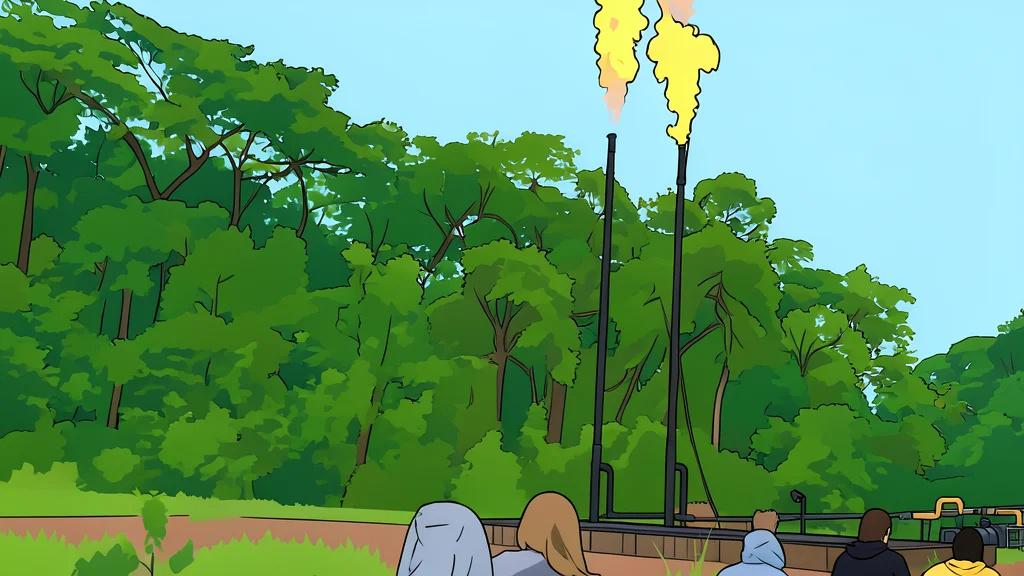
UCLA legal scholars filed an amicus brief urging Ecuador's Constitutional Court to enforce remedies for persistent gas flaring in the Amazon.
Key points
- UCLA Law Clinics filed an amicus brief in Ecuador's 'Mecheros' case to support enforcement of a 2021 ruling against gas flaring.
- The brief argues that the state has failed to comply with deadlines to eliminate flares near homes, leading to a net increase in active sites.
- Legal scholars urge the Constitutional Court to hold oil companies and the government accountable for documented water pollution and health hazards.
UCLA School of Law clinics have submitted an amicus brief to the Constitutional Court of Ecuador, seeking to accelerate compliance with a previous ruling against gas flaring in the Amazon. The Human Rights Litigation Clinic and the Frank G. Wells Environmental Law Clinic represent a group of international legal experts who argue that the state has failed to uphold its judicial obligations regarding environmental health and human rights.
The intervention, reported by Legal Planet, supports the 'Mecheros' case, a long-running dispute initiated by nine indigenous girls living near active flares. Their legal team, UDAPT, has campaigned for years to stop the ignition of natural gas by oil extraction companies, a practice that releases methane and pollutants into the air and contaminates local water and soil sources.
Scholars Urge Court to Enforce Prior Ruling
According to the brief, the scholars emphasize that an appellate court already mandated the elimination of flares near population centers within 18 months of the 2021 judgment. Despite this order, the brief states that the government has only deactivated a limited number of sites while allowing new ones to be ignited, resulting in a net increase in active flares since the decision was issued.
The legal team argues that the state’s delay in implementing required technical studies on water safety and health impacts constitutes a violation of human rights. They call on the Constitutional Court to provide concrete remedies for this noncompliance and to hold both national authorities and oil companies accountable for the ongoing environmental degradation.
Documented Health and Environmental Impacts
UCLA students and faculty traveled to Ecuador this spring to observe the local conditions firsthand. Their observations align with earlier court findings that the flares create unsafe drinking water, degrade soil fertility, and contribute to respiratory illnesses in nearby communities. The brief notes that these pollutants include methane, a significant driver of climate change, which is released into the atmosphere rather than captured for commercial use.
Stalled Compliance and Future Implications
The original judgment also required the development of a gas capture plan and oncological studies to assess long-term health risks, yet these measures remain unfulfilled. The case now rests on the Constitutional Court’s willingness to enforce the existing mandate rather than merely re-evaluating the underlying claims, setting a potential precedent for environmental accountability in the region.