India and Russia Shift Defense Ties Toward Joint Production
New Delhi seeks technology transfer over finished hardware, reshaping decades of arms dependence on Moscow.
Key points
- India is shifting from buying Russian weapons to demanding technology sharing and joint production.
- Approximately 65 percent of India's military hardware is now produced domestically, reducing import reliance.
- The BrahMos missile program exemplifies the potential for deepened joint technology development between the two nations.
The defense relationship between India and Russia is undergoing a structural transformation, moving away from simple arms procurement toward deeper technological integration. While the partnership has historically relied on Moscow supplying finished hardware to New Delhi, the dynamic is now shifting as India leverages its growing industrial capacity to demand greater access to core military technologies. This evolution marks a significant departure from the traditional buyer-seller model that has defined the two nations' strategic ties for decades.
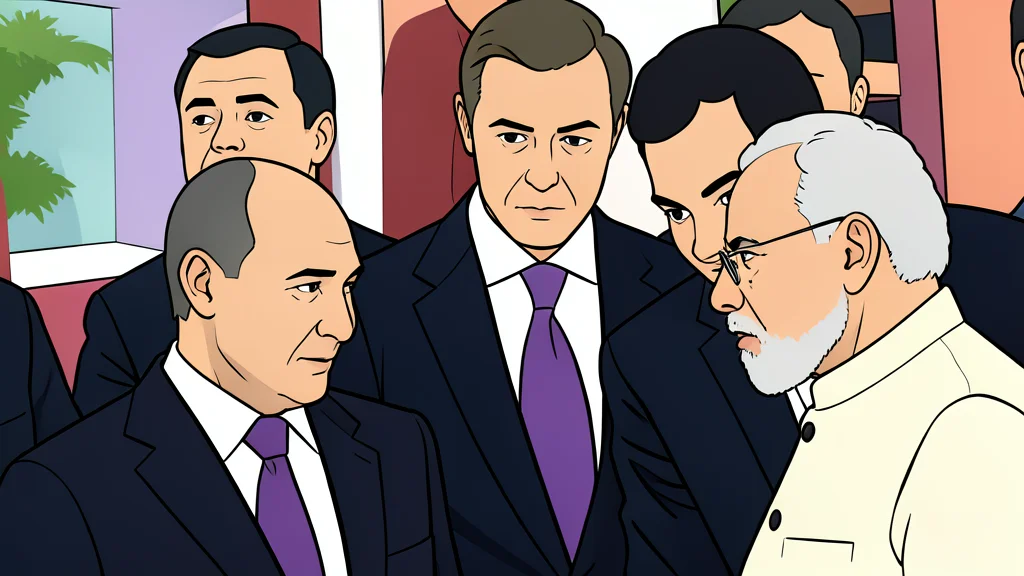
Recent diplomatic engagements have underscored this shift, with high-level meetings in New Delhi and a significant visit by the Indian Army Chief to Russia signaling renewed priorities. According to reports from Geopolitical Monitor, these interactions were not merely ceremonial but focused on renegotiating the terms of cooperation. The central issue is no longer just the volume of weapons traded, but the extent to which Russia is willing to share proprietary technology to sustain the partnership in a changing geopolitical landscape.
Changing Dynamics of Military Trade
India’s frontline forces have long been equipped with Russian-designed platforms, from armored vehicles to missile defense systems. However, the nature of this reliance is changing. Kremlin spokesman Dmitry Peskov acknowledged that while Russia plans to supply the Su-57 fifth-generation fighter, local manufacturing remains a key point of negotiation. This indicates a willingness by Moscow to adjust its traditional export model to accommodate New Delhi’s insistence on technology transfer rather than purely commercial transactions.
This shift reflects a broader strategic recalibration. India is no longer content to be a passive consumer of foreign military technology. Instead, it is leveraging its status as a major global power to negotiate for joint development and licensed production. For Russia, this presents a complex challenge: maintaining a vital strategic partner while potentially diluting its own technological edge. The outcome will likely depend on how much intellectual property Moscow is prepared to share to keep the alliance intact.
India’s Expanding Domestic Defense Industry
Simultaneously, India is rapidly expanding its own defense industrial base. Government estimates suggest that approximately 65 percent of the country’s military hardware is now produced domestically, a stark reversal from a decade ago when imports constituted the majority of its arsenal. This self-reliance is not an isolated trend but part of a deliberate strategy to reduce vulnerability to external supply disruptions and enhance strategic autonomy.
This domestic growth is complemented by a diversification of international partners. While ties with Moscow remain strong, New Delhi is also deepening collaborations with Western nations, including the United States, France, and Italy. According to Ukrainian military intelligence, this multi-vector approach allows India to balance its relationships, ensuring that no single supplier holds disproportionate leverage. The result is a more resilient and sophisticated defense ecosystem that is less dependent on any single nation's output.
Future Prospects for Joint Development
Looking ahead, the most tangible area for deepened cooperation appears to be in missile technology, particularly the BrahMos supersonic cruise missile. Originally derived from Russian designs, the BrahMos has been significantly upgraded over the past two decades through joint efforts. This project serves as a model for future collaborations, demonstrating that shared development can yield systems that surpass the capabilities of either partner alone.
The trajectory of the India-Russia defense partnership will likely be defined by these joint ventures rather than simple sales. As India’s industrial capabilities continue to mature, the potential for a reciprocal relationship emerges, where New Delhi may eventually supply certain technologies or components to Moscow. The coming years will test whether this partnership can evolve into a true strategic partnership based on mutual technological advancement, or if it remains constrained by the historical asymmetries of the past.