India-Russia Defense Shift: Local Production Replaces Imports
New Delhi is pivoting to joint manufacturing, leveraging domestic capacity to demand deeper tech sharing from Moscow.
Key points
- India now produces roughly 65% of its military hardware domestically, shifting leverage away from Russian suppliers.
- General Dhiraj Seth’s recent visit to Russia marks the first trip by a top Indian commander in eight years.
- Negotiations for the Su-57 fighter emphasize local manufacturing over simple imports, signaling a deeper tech-sharing pact.
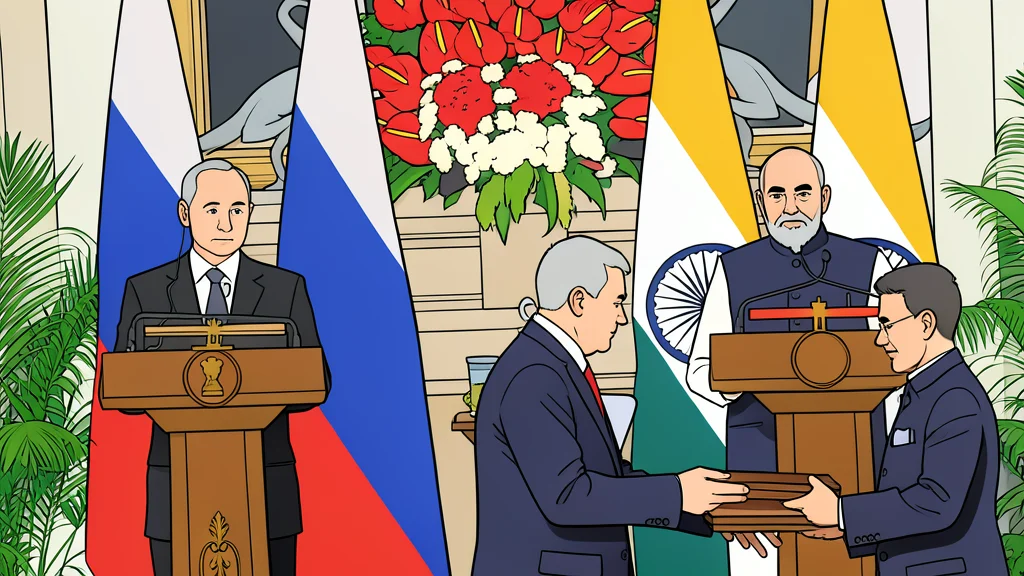
The long-standing defense relationship between India and Russia is undergoing a structural transformation, moving away from a simple buyer-seller dynamic toward a model centered on technology transfer and joint production. This shift was underscored during the recent BRICS summit in New Delhi, where Prime Minister Narendra Modi and President Vladimir Putin discussed expanding cooperation beyond traditional arms sales. According to Eurasia Review, the partnership is being redefined as India leverages its growing industrial base to negotiate more favorable terms with Moscow.
This evolution coincides with a significant diplomatic signal: Indian Army Chief General Dhiraj Seth recently traveled to Russia, marking the first official visit by a top Indian commander in eight years. While Russian-origin equipment still forms the backbone of India’s ground forces, New Delhi is increasingly insisting that new contracts include robust guarantees for local manufacturing and knowledge sharing. This approach reflects a broader strategic adjustment aimed at reducing dependency on finished imports while maintaining the strategic alignment between the two nations.
Domestic Production Reshapes Trade Balance
India’s changing posture is driven by substantial gains in its domestic defense industry. Government estimates indicate that approximately 65 percent of military hardware is now produced within the country, a dramatic reversal from a decade ago when two-thirds of equipment was imported. This self-reliance allows New Delhi to approach negotiations from a position of greater leverage, demanding that partners like Russia share proprietary technologies rather than merely selling finished products.
Kremlin spokesman Dmitry Peskov acknowledged these shifting dynamics, noting that while Russia intends to supply the Su-55 fifth-generation fighter, local manufacturing remains under active negotiation. He suggested that Moscow might share sensitive technologies to strengthen the strategic partnership, recognizing that India is no longer content with purely commercial transactions. This concession highlights how India’s industrial maturity is compelling Russia to adapt its export strategy to retain relevance in the Indian market.
Diversification Reduces Single-Source Dependence
While ties with Moscow remain strong, New Delhi is actively diversifying its defense procurement sources to mitigate risk. Reports indicate that India is deepening partnerships with Western nations, including the United States, France, and Italy, to broaden its access to advanced military systems. This multi-alignment strategy ensures that India is not solely dependent on any single supplier, providing it with greater flexibility in both procurement and geopolitical maneuvering.
Future Cooperation Faces Strategic Tests
Looking ahead, specific initiatives such as the co-production of T-90MS tanks and continued work on the BrahMos missile system illustrate the tangible steps being taken to formalize this new relationship. A logistics pact signed in early 2025, which facilitates the movement of troops and equipment between the two countries, further cements the operational integration of their forces. Analysts suggest that as Russia faces resource constraints elsewhere, India may find itself in an even stronger position to dictate the terms of future cooperation.