Indonesia Ferry Recovery Shifts to Salvage Operations
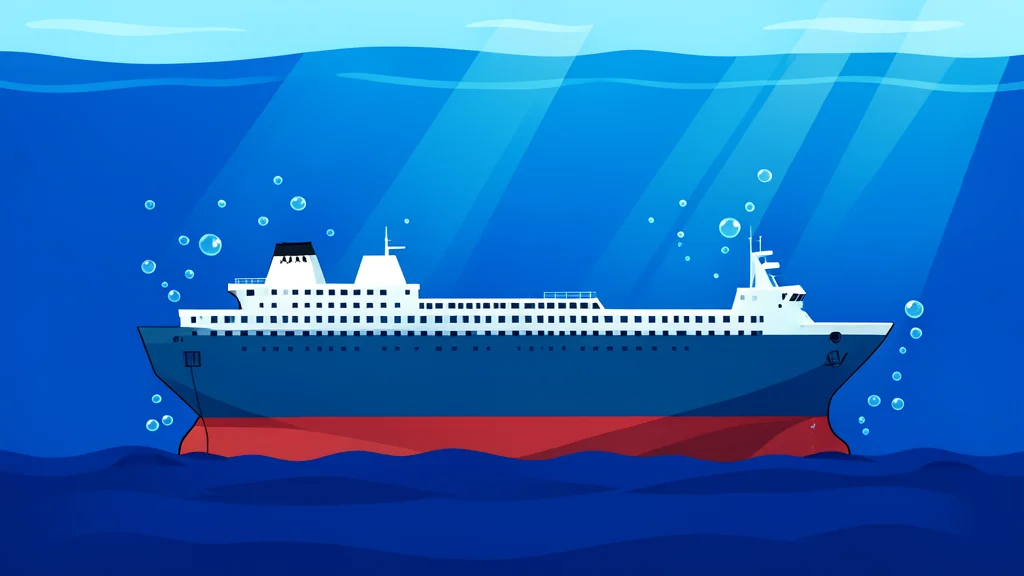
After five days of stalled rescue efforts due to severe weather, Indonesian authorities have initiated a complex salvage operation to right the capsized Virgo Transport 8 in the Java Sea.
Indonesian divers have moved from direct search to a broader salvage strategy after strong currents and large waves prevented access to the submerged vessel for five days. According to local navy commander Galih Nurna Putra, the decision to right the ship was made on Friday to facilitate the recovery of missing persons and deceased individuals. The operation marks a significant shift in the response to the disaster that claimed at least nine lives and left 126 people unaccounted for.
The Virgo Transport 8 capsized early Sunday while on a scheduled 20-hour voyage from Surabaya to Banjarmasin. Despite the deployment of 1,100 rescuers, rough seas severely limited operations. Officials state that the vessel’s unstable condition, caused by trapped air and empty compartments, poses significant risks to any divers attempting to enter the hull before it is properly stabilized and righted.
Challenges in Deep Water Recovery
The complexity of the recovery is compounded by the vessel’s location, which sits roughly 80 nautical miles from the command center at Trisakti port. Arianto Ardi, a rescue agency official, noted the difficulty of accessing the site in such conditions. To address the depth and stability issues, specialist divers capable of operating at depths exceeding 100 meters have been deployed. These experts are essential for assessing the ship’s integrity before any major movement occurs.
According to I Putu Sudayana, head of the Banjarmasin search and rescue agency, the primary goal is to tow the vessel into shallower waters before attempting to right it. He emphasized that teams will be able to resume body recovery only once the ship is stabilized. Until this process is complete, entering the capsized ship remains dangerous due to the potential for the hull to shift unexpectedly.
Coordinated Multi-Agency Response
The salvage operation is being led by the ship’s owner, as required by Indonesian law, with substantial support from the navy, maritime police, and local rescue agencies. An expert team was brought in on Friday to assist in the initial phase of the operation. Divers did manage to enter the ship on Friday, retrieving three bodies, but strong currents forced a halt to the underwater search shortly after.
As reported by Al Jazeera English, the current death toll stands at nine, with 108 survivors accounted for. The remaining 126 passengers and crew members are still missing. The coordination between military and civilian agencies aims to ensure that the salvage process is conducted safely and efficiently, given the hazardous environmental conditions in the Java Sea.
Reliance on Maritime Transport
The incident underscores the critical role of ferries in Indonesian transportation. The archipelago nation relies heavily on sea travel to connect its 17,000 islands, a mode of transport that is significantly cheaper and more accessible than air travel for most citizens. This dependence on maritime routes highlights the ongoing challenges posed by unpredictable weather patterns and the logistical difficulties of emergency response in remote ocean areas.
As the salvage operation progresses, attention will turn to the timeline for fully righting the vessel and the subsequent search efforts. The success of the towing and stabilization phases will determine how quickly recovery operations can resume in the shallower waters near Banjarmasin.