Moscow Deepens Strategic Ties with Myanmar Junta
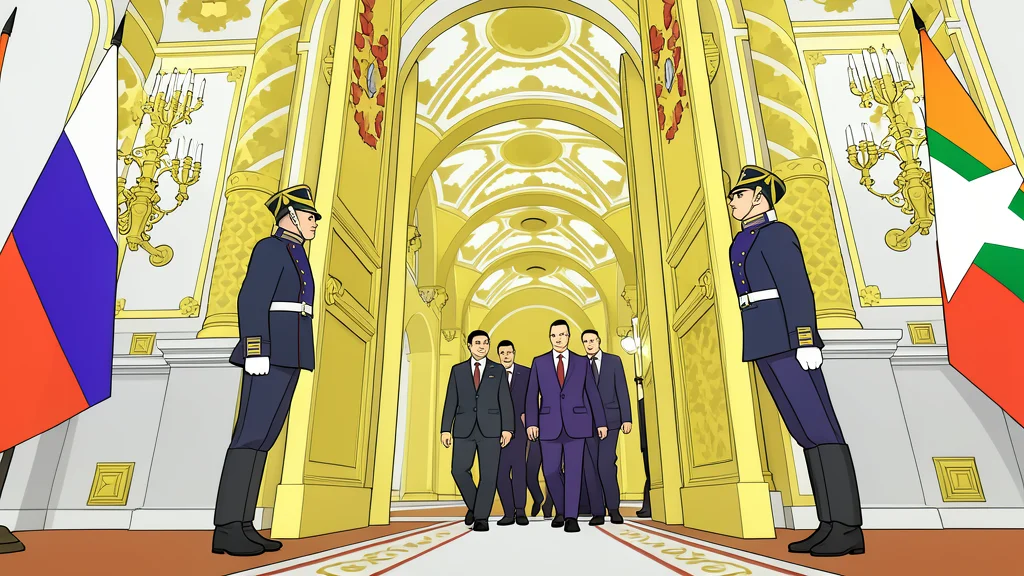
Russia’s engagement with Naypyidaw has evolved beyond arms sales to include critical state infrastructure and joint combat training, signaling a broader geopolitical realignment in Southeast Asia.
The relationship between Russia and Myanmar’s military government has undergone a significant transformation, moving from a traditional arms supplier dynamic to one of deep strategic integration. According to analysis by GN geopolitics/coup, this shift is marked by recent diplomatic engagements and technical collaborations that embed Russian interests directly into the core of Myanmar’s state administration.
This evolution follows a meeting in Moscow where Myanmar’s leader and Russia’s president signed joint statements opposing Western sanctions. The agreement encompasses broad sectors including energy, space, and digital technology, indicating a long-term commitment that transcends immediate military needs. The asymmetry of these interactions is evident, as Myanmar has made multiple high-level visits to Moscow while Russian leadership has not reciprocated, yet the depth of collaboration has intensified considerably.
Russian Technology in State Administration
A pivotal moment in this deepening relationship occurred when a Russian software firm with documented links to military intelligence was contracted to build Myanmar’s National Single Window. This online portal is designed to process all import and export documents, effectively giving a foreign entity a central role in the country’s trade infrastructure. Such an arrangement represents a far more intrusive form of engagement than the sale of military hardware.
The implications of this digital integration are significant for regional security and economic monitoring. If the system connects to broader ASEAN trade networks, the Russian contractor would gain an insider view of regional trade flows. This level of access raises concerns about data sovereignty and the potential for leveraging economic information for geopolitical advantage, marking a new frontier in state-to-state cooperation.
Joint Exercises and Tactical Exchange
Military cooperation has also crossed a new threshold with the first joint army exercise held in Naypyidaw. Unlike previous naval drills that were largely ceremonial, this recent engagement focused on advanced tactical skills. The two armies worked through drone reconnaissance, sniper employment, and combat engineering, with an explicit exchange of battlefield experience that reflects the realities of modern conflict.
Observers note that the tactics employed during these exercises mirror those refined in recent conflicts in Eastern Europe. Massed strikes and drone-cued targeting are being transferred to the Myanmar military, which is currently engaged in counter-insurgency operations. This transfer of knowledge and tactics suggests that the Myanmar conflict is increasingly shaped by external military doctrines, potentially prolonging the internal struggle and affecting civilian populations.
Reciprocal Flows of Military Materiel
The relationship is not solely a one-way flow of Russian technology into Myanmar. Reports indicate that Myanmar’s state arms factories have shipped munitions, including mortar rounds, to Russia. This reciprocal exchange fits into a broader pattern observed in other parts of Asia, where isolated regimes engage in trade with Moscow to secure support for their own military and economic needs.
This arrangement follows a template established by other authoritarian states, trading resources and personnel for cash, technology, and diplomatic cover. As these networks expand, the geopolitical landscape of Southeast Asia becomes more complex, with Myanmar increasingly aligned with Moscow’s strategic interests. The future stability of the region will depend on how these deepened ties evolve and impact broader international norms and security frameworks.