South Korea Weighs Non-Combat Options for Strait of Hormuz Security
Seoul rules out combat troop deployment but considers expanding anti-piracy roles to protect vital energy routes amid US pressure.
Key points
- President Lee Jae Myung ruled out combat troop deployment to the Strait of Hormuz to avoid direct involvement in the US-Iran conflict.
- South Korea relies on the strait for 70 per cent of its crude oil and over 50 per cent of its naphtha imports for key industries.
- Seoul is considering non-combat contributions such as expanding its anti-piracy unit or deploying maritime patrol aircraft to protect shipping.
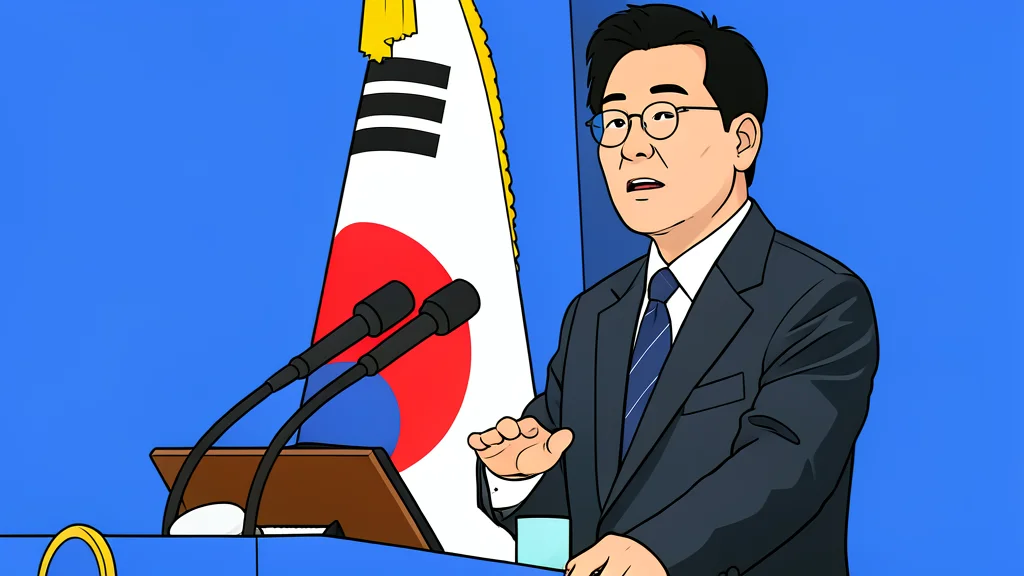
South Korean President Lee Jae Myung has explicitly ruled out deploying combat troops to the Strait of Hormuz, a decision that underscores the delicate balance his administration is striking between alliance obligations and domestic political constraints. Speaking at a televised press conference, Lee reaffirmed the country's long-standing principle of avoiding direct involvement in foreign conflicts, a stance adopted as tensions between the United States and Iran continue to escalate.
The move comes amid mounting pressure from Washington, which has urged Seoul to contribute more actively to securing the vital waterway. While Seoul maintains that it will protect its citizens and commercial shipping interests, the government is exploring non-combat measures to navigate the geopolitical risks associated with the region's ongoing stalemate.
Economic stakes drive strategic caution
South Korea’s heavy reliance on the Strait of Hormuz for energy imports creates a critical vulnerability that complicates its diplomatic position. According to the Phnom Penh Post, the country sources approximately 70 per cent of its crude oil and over 50 per cent of its naphtha through this route, which are essential for its semiconductor, automotive, and petrochemical industries.
This economic dependence provides a strong incentive for Seoul to help keep the waterway open, yet any military engagement risks provoking Iran and fueling domestic opposition. The administration is therefore prioritizing pragmatic diplomacy that safeguards national interests without committing to a direct military role in the US-Iran conflict.
Diplomatic friction with Washington
Relations between Seoul and Washington have grown increasingly strained, with US President Donald Trump publicly criticizing South Korea’s stance on Iran denuclearization efforts. Trump also ordered a reduction in joint military exercises, citing costs and the perceived hostile signal such drills send to North Korea, a development that has complicated the security dialogue between the two allies.
While reports suggest Washington is pressing Seoul for a decision before the US midterm elections, the South Korean Defence Ministry has denied the existence of a strict deadline. An on-site assessment team recently visited the United Arab Emirates to gauge stability, a move described by officials as a situational survey rather than a precursor to troop deployment.
Exploring non-combat naval roles
To address US concerns while adhering to domestic constraints, Seoul is reviewing the expansion of its anti-piracy naval Cheonghae Unit, which has been operating near the strait since May. Officials indicated that technical support, including the potential deployment of maritime patrol aircraft, logistics vessels, or mine clearance units, could form the basis of South Korea’s contribution.
With Foreign Minister Cho Hyun due to meet US Secretary of State Marco Rubio in Washington, these talks are expected to address the scope of South Korea’s involvement in securing the strait. The outcome will likely hinge on finding a middle ground that satisfies US security demands without triggering domestic backlash against the President, whose approval ratings have recently declined.