US and Australian Navies Conduct Joint Operations in South China Sea
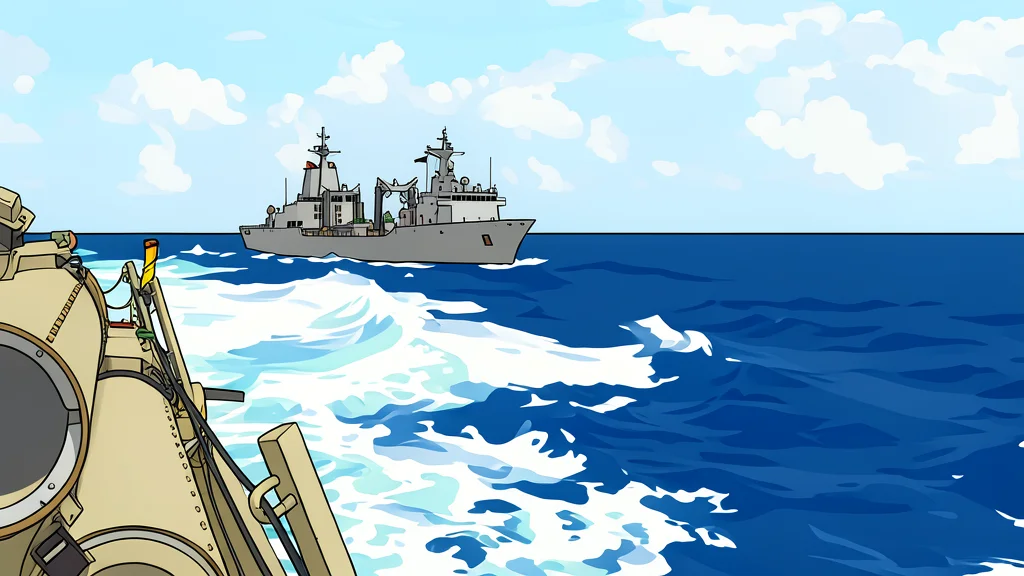
A recent replenishment-at-sea operation between a US destroyer and an Australian oiler highlights the continued coordination of naval assets in the region.
The United States Navy and the Royal Australian Navy recently completed a joint logistical operation in the South China Sea, reinforcing the operational presence of allied forces in the region. According to the GN auto geopolitics/asia-pacific: South China Sea report, the Arleigh Burke-class destroyer USS Benfold conducted a replenishment-at-sea with the Supply-class oiler HMAS Supply. This routine maneuver, carried out on August 27, 2026, underscores the ongoing interoperability between the two navies as they maintain a steady posture in international waters.
The USS Benfold is part of Destroyer Squadron 15, which serves as the principal surface force for the U.S. 7th Fleet. As the Navy’s largest forward-deployed numbered fleet, the 7th Fleet routinely engages with partners to support a free and open Indo-Pacific. The involvement of HMAS Supply in this specific exercise illustrates the depth of logistical cooperation, where sustainment capabilities are shared to extend the endurance of combatants during extended deployments.
Operational Significance of Allied Coordination
Replenishment-at-sea is a critical maneuver that allows warships to continue operations without returning to port. By conducting these exercises in the South China Sea, the two navies demonstrate their ability to sustain high-tempo operations in a strategically sensitive area. Analysts note that such joint activities are standard practice for maintaining readiness, yet they also serve as a visible signal of commitment to regional security frameworks.
The timing of the exercise, occurring in late August, coincides with a period of heightened attention to maritime stability in the Asia-Pacific. While the operation is described as routine, the consistent presence of US and Australian assets suggests a long-term strategic objective. This continuity helps to normalize the operational environment, ensuring that both navies remain proficient in working together under various conditions.
Regional Dynamics and Strategic Posture
The South China Sea remains a focal point for geopolitical discussions regarding freedom of navigation and international law. The US Navy’s emphasis on preserving a free and open Indo-Pacific is central to its forward-deployed missions. According to official statements, these interactions with allies are designed to uphold these principles while ensuring that no single actor can unilaterally alter the status quo in the region.
The collaboration between Washington and Canberra reflects a broader trend of deepening defense ties. The integration of logistical support, such as the transfer of fuel and supplies at sea, is a hallmark of mature partnerships. It reduces the operational burden on individual vessels and allows for more flexible deployment patterns. This approach is increasingly viewed as a stabilizing factor by regional observers who monitor maritime activities.
Forward Outlook for Naval Activities
Looking ahead, the frequency of such joint exercises is expected to remain consistent. The US 7th Fleet and the Royal Australian Navy are likely to continue coordinating their schedules to ensure comprehensive coverage of key maritime routes. Stakeholders should watch for announcements regarding future bilateral drills or multilateral exercises that may include additional partners. These events will provide further insight into the evolving nature of naval cooperation in the Indo-Pacific.
The next few months will be critical for observing how these logistical networks are utilized in response to emerging challenges. The ability to sustain operations far from home ports is a key metric of naval power. As the geopolitical landscape shifts, the seamless integration of US and Australian capabilities will likely serve as a benchmark for allied interoperability in the region.