Berlin Seeks Diplomatic Reset with New Hungarian Government

German Foreign Minister Johann Wadephul visits Budapest to rebuild ties after years of strain, while domestic housing affordability hits a historic low.
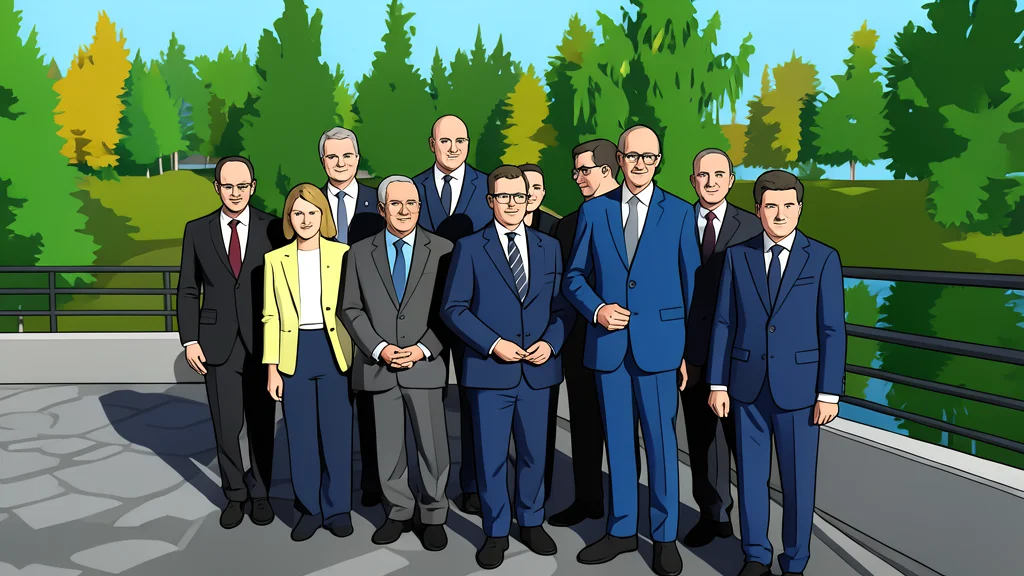
German Foreign Minister Johann Wadephul has arrived in Budapest for a high-profile visit aimed at re-establishing diplomatic channels between Berlin and Hungary. According to official statements, the trip marks the first by a German foreign minister in nearly seven years, signaling a deliberate effort to repair relations that deteriorated under the previous Hungarian administration. Wadephul described the current situation as requiring significant effort to catch up, emphasizing that the recent political shift in Hungary presents a unique opportunity to rebuild trust.
The visit coincides with a period of significant political transition in Hungary, where the nationalist Fidesz party was voted out of office in April. Since May, conservative Prime Minister Peter Magyar has led a new pro-European government that has begun implementing reforms aligned with European Union standards. While Berlin welcomes this trajectory, the diplomatic machinery remains in early stages of re-engagement, with both sides acknowledging that normalizing relations will require sustained dialogue and concrete actions.
Business delegation accompanies minister
A delegation of German business representatives is traveling with Wadephul to discuss the economic implications of the political change. The minister noted that German companies currently account for approximately 250,000 jobs in Hungary, making the stability of the regulatory environment a priority for both governments. He argued that predictable rules and the rule of law are essential not only for public confidence but also for businesses considering further investment in the region.
According to Wadephul, fair and reliable competitive conditions for companies from all EU member states will be crucial for Hungary’s economic growth. The presence of the business delegation underscores the practical dimension of the diplomatic reset, moving beyond symbolic gestures to address trade and investment frameworks. This approach reflects a broader strategy to anchor bilateral relations in mutual economic interest rather than solely political alignment.
Housing affordability reaches historic low
Amid these diplomatic developments, domestic economic challenges continue to shape public discourse in Germany. A recent study indicates that the country’s homeownership rate has fallen to 43.5%, its lowest level in two decades. The research, cited by the Augsburger Allgemeine newspaper, attributes this decline to a combination of high construction costs, rising interest rates, and specific housing policies implemented over recent years.
Matthias Günther, director of the Pestel Institute, noted that Germany now ranks last in Europe for homeownership. He highlighted that even dual-income households with average salaries are finding it difficult to afford their own homes. The study found that residential construction costs have increased by 160% since 2000, significantly outpacing the 64% rise in overall consumer prices, a disparity that disproportionately affects younger generations.
Younger generations face housing strain
The impact of these trends is particularly acute among younger adults. The study found that almost three-quarters of people aged 25 to 45 currently live in rented accommodation, a shift that has profound implications for long-term economic stability and demographic trends. This housing affordability crisis adds another layer of complexity to the German political agenda, which must now balance foreign policy initiatives with pressing domestic social issues.
As Wadephul engages with his Hungarian counterparts, the contrast between diplomatic optimism and domestic economic anxiety is stark. The government faces the challenge of projecting strength abroad while addressing the financial pressures felt by many citizens at home. Observers will be watching to see if the diplomatic breakthrough with Hungary can be sustained, and how the government responds to the growing urgency of the housing market.