Britain Prepares Challenger 3 Fleet Amidst NATO Alignment and Scale Concerns
The British Army is finalizing the acquisition of the Challenger 3, a main battle tank designed to standardize ammunition with NATO allies. However, the planned fleet size of 148 vehicles has raised questions about sustainability in modern attritional warfare.
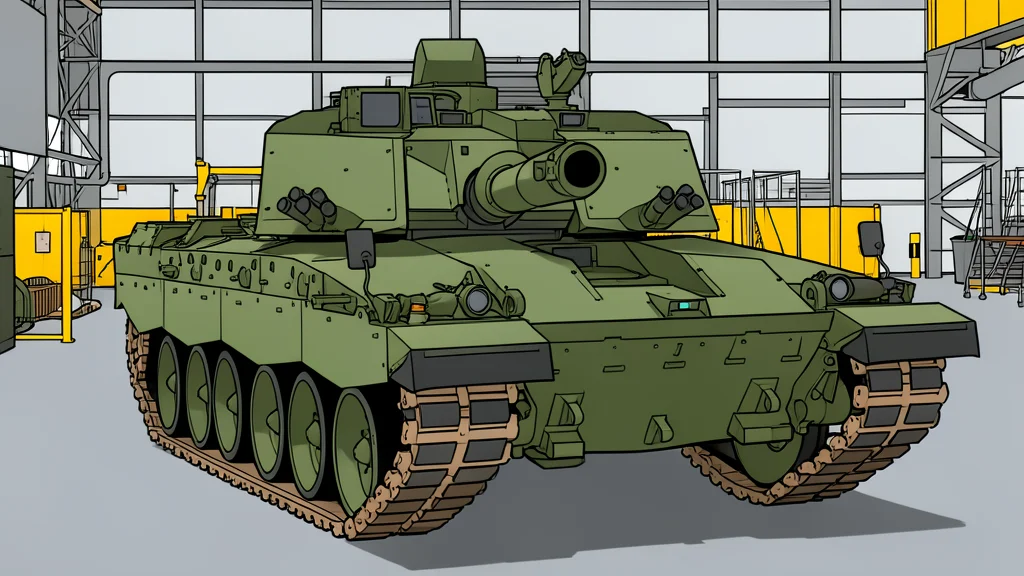
The British Army is moving forward with the introduction of the Challenger 3, marking the first significant update to its main battle tank inventory in years. According to GN geopolitics/nato, the new platform retains the robust hull of the veteran Challenger 2 but integrates a modernized turret and a smoothbore 120mm main gun. This change aligns the British tank with the standard ammunition used across the NATO alliance, a move intended to streamline logistics and enhance interoperability with partner nations during joint operations.
While the technical upgrades are clear, the scale of the acquisition has drawn scrutiny. The British Army is slated to receive only 148 Challenger 3 vehicles. Critics argue that such a small fleet offers limited resilience against the high rates of armored vehicle loss observed in recent conflicts. In a war of attrition, where thousands of tanks have been destroyed, a fleet of this size may struggle to maintain operational readiness, absorb combat losses, and fulfill broader alliance commitments without depleting its reserves.
Challenges in Fleet Sustainability
The concern over numbers is rooted in the practical realities of modern armored warfare. Open-source data indicates that armored vehicles are being worn down at an industrial scale in current conflicts. Against this backdrop, a fleet of 148 tanks leaves little margin for maintenance cycles, training, or unexpected losses. A single brigade-level deployment could consume a significant portion of the total inventory, potentially leaving the British Army with insufficient forces for other commitments or rapid reinforcement needs.
This debate highlights a broader tension between advanced capability and operational scale. While the Challenger 3 is expected to be more capable than its predecessor, its effectiveness in a sustained conflict depends heavily on the ability to sustain and replace losses. The current planning figures suggest a force optimized for high-intensity, short-duration engagements rather than prolonged attritional campaigns, a distinction that may become critical if the European security environment continues to deteriorate.
Vibration Testing and Crew Comfort
Behind the strategic debates, engineers are focused on the vehicle's operational reliability. Rheinmetall UK recently announced the establishment of a dedicated Vibration Test Facility to evaluate the Challenger 3's performance. This facility is capable of handling structures weighing up to 40 tonnes, allowing engineers to simulate complex movements such as pitch and roll. The goal is to conduct accelerated durability testing without relying solely on extended physical trials, ensuring the tank can withstand the rigors of long-term field use.
Attention to vibration is particularly significant for the British Army due to past issues with other platforms. The Ajax armored fighting vehicle, for instance, faced severe problems where vibration and noise transmitted through the hull affected crew health and safety. These issues led to mandatory hearing checks and medical monitoring for personnel. By prioritizing vibration testing for the Challenger 3, the Army aims to avoid repeating these mistakes and ensure that the new tank provides a safe and comfortable environment for its crews during extended operations.
Forward Outlook for Alliance Interoperability
As testing progresses, the focus remains on integrating the Challenger 3 into the broader NATO framework. The adoption of the 120mm smoothbore gun is a key step toward standardization, reducing the logistical burden of managing multiple ammunition types. However, the ultimate success of the program will depend on whether the fleet size can be adjusted to meet evolving strategic needs. Observers will watch closely for any announcements regarding potential increases in procurement numbers or changes in deployment doctrine as the vehicle moves from testing to full operational service.