EU Energy and Military Leaders Convince on War Risk
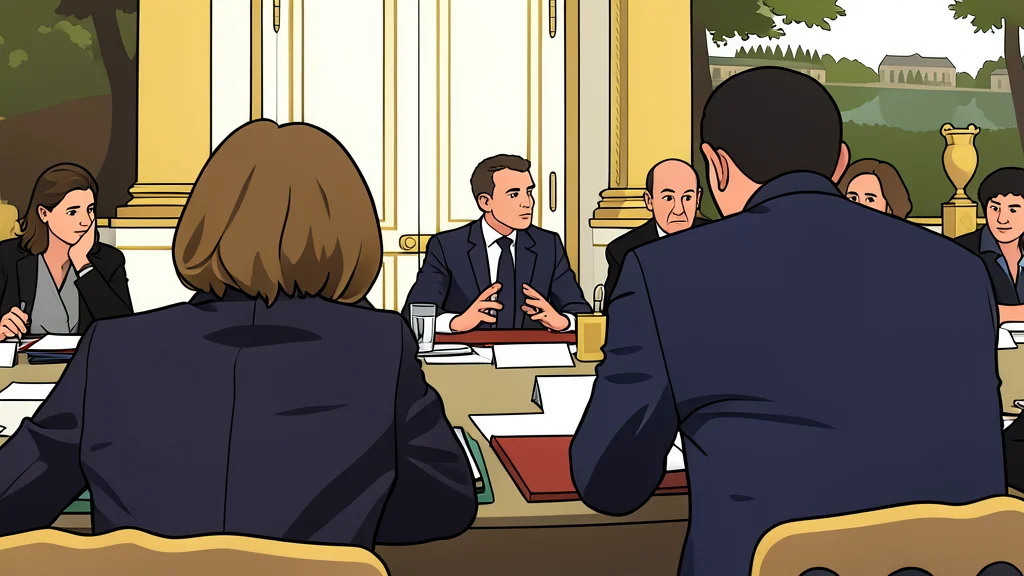
Macron convenes security and energy chiefs as European capitals tighten defenses amid rising hybrid threats.
Key points
- Macron convened intelligence and energy leaders in Paris to discuss deteriorating international conditions.
- Poland and Germany are expanding military capabilities in the Baltic region in response to hybrid threats.
- The US is discussing a permanent base in Poland while urging Europe to increase its own defense spending.
A recent gathering at the Élysée Palace in Paris marked a significant shift in how European leaders are framing their security challenges. President Emmanuel Macron invited not only political figures but also senior representatives from intelligence agencies, the military, and the energy sector to discuss the deteriorating international situation. According to reports from yetkinreport.com, this inclusion of energy officials signals that France is no longer separating military defense from energy resilience.
The meeting reflected a broader trend across the continent where security, energy, and infrastructure are being viewed as interconnected components of national stability. While NATO officials continue to state that an imminent direct attack on the alliance is not expected, assessments of intensifying Russian hybrid activities are becoming more prominent. This suggests that European capitals are preparing for a prolonged period of strategic uncertainty rather than a single, sudden conflict.
Hardening Rhetoric in Eastern Europe
Poland has emerged as a key indicator of this changing security landscape. Prime Minister Donald Tusk has warned that the upcoming autumn and winter months could be particularly critical, citing intelligence assessments of potential hybrid attacks involving drones and missiles. This concern was recently tested when Poland scrambled fighter aircraft and temporarily closed airports following a large-scale Russian attack on Ukraine, although no Polish airspace was violated. The incident underscored how close the conflict has come to NATO’s eastern borders.
Germany has also moved to solidify its military posture in the region. Berlin plans to make its brigade in Lithuania fully operational by the end of 2027, a decision that reflects a long-term view of relations with Russia. This expansion is not seen as a temporary precaution but as a structural adjustment to a security environment that European officials believe has become permanently more volatile.
US Commitment and European Tensions
The role of the United States remains a central variable in these calculations. Following discussions with Polish President Karol Nawrocki, US President Donald Trump indicated progress toward establishing a permanent US Army base in Poland. While no final decision has been made, the serious consideration of such a move sends a strong political signal about the credibility of American security guarantees on the alliance’s eastern flank.
However, the Trump administration is simultaneously reassessing the wider US military presence in Europe and demanding that allies assume greater responsibility for their own defense. This dual dynamic creates a complex environment where Washington may strengthen its position in frontline states while pressuring Europe to increase its own military spending and capabilities. The likely result is increased pressure on European budgets and a further expansion of military capacity across the continent.
Energy as a Security Priority
The integration of energy security into military strategy represents a notable evolution in European policy. The presence of senior energy officials in Paris highlights that economic risks related to energy supply are now viewed through a security lens. This approach acknowledges that conflicts in other regions can have direct and immediate impacts on European energy stability, blurring the traditional lines between economic policy and national defense.
As Europe navigates this new landscape, the focus is shifting toward resilience and long-term preparedness. The convergence of military, intelligence, and energy sectors in high-level discussions suggests that European leaders are preparing for a sustained period of geopolitical tension. The coming months will likely see further developments in defense spending and diplomatic positioning as capitals work to balance their commitments to allies and their own domestic stability.