China's Economic Rise Overshadows U.S. Military Focus in MENA
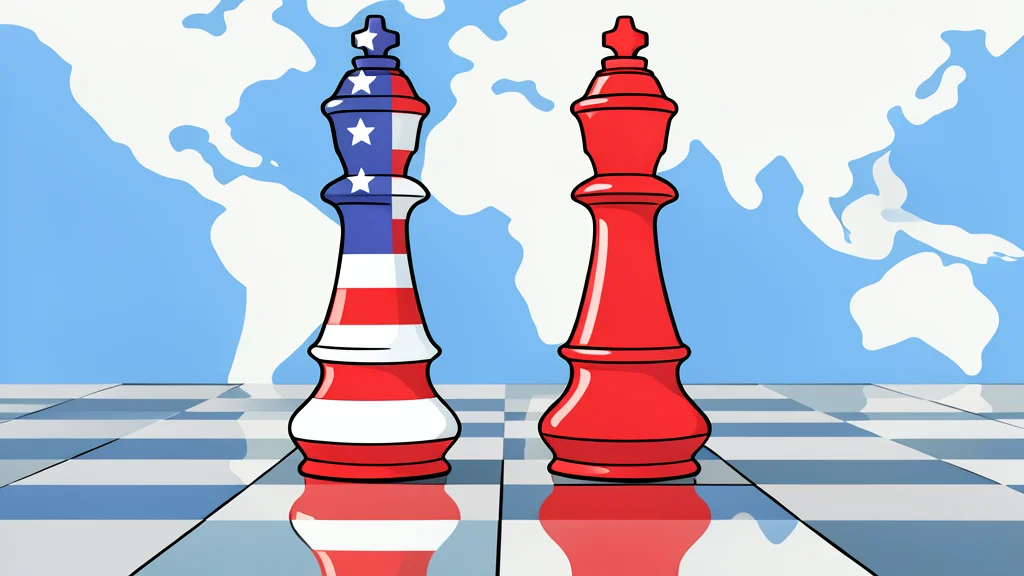
While the West prioritized security interventions, China expanded its economic footprint in the Middle East and Africa, creating a new geopolitical balance.
Key points
- China’s nominal GDP grew from $1.36 trillion in 2001 to $17.82 trillion in 2021, a period when the U.S. was focused on military conflicts.
- U.S. policy in the MENA region has historically prioritized military security doctrines over integrated long-term economic investment strategies.
- China shifted its regional engagement from ideological support for liberation movements to a pragmatic focus on trade and infrastructure.
The strategic landscape of the Middle East and North Africa is undergoing a fundamental shift as China consolidates its economic influence in regions long dominated by Western military security. According to an analysis published by Manara Magazine, the United States has historically relied on security-focused doctrines, while Beijing has pursued a long-term strategy centered on trade and infrastructure investment.
This divergence in approach has resulted in a distinct competitive dynamic. As American policymakers focused on containment and military engagement in the early twenty-first century, Chinese state actors leveraged the relative stability of the moment to build enduring economic ties, positioning itself as a critical partner for regional development and modernization.
Divergent Strategic Priorities in the Region
Historical U.S. policy in the region, from the Truman Doctrine to the Bush Doctrine, was largely defined by military security and the protection of strategic interests. These frameworks often prioritized short-term geopolitical stability over integrated economic planning. In contrast, China’s engagement has been characterized by a pragmatic focus on resource acquisition, infrastructure development, and bilateral trade agreements that bypass traditional political conditionality.
The article notes that while American interventions in places like Iraq aimed to reshape political structures, they often resulted in prolonged instability. Meanwhile, China’s approach avoided direct military confrontation, instead offering financial incentives that aligned with the developmental goals of host governments. This method has allowed Beijing to deepen its presence without the reputational costs associated with military conflict.
Economic Expansion During Western Distraction
A significant portion of China’s rise as a global economic power coincided with the United States’ heavy engagement in the Global War on Terror. According to the data cited in the report, China’s nominal GDP grew from approximately $1.36 trillion in 2001 to nearly $17.82 trillion by 2021. This exponential growth occurred while Western attention was consumed by military operations in Afghanistan and the Middle East.
This temporal correlation suggests that China benefited strategically from a period when its primary rival was preoccupied with security challenges. By focusing on internal industrial development and external trade partnerships during this window, China transformed into the world’s second-largest economy. This economic mass now provides Beijing with the leverage to project influence through commercial channels rather than military force.
Shifting from Ideology to Commercial Pragmatism
China’s relationship with the region has evolved from ideological alignment to economic pragmatism. In the 1960s, Beijing supported anti-colonial movements in Africa and recognized Algeria’s independence early on, driven by a shared opposition to Western hegemony. However, by the late twentieth century, the focus shifted decisively toward trade, aid, and influence through market mechanisms rather than political solidarity.
This transition marks a departure from the revolutionary rhetoric of the past, replacing it with a sophisticated strategy of economic statecraft. The result is a more stable and enduring foothold in the MENA region, one that is less susceptible to the volatility of political changes than purely military alliances. The forward question remains how Western nations will adapt their strategies to compete with this entrenched economic reality.