Finland's Government Holds Power Amid Agricultural Crisis
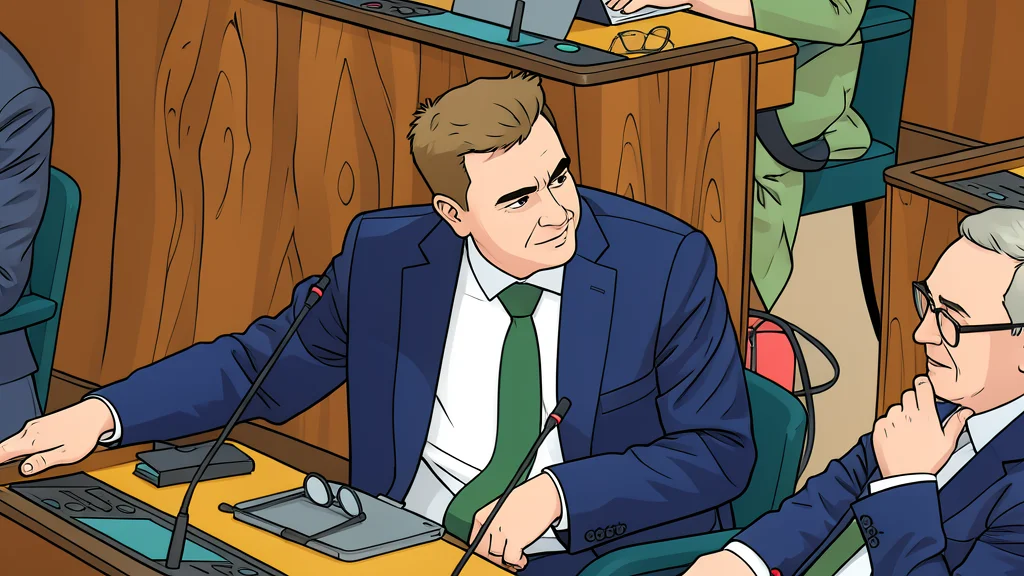
Prime Minister Petteri Orpo's administration narrowly avoided a collapse in parliament, retaining its mandate despite significant opposition pressure over the struggling state of Finnish agriculture.
The Finnish government has survived a confidence vote in parliament, retaining its mandate by a narrow margin of 96 votes to 82. The vote concluded a tense interpellation debate centered on the state of the agricultural sector, a critical issue for the coalition’s stability. Twenty members of parliament were absent from the session, while one opposition lawmaker abstained, highlighting the divided nature of the legislature on this economic matter.
According to GN geopolitics/politics (en-US), the interpellation was initiated by the Centre Party, which has historically represented agrarian interests in the Finnish countryside. Party leader Antti Kaikkonen argued that the sector is the least profitable in the European Union and requires immediate emergency funding ranging from 100 to 150 million euros to prevent further decline. The opposition contended that the current administration's policies have exacerbated the financial difficulties faced by farmers during its term in office.
Fiscal Trade-offs and Tax Proposals
A central point of contention was the source of funding for agricultural support. The Centre Party suggested that the government could secure the necessary funds by cancelling its proposed reduction in corporate tax rates. The administration plans to lower the corporate tax rate from 20 percent to 18 percent starting next year, a move that would result in an estimated loss of 850 million euros in state revenue. Critics view this tax cut as misaligned with the urgent needs of the agricultural sector.
The debate echoes similar measures recently proposed by Sweden’s outgoing government, indicating a broader regional concern regarding the viability of farming in the Nordic states. The opposition argued that prioritizing corporate tax relief over agricultural subsidies threatens the long-term food security of the nation. This clash highlights a significant policy divergence between the governing coalition and the agrarian opposition regarding fiscal priorities.
Street Protests Shape Political Discourse
Political tensions have been amplified by visible public discontent. Farmers held protests outside the parliament building in the spring, expressing deep concern over the future of Finnish agriculture and national food supplies. These demonstrations underscored the pressure facing lawmakers to address the economic viability of the sector, which employs a significant portion of the rural population.
The narrow outcome of the confidence vote suggests that while the government retains formal control, its ability to implement contentious fiscal policies may be constrained. The interpellation debate serves as a reminder that agricultural policy remains a volatile flashpoint in Finnish politics, with the sector's profitability directly influencing parliamentary stability.
Future Legislative Challenges Ahead
With the government having survived the vote, the immediate threat of a collapse has receded, but the underlying economic issues remain unresolved. The administration must now navigate the upcoming implementation of tax changes while facing continued scrutiny from opposition parties and the agricultural community. The next legislative session will likely see further debates on how to balance corporate incentives with the support needed for domestic food production.