German MEP Disrupts Carney's EU Speech
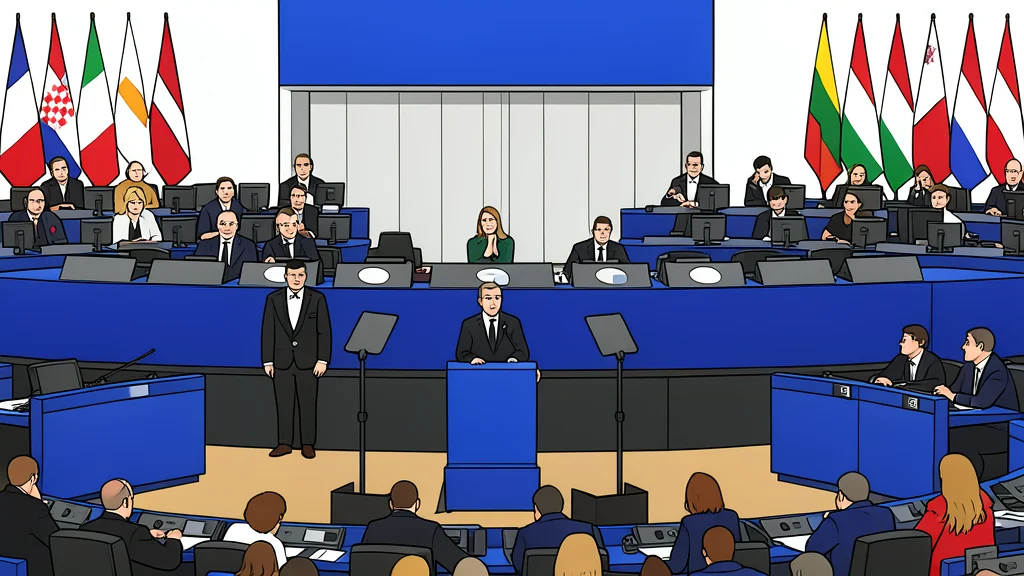
A lone heckler interrupted Prime Minister Mark Carney's address in Strasbourg, framing the disruption as a critique of the EU's shifting geopolitical alliances.
Prime Minister Mark Carney’s address to the European Parliament in Strasbourg was marked by a brief but noticeable disruption. As he approached the podium, German Member of the European Parliament Siegbert Droese interrupted the proceedings with a repeated chant. According to reports from GN auto geopolitics/europe, the incident occurred just as Carney was preparing to outline a vision for closer ties between Canada and the European Union.
Droese, a member of the Alternative for Germany party, called out the acronym for the United States while the crowd reacted with mixed emotions. Carney reportedly chuckled at the interruption and proceeded with his speech, which emphasized an "alliance for the future." The event highlighted the heightened tensions surrounding recent diplomatic moves between the EU and North America, particularly as Brussels considers new frameworks for partnership with third-party nations.
Defending the Disruptive Gesture
In a statement provided to media outlets, Droese described his actions as a necessary response to what he termed the "geopolitical elephant in the room." He argued that the European Commission’s recent proposals regarding Canada’s status were inconsistent with existing treaties. According to Droese, the chant was intended to highlight what he views as an unrealistic and knee-jerk reaction by Brussels leadership to seek a deeper association with a non-member state.
The German politician further characterized the European Commission president’s proposal as a strategy to bypass complicated relations with the United States. He suggested that the irony of the situation was best captured by the minimal effort required to trigger a reaction from the Canadian leader. Droese maintained that his interruption was a direct commentary on the political dynamics shaping current EU foreign policy decisions.
Context of Rising Polarization
Droese’s party, the Alternative for Germany, has seen a surge in popularity among voters, advocating for strict immigration controls and a nationalist cultural agenda. The party’s platform includes proposals for large-scale deportations of individuals without German heritage and a reduction in funding for projects deemed insufficiently aligned with national interests. This ideological stance often places the group in opposition to the supranational cooperation that characterizes the European Union’s institutional framework.
The incident took place against a backdrop of significant diplomatic maneuvering. Just one day prior to Carney’s speech, European Commission President Ursula von der Leyen indicated a desire to establish a new category of membership for Canada. This proposed status, described as an associate membership, represents a novel approach to the bloc's external relations and has sparked debate among member states regarding its legal implications and strategic value.
Implications for Future Alliances
The reaction to the disruption offers insight into the current climate of European politics, where domestic political pressures increasingly influence foreign policy discussions. While Carney’s composed response aimed to keep the focus on bilateral cooperation, the underlying disagreement over the EU’s strategic direction remains unresolved. The proposed partnership with Canada is seen by some as a hedge against uncertainty in transatlantic relations, a view that critics like Droese reject as legally unsound.
Looking ahead, the definition and implementation of the proposed associate membership will be the key area of scrutiny. Observers will watch how the European Commission navigates the legal constraints of its treaties while attempting to formalize a deeper bond with Canada. The extent to which internal political factions can influence these negotiations remains a critical question for the stability of the EU’s external partnerships.