Hungary and Czechia Distance Themselves from Ukraine's Carpathian 8
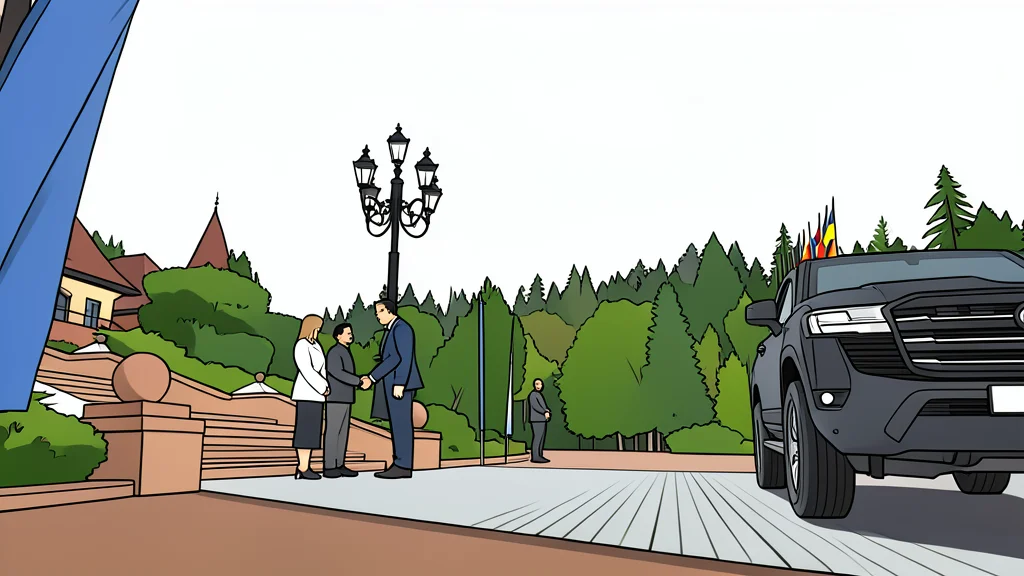
Hungary and the Czech Republic have signaled reluctance to fully join Ukraine's new regional security platform, highlighting diplomatic friction.
Key points
- Hungary’s Prime Minister denied joining Ukraine’s Carpathian 8 initiative and blocked a fuel storage deal with MOL Group.
- The Czech Republic sent a low-level opposition official to the summit, reflecting internal coalition divisions on Ukraine support.
- Poland committed to the platform, highlighting specific infrastructure projects and missile defense cooperation with Ukraine.
Ukraine’s initiative to establish the Carpathian 8, a regional bloc aimed at enhancing trade and security cooperation, has met with significant resistance from two key European neighbors. While Kyiv hoped the format would solidify partnerships following political shifts in Budapest, both Hungary and the Czech Republic have indicated a desire to remain on the periphery of the new arrangement.
The divergence in approach became evident during a recent three-day summit, where attendance levels and the rank of representatives served as clear indicators of diplomatic posture. According to reports from Balkan Insight, the lukewarm response from Central European capitals underscores the complex and often contradictory domestic politics surrounding support for Ukraine in the region.
Hungarian Denial of Participation
Hungary’s position was marked by a notable absence of high-level leadership. Prime Minister Peter Magyar did not attend the summit, sending instead a chargé d’affaires from the Hungarian embassy in Kyiv, a post that currently lacks an ambassador. This low-level representation suggested a lack of enthusiasm for the platform, a sentiment that Kyiv likely viewed as a setback to its hopes for a complete reset in bilateral relations.
Tensions were further highlighted when Magyar publicly denied in parliament that Hungary had joined the C8 initiative. The prime minister pushed back against reports of a memorandum of understanding signed between Hungarian oil giant MOL Group and Ukraine’s Naftogaz for fuel storage. Magyar insisted that MOL, in which the state holds a controlling stake, must coordinate such strategic plans with the government, effectively blocking what had been presented as a successful business outcome of the summit.
Czech Coalition Internal Divisions
The Czech Republic similarly chose not to fully commit to the new format, reflecting the fragmented nature of its governing coalition. The government did not send Prime Minister Andrej Babis or a senior minister, opting instead for Jiri Drahos, the Deputy Speaker of the Senate and an opposition politician. This move was interpreted by analysts as a strategic attempt to avoid direct domestic association with a Ukrainian-led initiative.
According to Petr Cermak, a research fellow at the Prague-based Association for International Affairs, this reticence mirrors the internal dynamics of the Czech coalition. He explained that the SPD party plays an openly anti-Ukrainian card, the Motorists party maintains a supportive line, and the ANO party attempts to balance these positions while avoiding public communication on the issue. A Ukrainian source told the Czech outlet Respekt that the low-level representation represented a wasted opportunity to discuss critical security and business matters.
Polish Engagement and Infrastructure Plans
In contrast, Poland demonstrated the strongest commitment to the C8 format, with Prime Minister Donald Tusk attending the summit personally. Warsaw’s interest lies in the tangible overlap between security cooperation and cross-border infrastructure development. The summit showcased specific projects, including a $216 million industrial park and multimodal terminal on the Polish-Ukrainian border, designed to handle over two million tonnes of cargo annually.
Additionally, Ukrainian Railways presented a $441 million plan to establish a low-cost passenger operator using European-gauge trains, linking cities like Uzhhorod and Lviv to Warsaw. These concrete economic and security benefits, coupled with Poland’s decision to join the European anti-ballistic missile initiative, provide Warsaw with strong incentives to maintain close ties with Kyiv. As Hungary and Czechia remain hesitant, the forward question is whether the C8 can function effectively as a cohesive security bloc without the full participation of all invited Central European states.