Lavrov Signals Compromise Readiness Amid Ongoing Strikes
Russian Foreign Minister Sergey Lavrov stated that Moscow is prepared to seek reasonable compromises regarding Ukraine, while maintaining that its fundamental objective to prevent NATO expansion on its borders remains unchanged.
MOSCOW – Russian Foreign Minister Sergey Lavrov indicated on Tuesday that Moscow is willing to explore pathways toward a compromise in the ongoing conflict with Ukraine. However, he emphasized that this flexibility does not extend to the core geopolitical red lines established by the Kremlin. According to Lavrov, Russia’s primary objective remains the assurance of its own security and the prevention of NATO’s military presence on its borders, a stance he described as fundamental and unalterable.
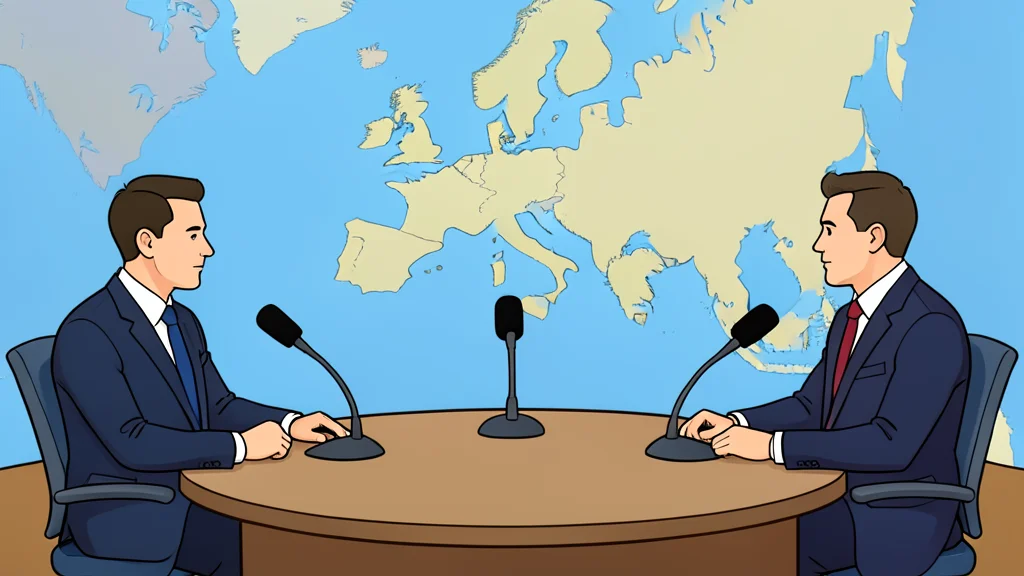
During an ambassadorial roundtable discussion focused on a potential Ukrainian settlement, Lavrov noted that Russia has never rejected the prospect of negotiations. He expressed readiness to engage in both bilateral and trilateral formats, signaling a openness to diplomatic channels. The Russian diplomat also highlighted what he viewed as a distinct American approach to the crisis, stating that Moscow welcomes the United States' interest in facilitating a settlement because, in his assessment, Washington understands the root causes of the conflict better than other Western nations.
Continued Pressure on Logistics Networks
While diplomatic statements were being made, military operations continued overnight. According to the Russian Defense Ministry, forces conducted coordinated drone strikes on critical logistics infrastructure within Ukraine. The reported targets included a logistics center in Velikaya Balka, Odesa region, which is alleged to store and distribute foreign military supplies. Additionally, the ministry stated that a dry cargo vessel, a ferry in the port of Chornomorsk, and railway infrastructure in western Ukraine used for military transport were hit.
The Russian military also claimed to have intercepted 222 Ukrainian drones across multiple regions during the same period. These strikes underscore the continuing intensity of the conflict, even as high-level diplomatic rhetoric suggests a potential window for negotiation. The juxtaposition of stated readiness for talks with active kinetic operations highlights the complex and volatile nature of the current diplomatic landscape.
Ukraine Removes Prosecutor General
In a separate development, the Ukrainian parliament voted to dismiss Prosecutor-General Ruslan Kravchenko from his position. The motion, which was submitted by President Volodymyr Zelensky, received 317 votes in favor, significantly exceeding the 226 votes required for passage. This decision follows a recent period of internal tension within Ukraine's anti-corruption and judicial institutions.
Kravchenko had tendered his resignation last week after the National Anti-Corruption Bureau accused a deputy head of a department in the Prosecutor General's Office of leading a criminal organization. While Kravchenko himself was not officially named as a suspect in the case, the political fallout led to his exit from the role. He had served as Ukraine's Prosecutor-General since June 2025, and his removal marks a significant shift in the country's legal leadership during a time of heightened security concerns.
Diplomatic Signals and Military Reality
The recent statements from Moscow, as reported by GN geopolitics/nato and other outlets, present a nuanced picture of Russia's diplomatic posture. By emphasizing readiness for compromise while holding firm on NATO issues, Lavrov appears to be delineating the boundaries of what Moscow considers negotiable. This approach aims to frame the conflict not merely as a territorial dispute, but as a broader strategic competition over alliance structures in Europe.
As the situation evolves, the international community is closely watching for any concrete steps toward dialogue. The combination of continued strikes on infrastructure, the dismissal of a key Ukrainian official, and the Russian foreign minister's remarks creates a complex environment where diplomatic opportunities and military escalation run in parallel. The coming weeks will likely reveal whether these diplomatic overtures translate into substantive negotiations or remain rhetorical maneuvers amidst ongoing hostilities.