Lithuanian President Warns of Coordinated Drone Pressure on Eastern NATO
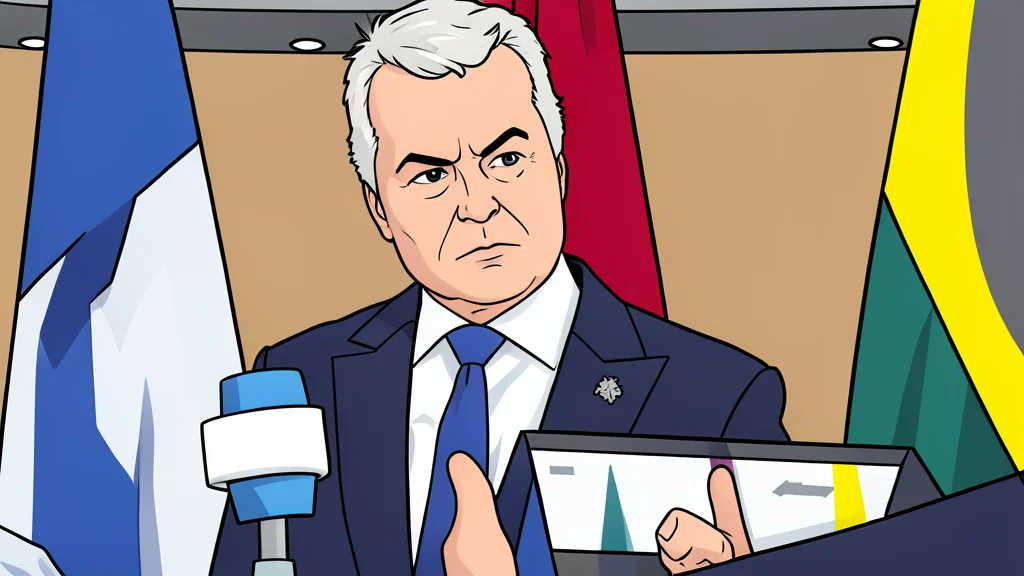
Vilnius assesses that recent airspace incidents are part of a broader strategy to maintain tension without triggering a direct military confrontation with the alliance.
Lithuanian President Gitanas Nausėda has argued that Moscow is deliberately exploiting the ambiguity of unmanned aerial vehicle operations to keep European societies in a state of heightened alert. Speaking during a recent broadcast, the president suggested that these incidents are not random accidents but calculated moves designed to target nations that provide robust support to Ukraine. This assessment aligns with a growing consensus among Baltic leaders that the frequency of such events indicates a shift in Russian tactical priorities rather than a direct escalation toward full-scale conflict.
The core of this strategy, according to Nausėda, relies on the ability to inflict psychological and logistical strain without crossing the threshold that would invoke Article 5 of the NATO treaty. By allowing drones to drift into allied airspace, Russia can force member states to divert resources toward defensive scrambles and border security. This approach keeps the focus on domestic security concerns, potentially eroding public support for continued military aid to Kyiv while avoiding the political cost of a declared act of war.
Strategic Ambiguity in Airspace Violations
The Lithuanian leader emphasized that the current pattern of incidents reflects a deliberate choice by Moscow to avoid a head-on confrontation with the alliance. He noted that while the drones may originate from Russian-controlled zones or be influenced by Russian electronic warfare systems, the attribution remains a complex legal and military puzzle. This ambiguity allows Russia to deny direct responsibility while achieving the desired destabilizing effect. The president stressed that the goal is to maintain a persistent low-level threat that forces NATO to remain on high alert, thereby draining political will and public patience.
Recent months have seen a series of notable events that fit this description. A Russian-made drone struck a residential building in Romania, marking the first time a Russian UAV injured civilians on NATO soil. Subsequently, multiple Ukrainian drones entered Baltic and Finnish airspace after their navigation systems were allegedly spoofed. These incidents prompted immediate defensive responses, including the scrambling of fighter jets and the implementation of temporary flight restrictions. The recurrence of such events across multiple member states suggests a coordinated effort to test the alliance’s readiness and unity.
Regional Responses and Defensive Posture
In response to the increasing frequency of airspace breaches, NATO member states have intensified their defensive measures. Finland recently restricted airspace near its eastern border following a surge in incursions. Similarly, Baltic nations have strengthened border surveillance and coordinated their air defense capabilities. The alliance has also pledged to enhance cooperation with Ukraine on electronic warfare and counter-drone technologies. These steps aim to mitigate the risk of accidental escalation while deterring further provocations. The focus has shifted from reactive scrambling to proactive monitoring and intelligence sharing among allied air forces.
According to GN geopolitics/nato, the diplomatic response has been firm but measured. Baltic and Scandinavian leaders have rejected Russian disinformation campaigns that seek to blame Ukraine for the incidents. Instead, they have emphasized the need for a unified NATO stance that addresses the root causes of the tension. This includes holding Russia accountable for the use of electronic warfare systems that disrupt civilian and military aviation. The alliance is working to establish clearer protocols for identifying and attributing such incidents, which will be crucial for determining appropriate diplomatic and military responses in the future.
Forward-Looking Security Considerations
As the situation evolves, the primary concern for NATO remains the prevention of an accidental incident that could trigger a broader conflict. The close proximity of Russian forces to allied borders increases the risk of misidentification or miscalculation. Military planners are focusing on improving communication channels and de-escalation mechanisms to ensure that defensive actions do not be misinterpreted as aggressive. The development of robust counter-drone capabilities is also a priority, as these systems are becoming increasingly sophisticated and harder to track. The alliance must balance the need for a strong defensive posture with the requirement to maintain strategic stability.
Observers will closely watch the next several months for any changes in the pattern of drone activity. A decrease in incidents could signal a shift in Russian strategy, while an increase might indicate a more aggressive posture. The outcome of upcoming NATO summits and bilateral talks will also provide insight into how the alliance plans to address these challenges. For now, the situation remains tense but contained, with both sides maintaining a fragile equilibrium. The key will be maintaining clear communication and robust defenses to prevent the current state of heightened alert from tipping into open conflict.