Ukraine Leans on Solar as Grid Faces Continued Strikes
As Russian attacks target centralized power infrastructure, Ukrainian businesses and households are increasingly turning to rooftop solar to maintain operations and reduce dependency on a vulnerable grid.
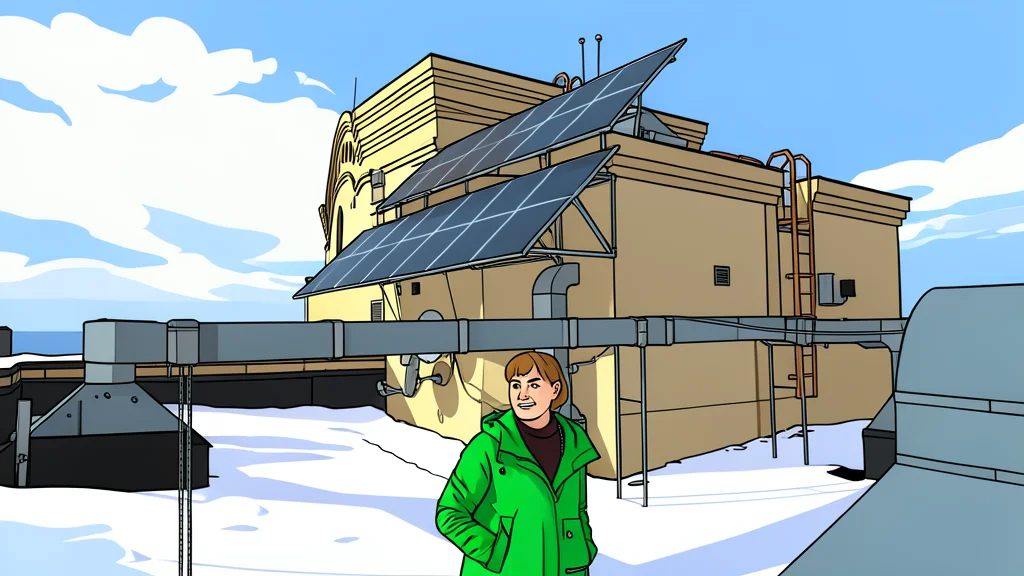
In the central Ukrainian town of Bila Tserkva, workers at a door manufacturing facility recently surveyed rows of photovoltaic panels installed on their industrial rooftop. For years, the plant has faced production disruptions due to rolling blackouts triggered by repeated strikes on the national grid. According to the Kyiv Independent, the facility’s owner opted for solar power to secure a more stable and economical energy supply amid ongoing conflict.
The shift reflects a broader trend across Ukraine, where government incentives are accelerating the adoption of renewable energy. With centralized power plants remaining frequent targets, decentralized solar installations offer a resilient alternative that is easier to restore and less vulnerable to widespread damage than traditional infrastructure.
Government Incentives Drive Solar Adoption
Ukraine has introduced financial mechanisms to lower the barrier to entry for businesses and households seeking to diversify their energy sources. Programs such as preferential loans allow entities to finance up to 80 percent of installation costs at low interest rates. This support has enabled companies like Yasno, a subsidiary of DTEK, to resume large-scale solar projects that had been paused during the early stages of the war.
Since restarting operations in mid-2024, Yasno has installed panels at over a hundred sites, adding significant capacity to the national mix. Industry officials note that this decentralized approach aligns with strategic resilience goals, allowing local entities to generate and store energy independently of the main transmission network.
Shift From Centralized Power Dependence
Prior to the invasion, Ukraine’s electricity system was heavily centralized, with nuclear plants supplying more than half of the nation's power. This concentration made the grid particularly susceptible to targeted attacks, which have caused severe winter outages and economic strain. The current pivot toward renewables represents a structural adaptation to these vulnerabilities, reducing reliance on a few critical nodes.
Renewables Align With EU Integration Goals
Beyond immediate wartime needs, the expansion of solar capacity supports Ukraine’s long-term energy policy and integration with European markets. Legal guarantees for green tariffs, established before the conflict, continue to incentivize private generation. As the country seeks to modernize its energy sector, solar power is becoming a central pillar of both resilience and future market alignment.