Ukraine's Wartime Tempo Exposes Western Procurement Delays
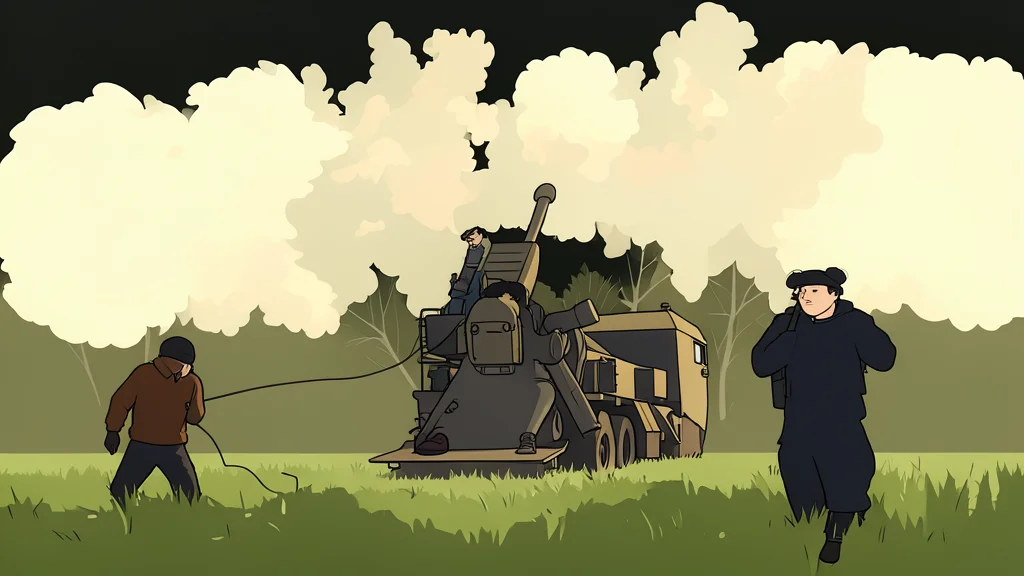
NATO trainers working with Ukrainian forces report that the speed required for survival on the front lines highlights significant bureaucratic bottlenecks within Western military structures.
Military personnel involved in training Ukrainian troops have identified a stark contrast between the rapid decision-making required in wartime and the slower, more procedural pace of Western peacetime operations. According to reports from GN geopolitics/nato, this disparity is becoming a focal point for European defense leaders who are seeking to understand how to accelerate their own capabilities without compromising safety or quality.
Norway’s Operation Legio, a multinational initiative based in eastern Poland, serves as a primary case study for this dynamic. The program trains Ukrainian soldiers while simultaneously feeding battlefield insights back into NATO member states. Officers leading the effort describe a challenging environment where the need for immediate tactical effects clashes with established long-term planning horizons.
Bureaucracy vs. Battlefield Necessity
Maj. John, the S3 Operations Officer for the training operation, noted that Western mechanisms are not accustomed to the tempo demanded by an active conflict. He explained that while European nations are used to long planning cycles, Ukraine requires immediate results. This friction creates a difficult dynamic for trainers who must adapt their methods to support a nation fighting for its survival.
Brigadier Atle Molde, commander of Task Force Legio, expressed frustration with the pace of Western processes. He stated that the operational style of peacetime Western militaries would not be effective in a high-intensity conflict. This sentiment reflects a broader concern among NATO leaders that current regulatory frameworks may hinder rapid response capabilities.
Innovation Through Regulatory Flexibility
The construction of Camp Jomsborg itself illustrates the potential benefits of bypassing standard procedures. Built in a matter of months in a forest clearing, the facility was developed with a speed that would be difficult to achieve under normal national building regulations. Molde acknowledged that standard licensing procedures were not followed to achieve this rapid deployment.
This flexibility extends to equipment development. Molde compared the process of updating drones in the West, which can take six months, to the Ukrainian approach where engineers near the front line update software every two days. He argued that giving engineers resources and fewer restrictions allows for significant innovation, suggesting that Western legislation may need major reform to foster similar agility.
Integrating Lessons into Western Doctrine
A key objective of Operation Legio is to transfer this experience back to European armed forces. Training teams at the camp have already overhauled their trench networks multiple times based on feedback from Ukrainian instructors and returning soldiers. This continuous evolution ensures that the training remains relevant to current combat conditions.
Looking ahead, the challenge for Western nations is to institutionalize these faster processes. While the camp demonstrates what is possible when constraints are reduced, translating this into permanent policy changes requires navigating complex legislative landscapes. The focus now shifts to how these wartime-derived efficiencies can be integrated into peacetime military structures to ensure readiness for future conflicts.