Global Conflict Deaths Hit Record High as Drone Warfare Spreads
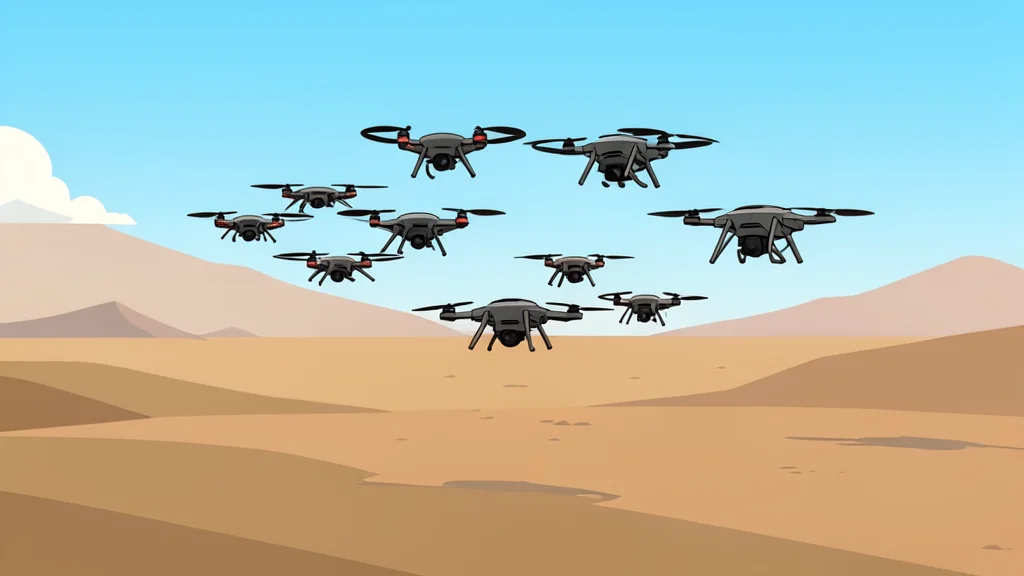
Active armed conflicts have reached 65, with 2025 deaths surpassing previous records due to accessible drone technology and stalemates.
Key points
- Active armed conflicts reached 65 in 2025, with 244,600 deaths, the highest since the Rwanda genocide.
- Global military spending exceeded $2.8 trillion in 2025 according to SIPRI data.
- Inexpensive drone technology has lowered barriers for non-state actors, favoring weaker sides in conflicts.
The global landscape of armed conflict has entered a period of unprecedented intensity, characterized by a surge in violence and a fundamental shift in how wars are fought. According to the Conflict Data Project at Uppsala University, the number of active armed conflicts has climbed to 65, while official conflict deaths in 2025 reached 244,600, marking the highest toll since the genocide in Rwanda. This escalation is not merely a statistical anomaly but reflects a deepening crisis in international stability, where diplomatic resolutions are increasingly elusive and military stalemates dominate the battlefield.
Keith Krause, director of the Centre on Conflict, Development and Peacebuilding at the Geneva Graduate Institute, argues that the current era resembles the chaotic brutality associated with the Greek god Ares rather than the disciplined state defense of Mars. In a recent analysis for Geneva Solutions, Krause highlights that democratic backsliding and social polarization have created fertile ground for political repression and violence in regions including Iran, Chad, and Myanmar. The accessibility of modern weaponry has lowered the barriers to entry for various non-state actors, transforming traditional state-on-state warfare into a more fragmented and dangerous environment.
Stalemates Define Modern Warfare
Major conflicts such as the war in Ukraine, the crisis in Gaza, and the civil war in Sudan have become entrenched in prolonged stalemates. Krause notes that the initial expectations of quick victories have proven misplaced, as defensive strategies and technological advantages offset each other. In Ukraine, for instance, the conflict has persisted for over a decade when including the annexation of Crimea, with no clear path to a decisive military endpoint. Similarly, the factions in Sudan have been locked in violence since 2023, with external support from various parties prolonging the fighting and reducing incentives for negotiation.
The inability to achieve definitive victory is further complicated by the economic realities of modern war. While military spending has hit historical highs, exceeding $2.8 trillion in 2025 according to the Stockholm International Peace Research Institute, the cost of mobilization for smaller actors has decreased. This divergence means that while states spend vast sums, non-state groups can leverage cheaper technologies to inflict significant damage, creating a persistent asymmetry that prevents quick resolutions. The result is a series of grinding, high-casualty conflicts where the strategic goals of the belligerents remain unattainable.
Drone Revolution Reshapes Battlefield Dynamics
A critical factor in this new era of conflict is the proliferation of inexpensive drone technology, which has fundamentally altered the balance of power. Krause describes this as a 21st-century revolution in military affairs, comparable to the invention of gunpowder. Drones costing only tens of thousands of dollars can now destroy much more expensive military equipment, a dynamic clearly visible in the ongoing war in Ukraine. This technological shift favors the weaker side, allowing insurgent groups and even criminal organizations to challenge better-funded state forces with relative ease.
The widespread availability of these tools has been documented by the Geneva-based Small Arms Survey, which notes that militarized drones are now readily accessible in many regions. In Haiti, armed drone attacks by gangs and private contractors are becoming common in urban areas like Port-au-Prince, while in Myanmar, both the army and rebel groups rely heavily on modified commercial technology. This democratization of lethal force suggests that the future of conflict will be defined not just by state armies, but by a diverse array of actors capable of deploying sophisticated aerial attacks.
Challenges For Peacebuilding Efforts
The combination of rising chaos, accessible weaponry, and entrenched stalemates poses significant challenges for international peacebuilding efforts. Krause warns that the current trajectory is driven by competition for scarce resources, widening inequalities, and demographic pressures, all of which exacerbate tensions. The traditional models of conflict resolution, which often rely on the exhaustion of warring parties or clear military victories, are becoming less effective in a world where external support and cheap technology allow conflicts to persist indefinitely.
As the world watches these conflicts unfold, the focus must shift toward understanding the underlying structural forces that fuel this violence. The rise of autonomous weapons systems and the erosion of democratic norms suggest that the coming years may see even greater instability. For policymakers and observers, the key question is how to adapt diplomatic and security strategies to a landscape where the tools of war are more accessible, the costs of resolution are higher, and the potential for humanitarian catastrophe is greater than at any point in recent history.