Thales Unveils HexaForce to Challenge Palantir's NATO Role
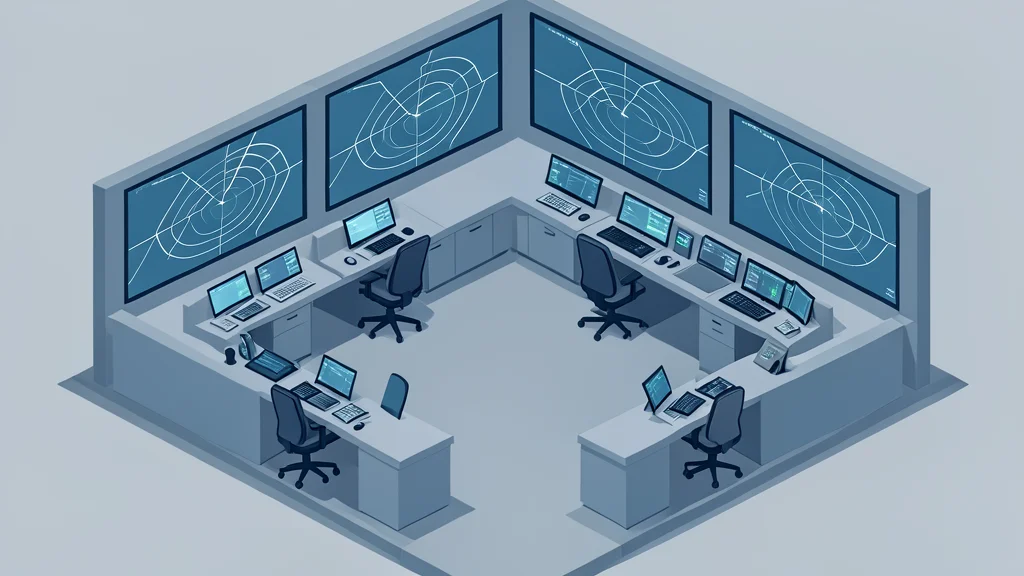
HexaForce aims to process 1,000 targets daily, offering a sovereign alternative to US battlefield systems amidst growing European digital sovereignty efforts.
Key points
- HexaForce processes up to 1,000 targets per day, ten times the previous capacity, using Thales' CortAIx accelerator.
- The system supports over 100,000 personnel and was tested during the NATO Coalition Warrior Interoperability Exercise in June 2026.
- European officials aim to reduce US tech reliance, though NATO leaders warn that switching could weaken cyber defenses and data sharing.
Thales has officially launched HexaForce, an artificial intelligence-driven command-and-control system designed to serve NATO and allied militaries. The new platform represents a significant step toward European digital sovereignty, offering a potential alternative to the US-developed Palantir systems currently integrated into alliance operations.
According to Cybernews, the system was unveiled on September 17 with a focus on interoperability and high-intensity warfare scenarios. It is engineered to coordinate diverse military assets across land, air, sea, cyber, space, and information domains, aiming to reduce reliance on American technological infrastructure while maintaining compatibility with existing coalition networks.
Technical Capacity and Operational Scope
The platform incorporates Thales’ CortAIx AI accelerator to automate the analysis and prioritization of massive data streams from military, open-source, and civilian origins. This architecture supports over 100,000 personnel and significantly boosts military agility by processing up to 1,000 targets per day, a tenfold increase from previous baseline capacities.
HexaForce underwent testing during the NATO Coalition Warrior Interoperability Exercise in June 2026. Thales states that these live trial phases are intended to pave the way for full-scale deployment, ensuring the system can operate effectively in degraded communication environments where centralized nodes might fail.
Strategic Shift Toward Digital Sovereignty
The launch coincides with broader European efforts to replace American software with local alternatives, driven by concerns over data privacy and strategic independence. Paris and Berlin have recently pledged to develop a European alternative to Palantir’s battlefield software, a move supported by public sentiment that favors reducing reliance on foreign technology providers.
Defense analysts note that HexaForce utilizes a distributed data network rather than a single central node. This design preserves information access even when communications are heavily degraded and keeps data control with the user, a feature particularly relevant to European armed forces seeking to maintain sovereignty without sacrificing interoperability.
Security Concerns and Future Outlook
Despite civilian enthusiasm for digital sovereignty, some military leaders remain cautious about decoupling from established US technologies. Admiral Pierre Vandier, NATO’s Supreme Allied Commander Transformation, warned in May 2026 that replacing existing tools could potentially weaken cyber defenses and disrupt critical data sharing protocols within the alliance.
The situation presents a complex balance between strategic autonomy and operational security. As NATO continues to evaluate its technological dependencies, the next phase will likely involve rigorous integration tests to determine if HexaForce can deliver its promised capabilities without compromising the alliance’s collective defense posture.