India Navigates New US Russia Sanctions Landscape
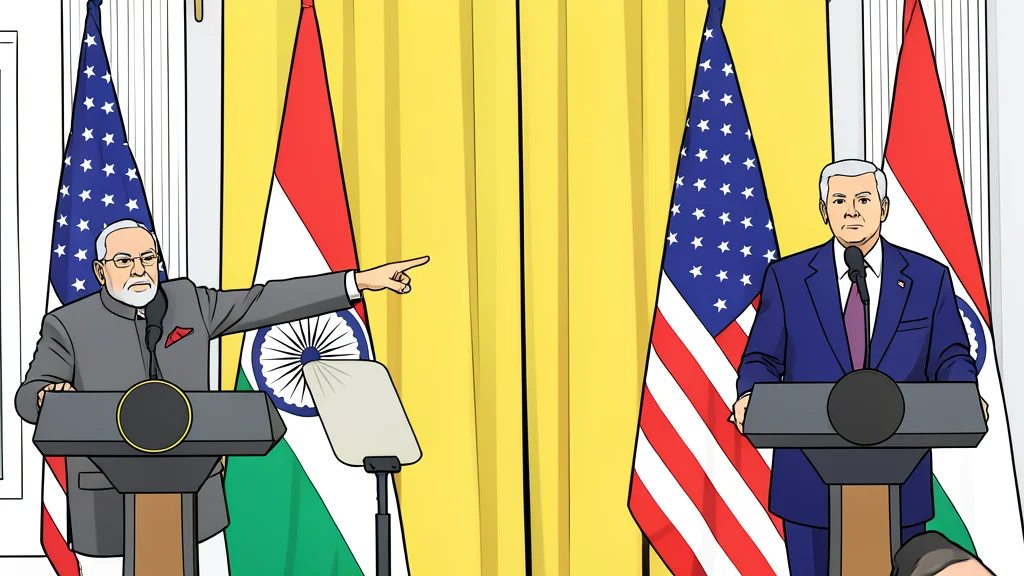
Newswires report New Delhi is preparing for potential trade shocks as Washington moves to formalize secondary sanctions against countries purchasing Russian energy.
New Delhi has signaled a firm resolve to safeguard its commercial interests following the passage of a comprehensive sanctions package in the United States. The new legislation grants the American executive branch the authority to impose tariffs of up to 100 percent on nations identified as significant buyers of Russian oil and gas. According to the GN geopolitics/trade (en-US) desk, this development places India in a complex position, balancing its critical need for energy security against the risk of severe economic retaliation from its largest trading partner.
The Indian government stated that it remains dedicated to ensuring energy stability for its 1.4 billion citizens. Officials indicated that New Delhi has engaged in high-level discussions with Washington to articulate the potential implications of the bill for bilateral relations and global energy markets. While the measure has not yet resulted in immediate punitive action, it sets a framework for aggressive economic leverage should India continue its current procurement strategies.
Legislative Passage Expands Executive Authority
The US House approved the legislation, formally designated as the Lindsey O. Graham Sanctioning Russia and Iran Act of 2026, by a margin of 262 to 159. This followed a decisive 86 to 11 vote in the Senate earlier in the month. The bill is now expected to be signed into law by President Donald Trump, converting these provisions into enforceable federal policy.
The primary objective of the act is to intensify economic pressure on Moscow by targeting its energy and defense sectors. It specifically addresses the so-called shadow fleet of tankers accused of helping Russia evade existing restrictions. By explicitly naming India and China as major buyers during legislative debates, the bill creates a direct legal pathway for the US to penalize third-party nations that sustain Russian revenue streams.
Energy Security Drives Procurement Strategy
Indian refiners have increasingly relied on Russian crude since Western sanctions reshaped global energy flows following the escalation of the Ukraine conflict. The Indian External Affairs Ministry noted that sourcing decisions are based on evolving market dynamics and the imperative to maintain fuel availability. New Delhi maintains that its purchases are driven by economic necessity rather than geopolitical alignment with Moscow.
Government officials emphasized that the inclusion of India in the legislation does not equate to an immediate imposition of maximum tariffs. Instead, it provides the US administration with the discretion to apply penalties if specific conditions are met. This conditional nature creates a period of uncertainty where New Delhi must prepare for potential financial impacts while continuing to negotiate with American counterparts.
Potential Impact on Export Competitiveness
If the authority granted by the bill is exercised against India, the consequences would likely manifest through increased costs for Indian exports to the US market. A tariff of up to 100 percent would sharply reduce the price competitiveness of Indian goods, potentially disrupting trade flows and affecting industries that rely heavily on the American consumer base.
The Indian government has stated it will work closely with trade and industry bodies to mitigate these risks. The forward question remains how New Delhi will balance its energy requirements with the need to maintain favorable trade terms with Washington. Analysts suggest that the next months will be critical in determining whether diplomatic negotiations can prevent the activation of these harsh economic measures.