Pentagon Seeks F-35 Canopy Diverted to Hong Kong
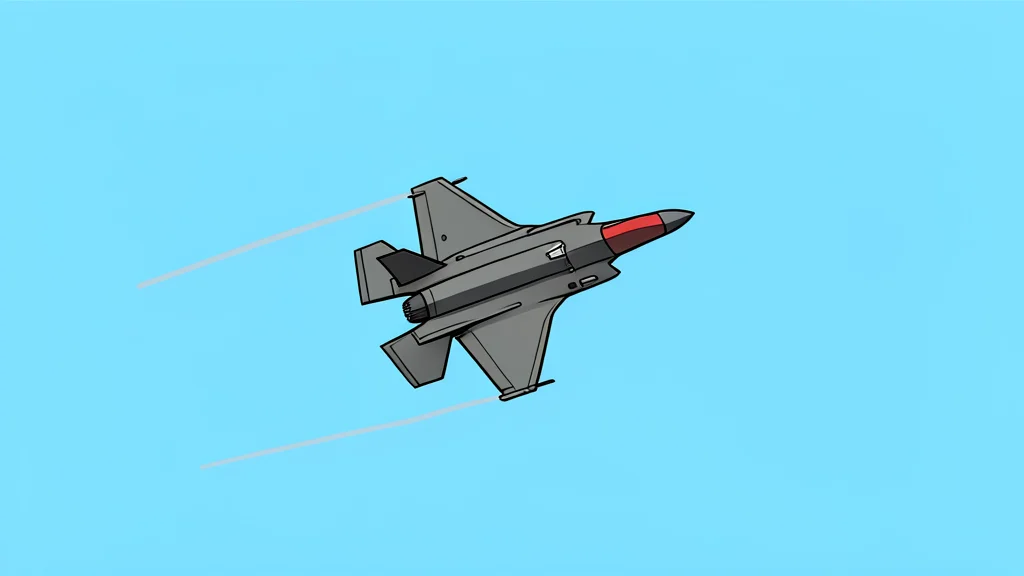
The U.S. Department of Defense is attempting to retrieve a stealth-coated F-35 cockpit canopy that was rerouted to Hong Kong during a repair shipment.
Key points
- The Pentagon is attempting to recover a stealth-coated F-35 canopy that was diverted to Hong Kong during a repair shipment.
- The House Armed Services Committee is investigating the incident after receiving briefings from State and Defense officials.
- A 2023 GAO report noted that over one million F-35 spare parts were missing, highlighting systemic accountability issues.
The U.S. Department of Defense is actively working to recover a sensitive F-35 Lightning II component after a shipment originally bound for repair in the United States was rerouted to Hong Kong this summer. The part in question is a cockpit canopy treated with a transparent radar-absorbent material, a technology critical to the aircraft's stealth capabilities. While no public evidence indicates that Chinese authorities have obtained or examined the component, the diversion has triggered a formal investigation by congressional oversight bodies.
According to The SOFX Report, the House Armed Services Committee has received multiple briefings regarding the incident and is continuing its oversight review. Officials from the State Department and the Pentagon first informed congressional staff of the issue in June, with further briefings scheduled for late September. The situation highlights a significant gap in the chain of custody for military hardware, as the shipment was handled by an intermediary on behalf of Lockheed Martin, the program’s prime contractor.
Shipment Diversion Triggers Oversight
The incident was first reported by Politico, citing sources familiar with the matter who stated that the shipment left Australia and changed course while crossing the Pacific. It remains unclear why the route was altered or who currently possesses the components. Australia operates F-35 maintenance facilities, but none currently have the capability to repair canopies, necessitating the shipment to the United States for specialized service.
The F-35 Joint Program Office acknowledged the issue, describing it as involving
Stealth Technology and Espionage Risks
Experts warn that the physical possession of such a component could significantly aid foreign adversaries. J.J. Gertler, a former congressional analyst, noted that having a real part allows for verification and refinement of intelligence gathered through previous espionage efforts. The thin, transparent layer on the canopy is designed to absorb radar signals, making the material itself a target for reverse engineering and analysis by potential competitors.
This case underscores broader concerns about the accountability of F-35 spare parts. Under the program's shared parts pool, the Defense Department owns the components until installation, but Lockheed Martin retains the record-keeping responsibilities. A 2023 Government Accountability Office report found that over one million spare parts had gone missing over five years, a loss that the department could not fully review due to the contractor's control over the data.
Systemic Accountability Gaps Remain
The Defense Department’s inspector general has cited F-35 parts accountability as a material weakness in every annual audit since 2019. With the Pentagon expected to spend nearly $2 trillion on the program over its lifetime, the inability to track high-value components represents a significant operational and security risk. Lockheed Martin stated that it complies with all U.S. shipping rules and handles shipments with the utmost diligence, though it declined to provide specific details on the current status of the missing part for security reasons.
The recovery effort is ongoing, with the F-35 Joint Program Office coordinating with U.S. authorities and industry partners to retrieve the items and implement safeguards to prevent similar incidents. The next step will likely involve a detailed inquiry into the logistics chain and the specific protocols followed by the intermediary, as well as a review of how such high-value items are secured during international transit.