US Discloses Orbital Weapons Deployment Amid Rising Tensions
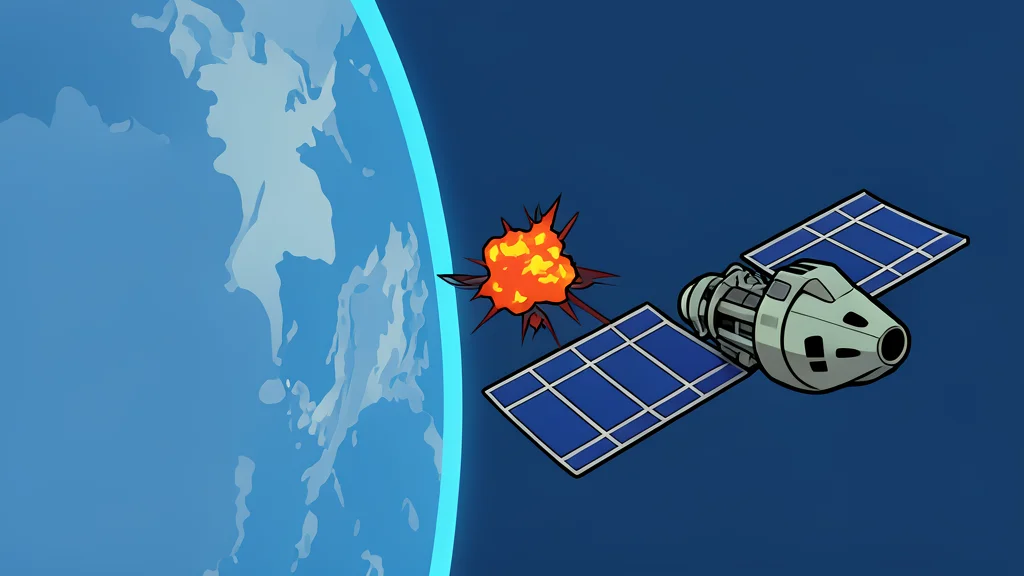
The United States has officially acknowledged the placement of defensive systems in orbit, signaling a shift in the strategic landscape as rival powers accelerate their own space capabilities.
The United States has disclosed for the first time that it has deployed weapons in space. The revelation came on Monday from U.S. Air Force Secretary Troy Meink, who stated that the Space Force has placed "space control weapons" in orbit around Earth. However, he declined to elaborate on the specific nature of these systems or the exact timeline of their deployment, emphasizing that the primary purpose of the announcement was to deter potential rivals.
Speaking at a conference in Maryland, Meink indicated that the disclosure was a calculated move to address the growing competition with Russia and China. Both nations are believed to be developing offensive satellites capable of disabling critical infrastructure in the event of a direct confrontation. By acknowledging these capabilities, Washington aims to signal readiness to defend its joint forces against hostile actions in the orbital domain.
Strategic Ambiguity and Deterrence
Meink carefully avoided detailing the specific capabilities of the new weapon, refusing to clarify whether it operates through kinetic or non-kinetic means. According to official statements, maintaining U.S. superiority in space is critical, and revealing specific technical details could undermine the deterrent effect. The goal, as described by the secretary, is to ensure that the United States can operate freely in the space environment, which is deemed vital for both military and economic security.
A U.S. Space Force spokesman defined "space control" as encompassing the necessary mission areas to compete in the space domain. This includes using both kinetic and non-kinetic means to disrupt, degrade, or destroy adversary capabilities if required. These actions can be employed for both offensive and defensive purposes, strictly in accordance with command guidance, marking a formal acknowledgment of a dual-use capability in orbit.
Legal Frameworks and Orbital Risks
The U.S. disclosure arrives amid an intensifying race among major powers to develop offensive space capabilities. While the 1967 Outer Space Treaty prohibits the placement of weapons of mass destruction in orbit, it does not ban other types of weapons. Consequently, the United States, Russia, China, and India have all demonstrated the ability to shoot down satellites using ground-launched missiles. However, recent concerns in Washington focus on the development of on-orbit offensive satellites by China and Russia.
Kinetic disruption, such as launching a weapon from one satellite to collide with another, creates significant debris that threatens all spacecraft in orbit. Non-kinetic methods, such as electronic jamming, offer an alternative. According to reports, Russian satellites have reportedly intercepted communications from European satellites since 2022, highlighting the real-world application of these non-kinetic threats and the urgency of the current strategic debate.
Monitoring Future Developments
As the geopolitical landscape shifts, observers are closely watching how other nations respond to this explicit U.S. acknowledgment. The next steps may involve further diplomatic engagements or accelerated testing of countermeasures. The focus remains on whether the international community can establish new norms to prevent an uncontrolled arms race in the shared orbital environment.